


How artificial turf fields in Metro Vancouver might be responsible for killing salmon


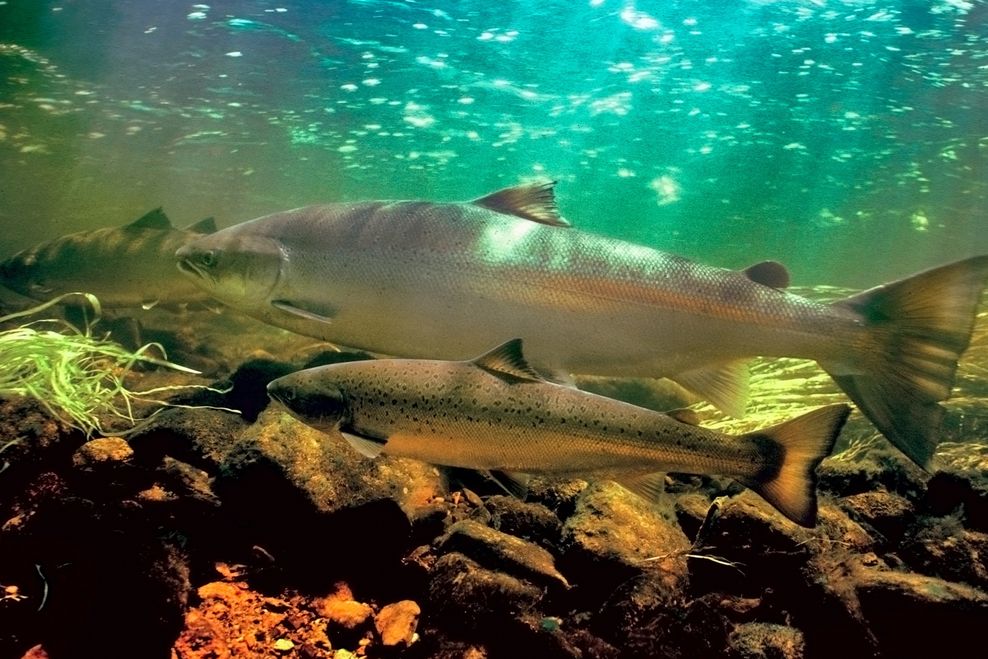
Artificial turf fields might be responsible for some salmon die-offs in Metro Vancouver streams.
A study from the University of British Columbia found that synthetic turfs — popular because they accommodate about four times the use of a natural field — are leaking a toxic chemical to coho salmon into a local waterway.
Many artificial turfs have infill made of crumb rubber, which is ground-up, recycled tires.
Rachel Scholes, a civil engineering professor at the University of British Columbia, said they found that it consistently released 6PPD-quinone, which has been linked to killing the fish.
Her team had already been researching contaminants coming off roads from car tires, and knew that the artificial turf fields were made with them.
“And then we actually got contacted by a streamkeeper group on the North Shore who were concerned about a particular turf field near a salmon-bearing stream. And they had observed fish die off in that stream. And wanted to know whether the field could have contributed to the toxicity,” she said.
“And so we started to look into it, and learned that actually there’s a lot of ground-up used tires on these fields, and that they could potentially be a big source of these toxic chemicals.”
First, they went to 12 different turf fields around Metro Vancouver and sampled the infill material, or what Schole describes as “that sort of black crumb stuff that is in between and below the turf blades.”
Schole’s PhD student, Katie Moloney, took those samples to their lab and tested them, and subsequently found 6PPD-quinone in all of them.
“And that helped us verify that that’s where these contaminants were coming from,” Schole said.
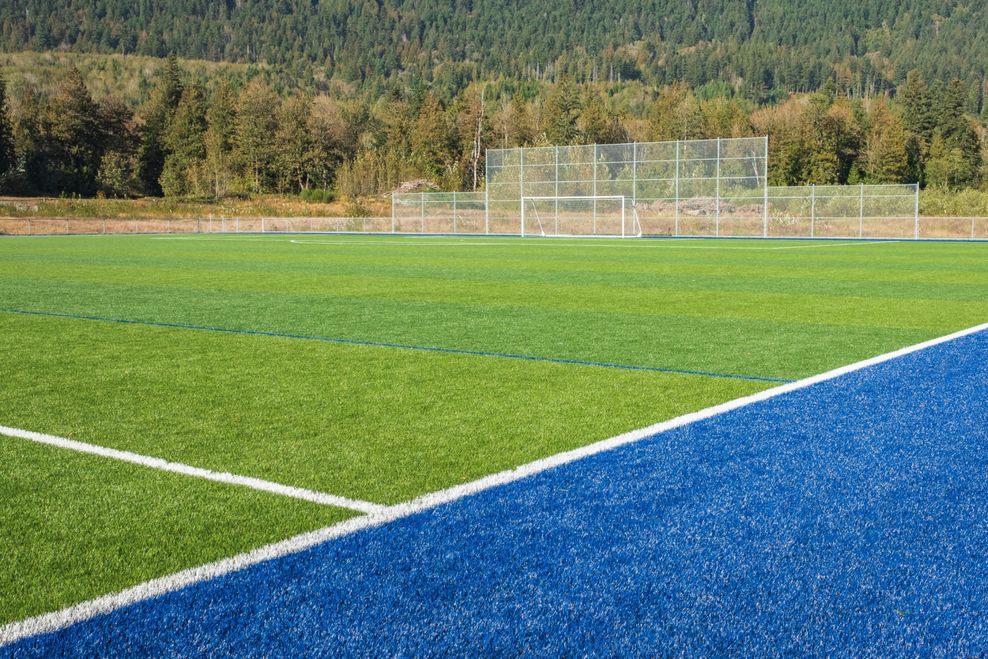
Elena_Alex_Ferns/Shutterstock
Schole said a surprising finding was that the age of the artificial turf didn’t make a difference — that they continue to leach chemicals throughout their lifetime.
Next, they went out during a rainstorm to collect stormwater that had drained through an artificial turf field. Here, they also found 6PPD-quinone and other toxic trace metals.
“And so that helped us link these lab leaching tests to potential impacts in the field, because the water we were sampling from below a turf field is similar to what might be directed into a surface water body, like a creek or a stream,” she said.
Schole cautioned that they don’t have direct evidence that these turf fields are linked to salmon die-offs, but field containment is likely to contribute to a stream’s toxicity in general.
She added that the most at-risk areas are smaller watersheds, since stormwater is less diluted when it enters a stream.
What’s the solution?
Schole said that 6PPD-quinone isn’t hard to filter out of the water.
“It’s just that we don’t treat most of our stormwater. And so if you had a filtration system underneath the field, it’s possible you could protect the nearby ecosystems pretty effectively.”
She said some municipalities are starting to look into whether they could direct storm water from turf fields into a rain garden, because there’s good evidence that water filtering through soil removes the chemical.
But this depends on the topography of the land and the surrounding land use, so putting a filter underneath the fields is another reasonable option.