


B.C. premier committed to amending DRIPA law to uphold government authority


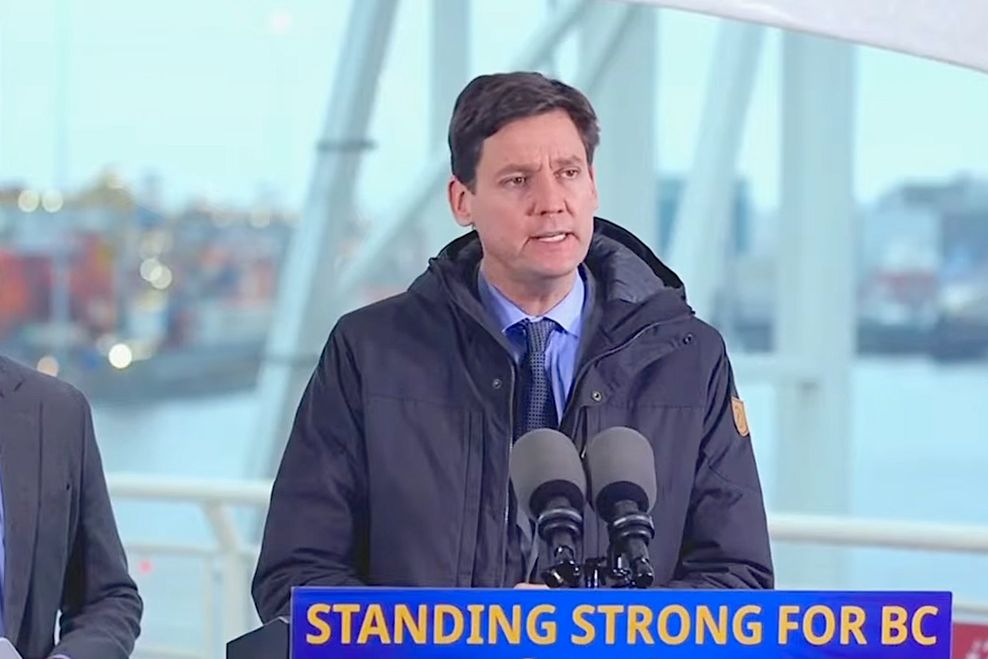
Premier David Eby says the Government of British Columbia will move ahead with amendments to the Declaration on the Rights of Indigenous Peoples Act (DRIPA) to clarify that reconciliation work is the responsibility of government — not the courts — and to ensure private property is protected.
Speaking to reporters during a press conference on Tuesday, Eby said recent court decisions have created uncertainty that his government believes must be addressed through legislative changes.
“There are some bright lines that we have and have had through this whole process,” said Eby. “One is that it’s government’s responsibility, not the courts, to work with First Nations and address issues of reconciliation. So we’ll be amending the Declaration Act to ensure that that is clear.”
- You might also like:
- First Nations leaders defend B.C.'s DRIPA law amid growing calls for repeal
- B.C.'s legal system faces major overhaul after landmark UNDRIP ruling by provincial appeal court
- 'Not coming for anyone's private property': Musqueam First Nation seeks win-win relationships
- Majority of B.C. residents worried about impact of Aboriginal title ruling: survey
- Langley Township to join appeal over Aboriginal title ruling impacting private property rights
- Reconciliation behind closed doors: B.C. government proposes law for secret negotiations between cities and First Nations
Separately, Eby also pointed to concerns around private property following the August 2025 court decision siding with the Cowichan Tribes, granting them Aboriginal title over a large area of southeast Richmond — affecting homeowners and property owners of major industrial and commercial businesses.
He said protecting private property is “non-negotiable” and reaffirmed the provincial government is pursuing a stay application — in addition to the appeal process — related to that ruling. The Premier noted that provincial lawyers will be able to file the stay application “soon,” after the orders are finalized from the original court decision. The stay application will temporarily suspend the implementation of the court decision, potentially for the duration of the forthcoming years-long appeal process.
“People’s homes and businesses are not negotiating chips for reconciliation,” asserted Eby, adding that certainty in property rights must be maintained while reconciliation efforts continue.
When asked about what the proposed amendments to DRIPA would include, Eby said the changes would reinforce that DRIPA commitments are government-to-government agreements with First Nations and were never intended to be directed by the courts.
In December 2025, the B.C. Court of Appeal ruled that the provincial government’s mineral claim-staking system is inconsistent with Indigenous rights and DRIPA, which is based on the United Nations Declaration on the Rights of Indigenous Peoples (UNDRIP). The court found that DRIPA has immediate legal effect in provincial law — a decision with far-reaching implications, as it requires the provincial legal system and all laws to be interpreted in accordance with the Declaration Act.
DRIPA, first introduced by the BC NDP-led provincial government, was unanimously approved in the legislature in 2019.
“The amendments will make it clear that what we said in the legislature when that bill was introduced… remains true today, which is that the Declaration Act commitments were government-to-government commitments,” he said.
Eby acknowledged concerns raised by some First Nations leaders, including opposition from dozens of First Nations that have signed a letter against amending DRIPA. However, he said recent court decisions have forced the government to restate legislative intent.
“This is challenging work,” said the Premier. “We’re in the challenging days.” He argued that court involvement creates “huge uncertainty” and “division,” and that negotiations are best handled directly between governments and First Nations.
“This is too delicate, too tender, too important for that to happen,” said Eby, referring to reconciliation being directed through the courts.
Eby confirmed the amendments will be introduced in the upcoming legislative session and said his government remains committed to continuing negotiations with First Nations while protecting economic stability and private property across the province.
Critics argue the controversy ultimately traces back to decisions made by the BC NDP, which did not provide sufficient legal clarity around how DRIPA would interact with existing statutes and the courts. Opponents contend the governing party failed to clearly define limits on judicial interpretation, leaving room for court rulings that have since created uncertainty for private property owners, industry, and Indigenous nations alike.
The Conservative Party of B.C. and some business sector stakeholders now argue the BC NDP is attempting to fix problems of its own making by amending DRIPA after the fact, rather than acknowledging flaws in its original design.
While Eby maintains that the amendments are necessary to reassert legislative intent and protect reconciliation from being driven through the courts, critics say the situation underscores what they view as years of inadequate consultation, rushed lawmaking, and an underestimation of the legal consequences of embedding UNDRIP into provincial law without clearer guardrails.
The B.C. Conservatives have been calling for an urgent full repeal of DRIPA, as opposed to the BC NDP’s approach of amending it. They argue that both DRIPA and the apparent wave of Aboriginal title land claims, which impact both public lands and fee-simple title private property, are having a mounting impact on economic certainty and investment.
- You might also like:
- First Nations leaders defend B.C.'s DRIPA law amid growing calls for repeal
- B.C.'s legal system faces major overhaul after landmark UNDRIP ruling by provincial appeal court
- 'Not coming for anyone's private property': Musqueam First Nation seeks win-win relationships
- Majority of B.C. residents worried about impact of Aboriginal title ruling: survey
- Langley Township to join appeal over Aboriginal title ruling impacting private property rights
- Reconciliation behind closed doors: B.C. government proposes law for secret negotiations between cities and First Nations