


$7-billion 'Zeno Peak' resort proposal would bring world's longest indoor ski hill to SFU's Burnaby Mountain campus


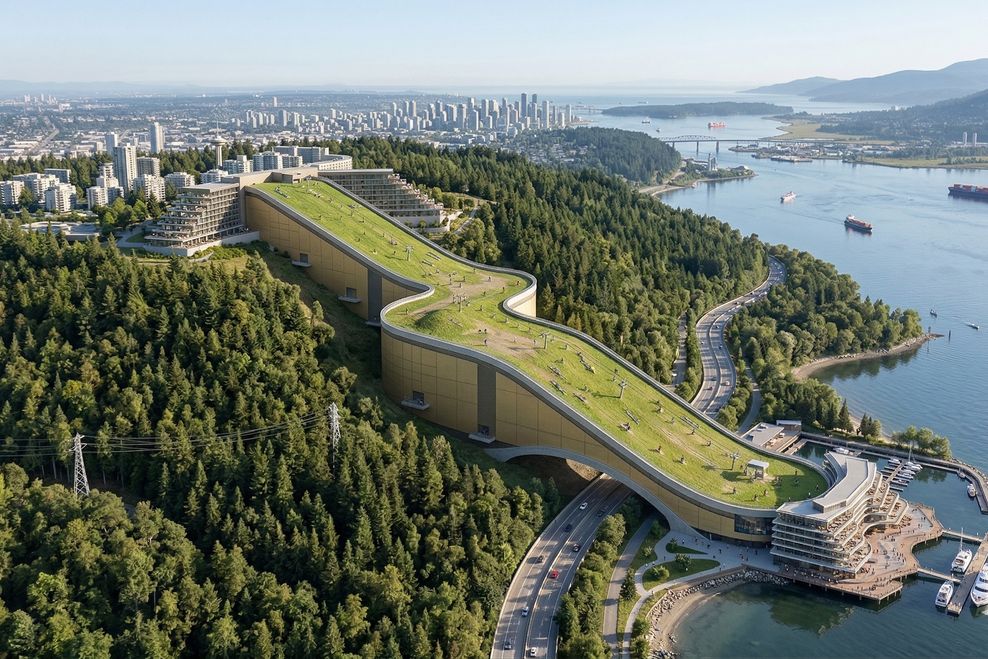
A sweeping new proposal could transform the north face of Burnaby Mountain into one of the most ambitious tourism and recreation developments ever conceived in North America.
The project, announced today, envisions a vast indoor and outdoor artificial ski and snowboard complex stretching continuously from summit to sea.
Named “Zeno Peak,” this megaproject combines a climate-controlled indoor alpine ski environment using artificial snowmaking and refrigeration with an outdoor rooftop dry ski slope surfaced in advanced synthetic materials. The development also includes two major hotel resorts totalling more than 700 guest rooms — one located at the mountain’s summit and another at the base along the shoreline of Burrard Inlet.
The location offers a range of spectacular views, from sweeping vistas at the summit of the complex to scenic perspectives along the waterfront.
- You might also like:
- There's still no timeline to build the SFU Burnaby Mountain gondola
- SFU campus atop Burnaby Mountain finally protected by a new permanent fire hall
- SFU opens long-awaited, $25-million First Peoples’ Gathering House
- Burnaby City Council rejects off-campus SFU student housing proposal with 1,400 units
The structure would extend approximately 900 metres (2,953 ft.) in length, beginning just west of Simon Fraser University’s (SFU) Burnaby campus atop the 370-metre (1,214-ft.) mountain — at the area of Kushiro Park and Mintara Restaurant (former Horizons Restaurant). From there, it would descend to a base at Barnet Marine Park. Just before the base, the structure would span Barnet Highway and the Canadian Pacific Kansas City (CPKS) railway with a structural bridge, creating a continuous connection between the mountainside and the waterfront.
The project represents an estimated private investment of over $7 billion, with stage one financing secured to cover architectural design, engineering, geotechnical analysis, and land costs secured. The company intends to attain a 99-year lease from the City of Burnaby for the public lands required.
Currently, the project is only in the very preliminary design stage ahead of its formal application submission.
“This project is about redefining what a destination can be,” said Gordon Macdonald, the CEO of Zeno Peak, in a statement.
“Zeno Peak isn’t just a ski facility — it’s a new kind of landmark that combines a mountain, a resort, and a year-round alpine experience into a single, cohesive environment. By working with the natural topography of Burnaby Mountain, this is as much an architectural and engineering achievement as it is a recreational one, while offering a scale and continuity that simply doesn’t exist anywhere else in the world.”
Not the actual final design; highly preliminary conceptual artistic rendering of Zeno Peak ski complex at Burnaby Mountain. (Zeno Peak)
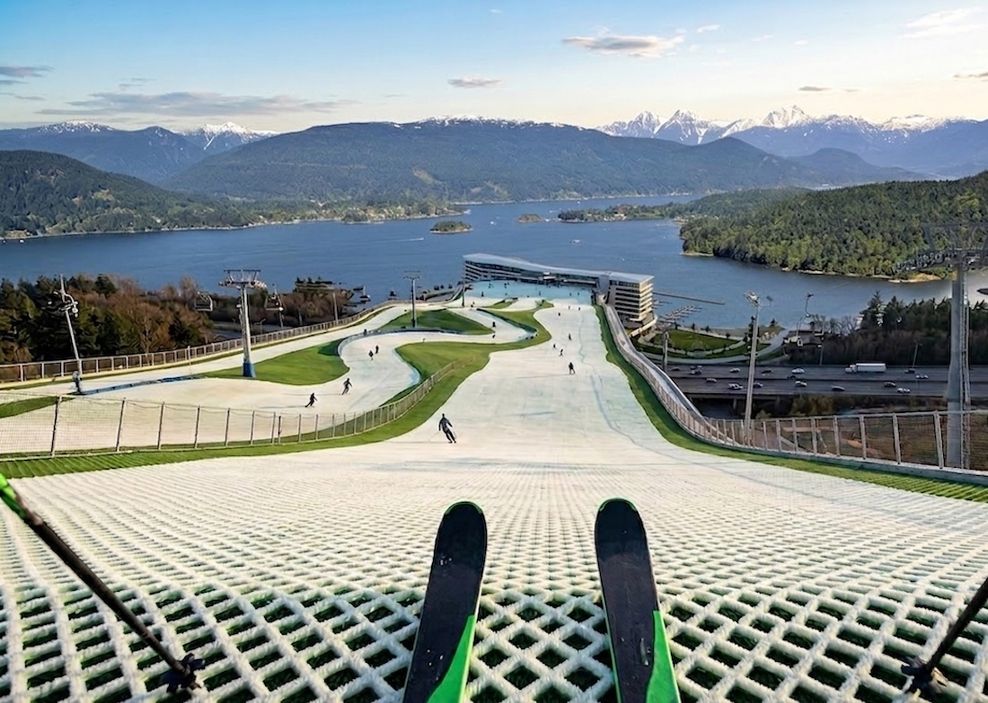
Not the actual final design; highly preliminary conceptual artistic rendering of Zeno Peak ski complex at Burnaby Mountain. (Zeno Peak)
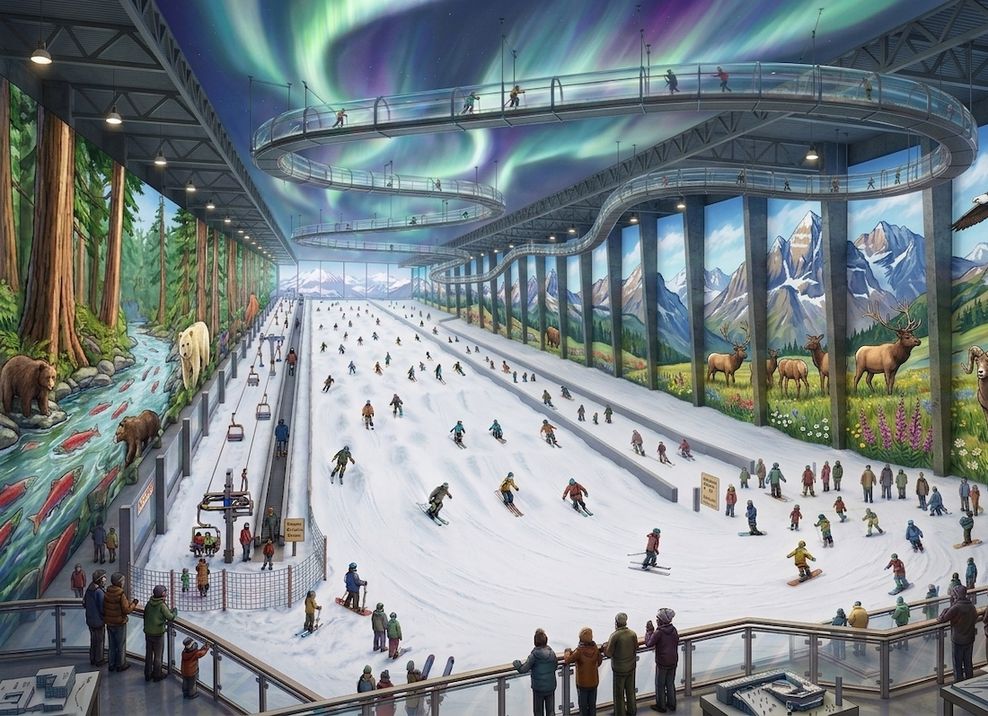
Not the actual final design; highly preliminary conceptual artistic rendering of Zeno Peak ski complex at Burnaby Mountain. (Zeno Peak)
World’s longest indoor ski hill, plus artificial synthetic rooftop surface used for outdoor skiing
Within this structure, the indoor ski run would measure approximately 720 metres (2,360 ft.), making it the longest indoor downhill ski slope in the world. It would feature a full range of terrain, including beginner (green), intermediate (blue), and expert/racing (black) runs, with the most advanced slope designed to meet International Ski and Snowboard Federation (FIS) standards. Access would be supported by integrated indoor lift and conveyance systems.
In addition, the facility would include a suspended 2.4-kilometre (1.5-mile) cross-country ski trail looping through the structure’s interior, as well as a 2,300-sq.-metre (25,000 sq. ft.) terrain park equipped with rails, jumps, and boxes for freestyle skiing and snowboarding, and an 840-sq.-metre (9,000 sq. ft.) ice skating rink.
The indoor environment would be highly immersive. Enclosed side walls would be covered with nature-inspired murals, while a state-of-the-art lighting and projection system would animate the ceiling — capable of simulating blue skies, changing weather conditions, or even a night sky illuminated with the northern lights.
In scale and ambition, the development would surpass global precedents such as SNO in Norway, SnowWorld Amneville in France, SnowWorld Landgraaf in the Netherlands, Big SNOW American Dream, and Ski Dubai, as well as major Chinese projects including Harbin Wanda Snow Park, L+SNOW Indoor Skiing Theme Resort in Shanghai, and Taicang Alps Resort near Shanghai.
Above the indoor slope, an 810-metre-long (2,657-ft.) outdoor ski run would span the rooftop of the structure. This surface would be lined with Neveplast — a proprietary synthetic material made from recycled and non-fossil sources, manufactured by an Italian company, designed to closely replicate the friction and feel of compact natural snow. Served by its own lift system, this rooftop run would rank among the longest outdoor synthetic ski slopes in the world. The same material is used for the Copenhill artificial downhill skiing attraction in Copenhagen, and at other outdoor artificial ski and tubing facilities elsewhere.
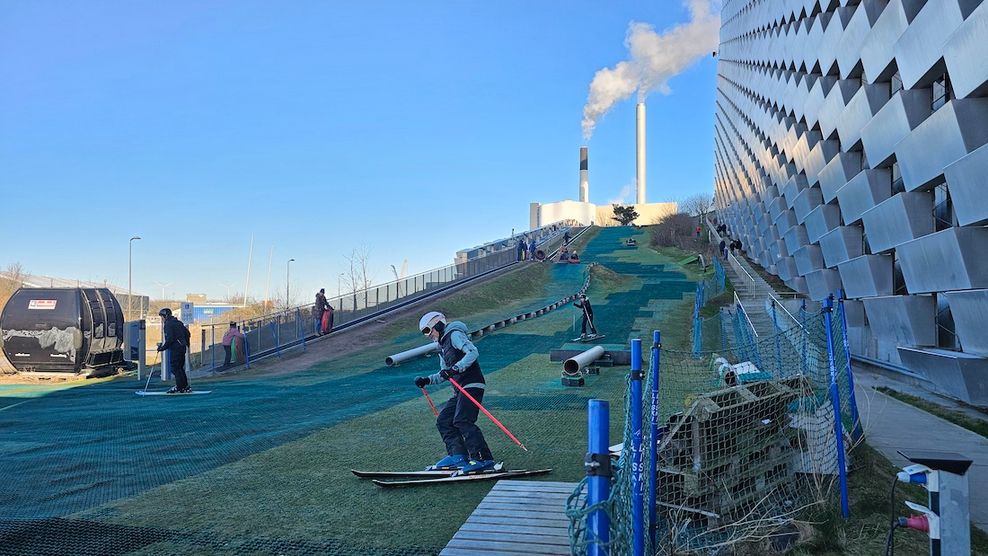
Copenhill synthetic downhill ski destination in Copenhagen. (Kenneth Chan)
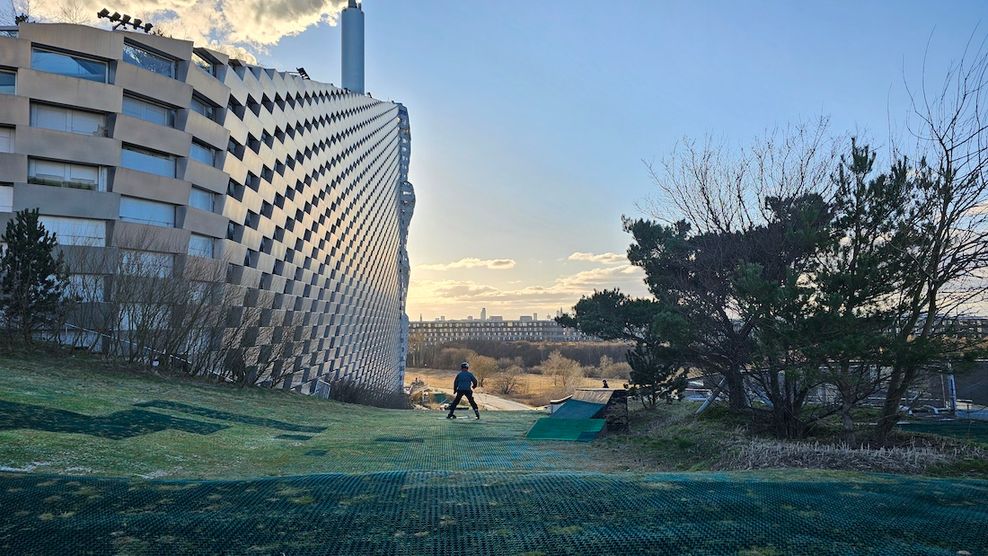
Copenhill synthetic downhill ski destination in Copenhagen. (Kenneth Chan)
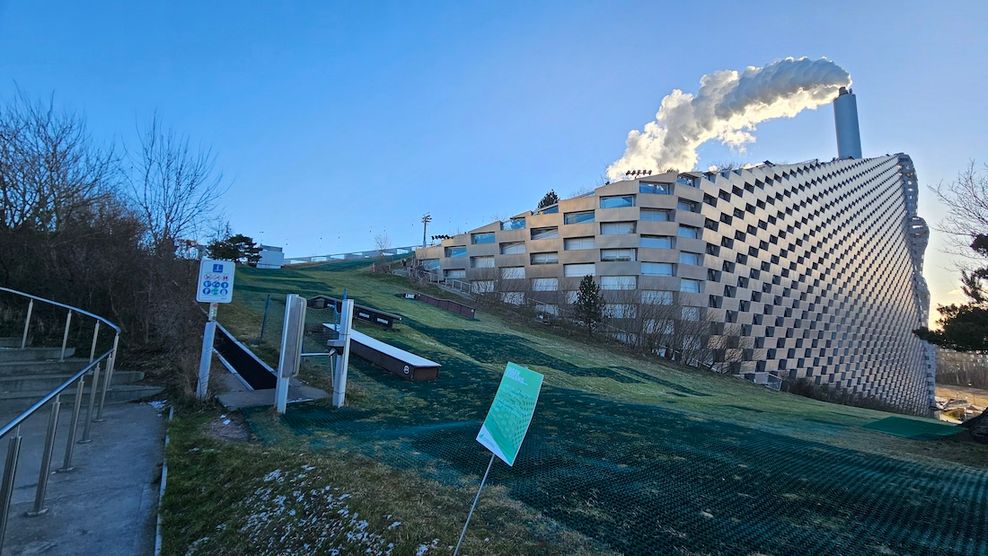
Copenhill synthetic downhill ski destination in Copenhagen. (Kenneth Chan)
Together, Zeno Peak’s indoor and outdoor ski runs would accommodate a wide range of guests, from first-time visitors to elite athletes. Permanent timing systems would allow for training, racing, and performance testing at a professional level.
The design strategically aligns with the natural grade of Burnaby Mountain, creating a continuous ski gradient that is moderated as the structure bridges over Barnet Highway and the CPKC railway.
“Removing reliance on natural snowfall” amid a warming climate
As climate patterns continue to shift across British Columbia, lower-elevation ski resorts in Metro Vancouver — such as Grouse Mountain, Cypress Mountain, and Mount Seymour — have faced increasingly inconsistent snowfall, shorter seasons, and growing reliance on artificial snowmaking, when the temperatures allow for it.
According to Metro Vancouver Regional District, by the 2050s, the watershed in the North Shore mountains could see a snowpack depth decrease by as much as 60 per cent in the early spring period, with warmer temperatures and more precipitation falling as rain at upper elevations during the winter months.
“The proposed Zeno Peak complex offers a fundamentally different approach by removing reliance on natural snowfall altogether. With its indoor, climate-controlled slope and outdoor synthetic ski surface, visitors would be able to ski, snowboard, and tube year-round, regardless of weather conditions. This ensures reliable access for everyone — from novice guests to high-performance athletes, including Olympians in need of year-round training facilities,” said Macdonald.
“Rather than replacing traditional mountain resorts, Zeno Peak would complement them, providing a dependable alternative during low-snow winters and a consistent training environment as climate variability continues to reshape winter sports in the region. Ultimately, this project will preserve British Columbia’s winter sports culture and heritage.”
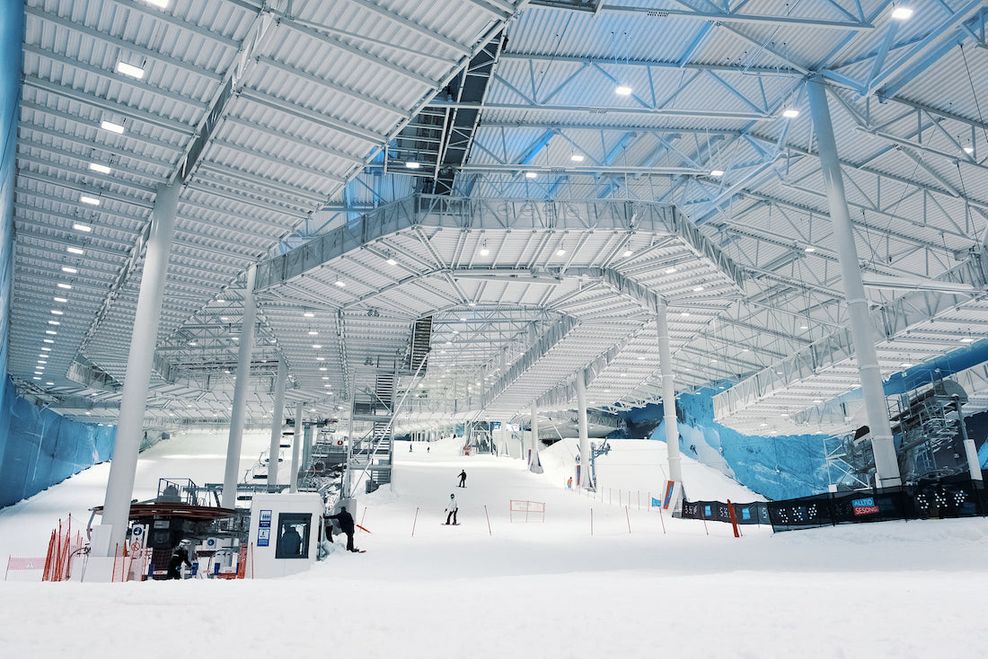
SNO indoor ski hill in Norway. (SNO)
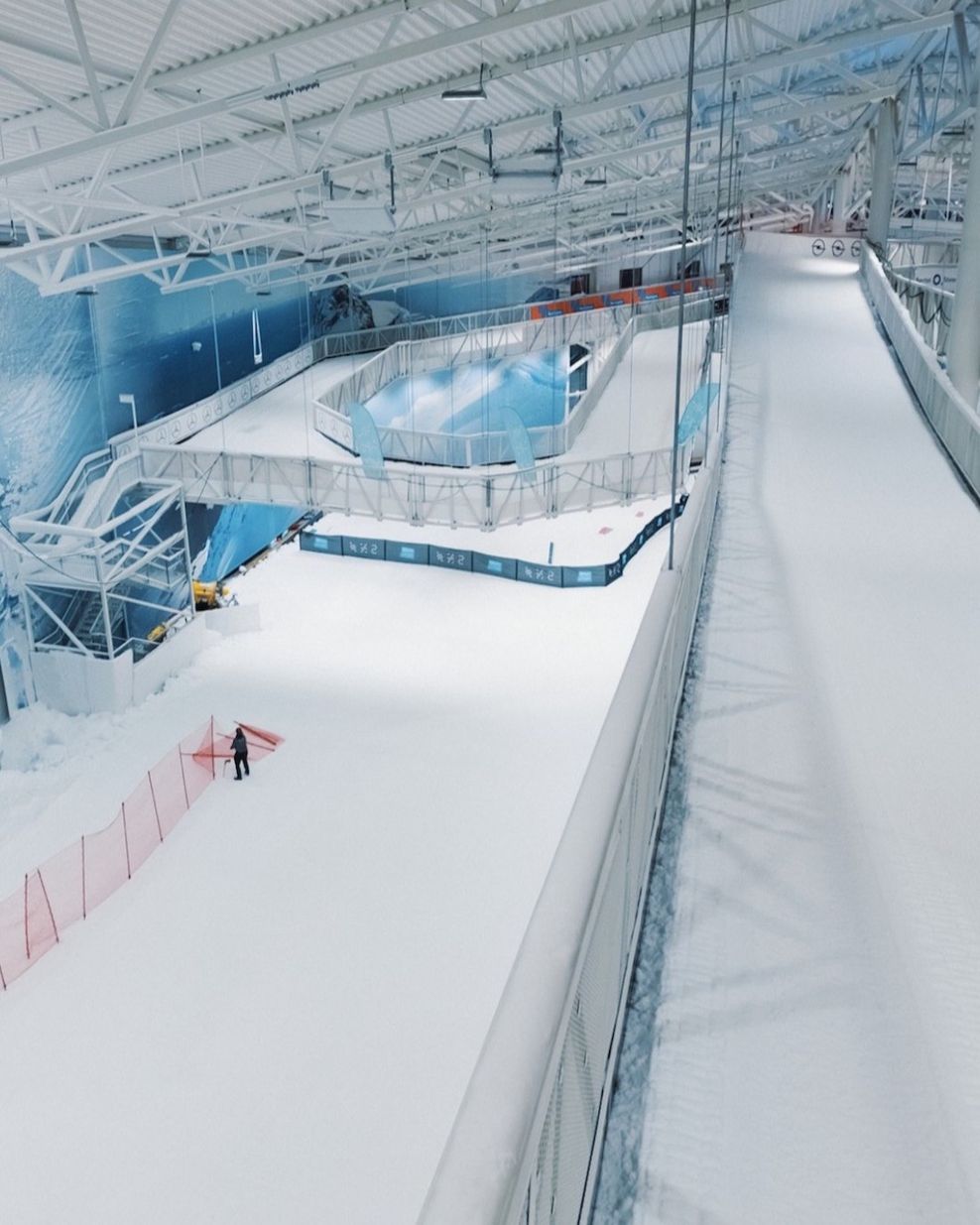
SNO indoor ski hill in Norway. (SNO)
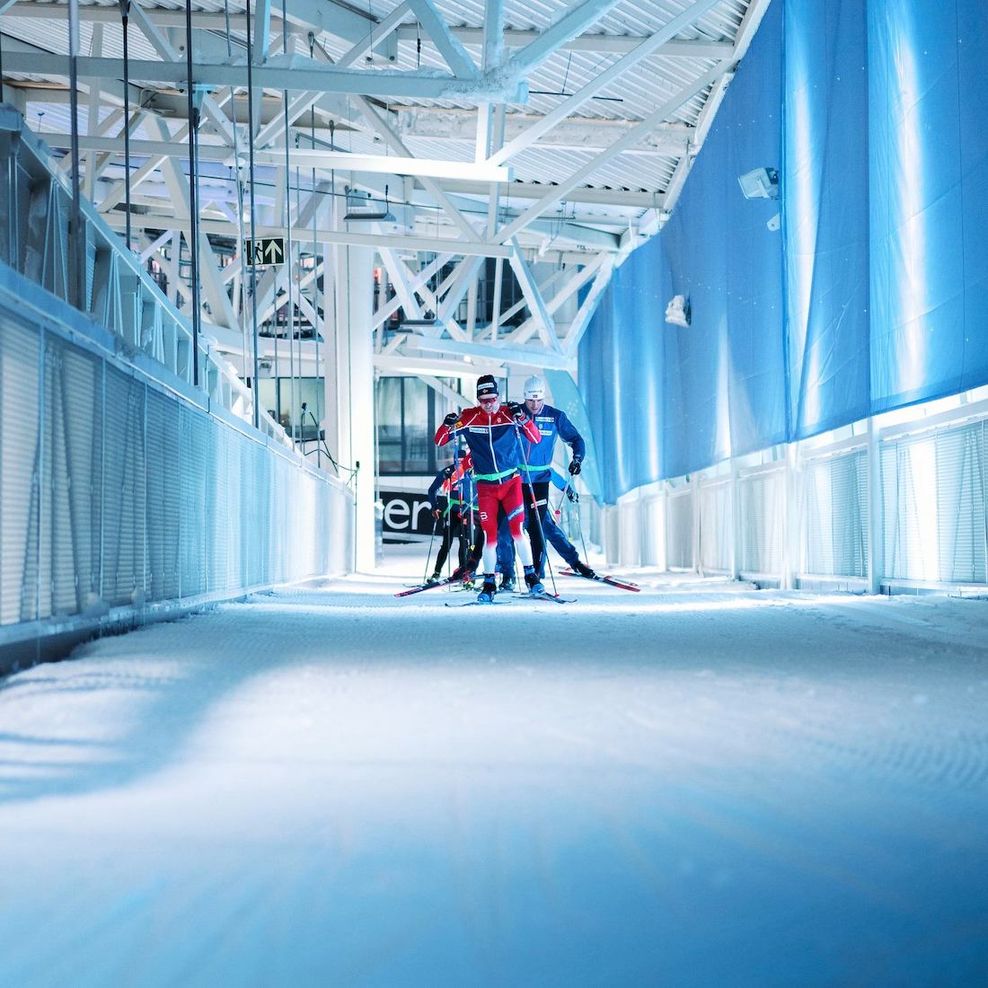
SNO indoor ski hill in Norway. (SNO)
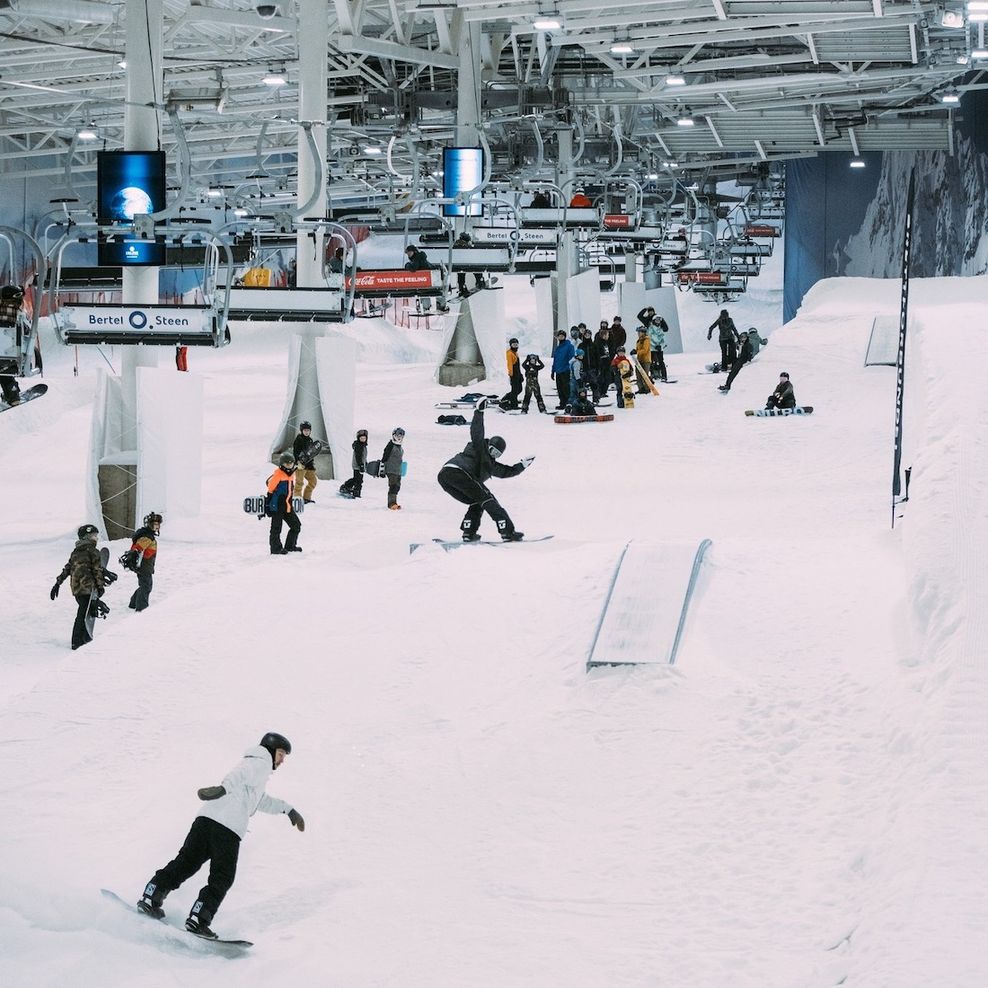
SNO indoor ski hill in Norway. (SNO)
Up to 9,000 people can ski or snowboard at the complex at any given time, including up to 6,000 people indoors and up to 4,000 outdoors on the rooftop. The chairlifts and conveyance systems can move up to 7,000 passengers per hour.
There would also be ski and snowboard rentals, as well as slope-side cafes, casual sit-down restaurants, and quick-service eateries, including an outdoor restaurant with a patio at the top of the outdoor ski run.
Monthly ski/snowboard passes would be offered for those looking to make frequent visits. As well, SFU students, faculty, and staff and UniverCity neighbourhood residents would be able to enjoy Zeno Peak’s runs at a substantial discount.
Along the edges of the rooftop outdoor ski run, a long staircase with hundreds of steps would be incorporated into the design. Open to the public at no cost, it would offer a fitness experience similar to the Coquitlam Crunch or a smaller-scale version of the Grouse Grind.
Two major hotels, including affordable guest suites for Olympian training; discount skiing for SFU students
Two hotels operated by renowned international brands would be fully integrated into this ski slope complex, including a seven-storey summit hotel with 265 guest rooms. As a community benefit, up to 25 affordable long-stay suites would be set aside for Olympians and other elite athletes for their training needs. As well, within this summit hotel building, there would also be a 1,900-sq.-metre (20,000-sq.-ft.) fitness gym and 2,800 sq. metres (30,000 sq. ft.) of dedicated academic space for SFU’s kinesiology program, including a sports medicine clinic.
The top floor of the summit hotel — providing spectacular views of the Lower Mainland — would offer a destination restaurant with an outdoor patio, along with about 2,300 sq. metres (25,000 sq. ft.) of event and meeting space. A potential future expansion could grow the number of guest rooms at the summit hotel by about 100 to a total of 350.
Down below, at the base of the ski complex, the 10-storey luxury waterfront hotel resort would offer 460 guest rooms, two destination restaurants (one on an upper level, and another right next to Burrard Inlet), 3,400 sq. metres (37,000 sq. ft.) of event and meeting space, a spa, an indoor swimming pool with a lazy river, hot pool, steam room, and sauna.
Both hotels would offer guests exclusive ski-in/ski-out lounge areas, providing direct and seamless access to the indoor ski slope. The waterfront hotel includes a new marina for the area.
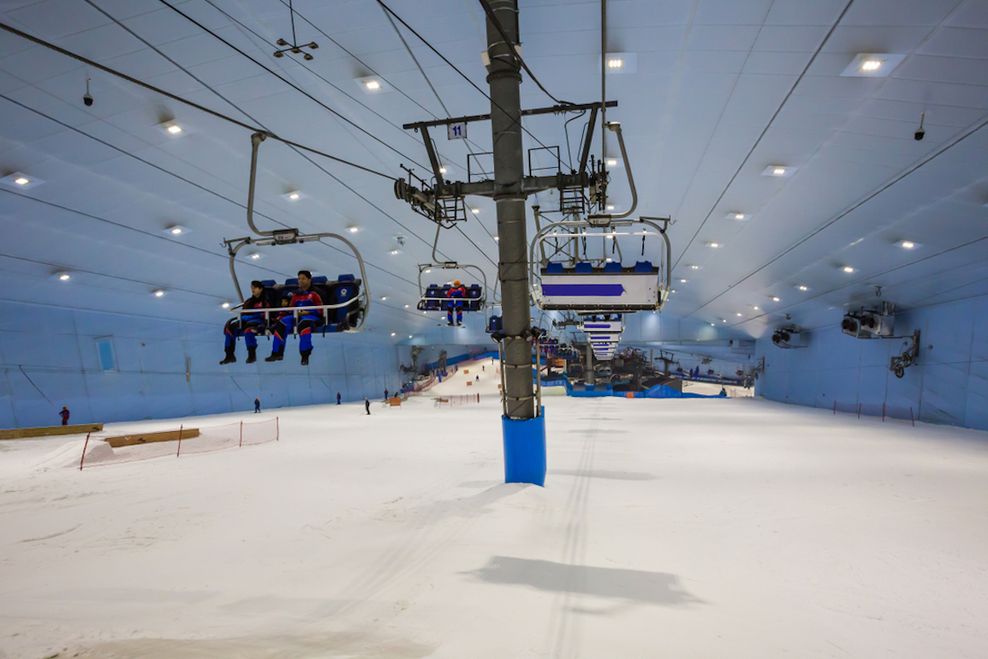
Ski Dubai indoor ski hill. (M101Studio/Shutterstock)
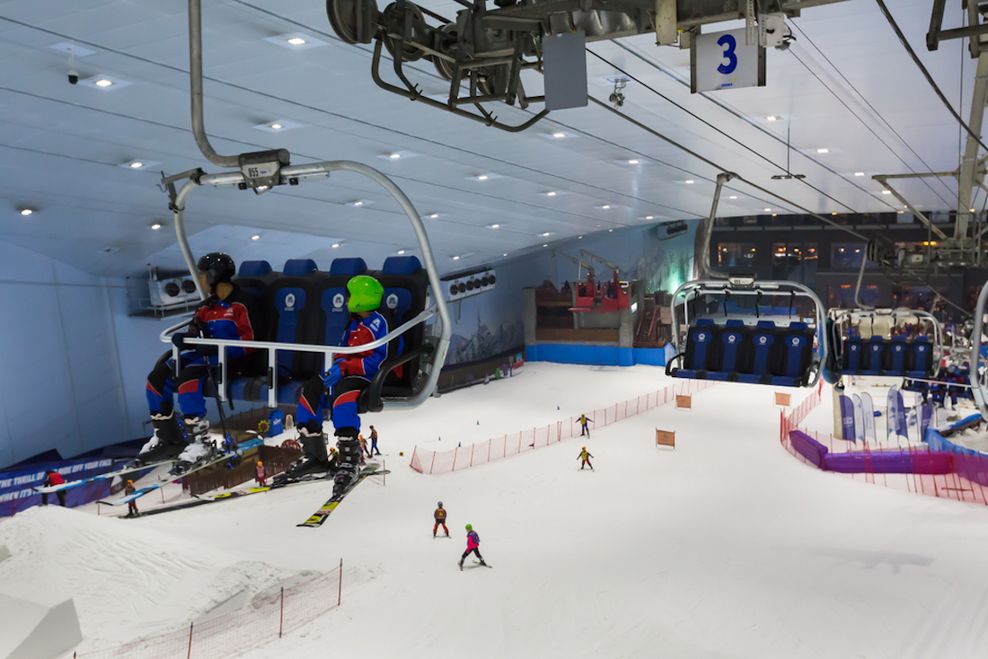
Ski Dubai indoor ski hill. (M101Studio/Shutterstock)
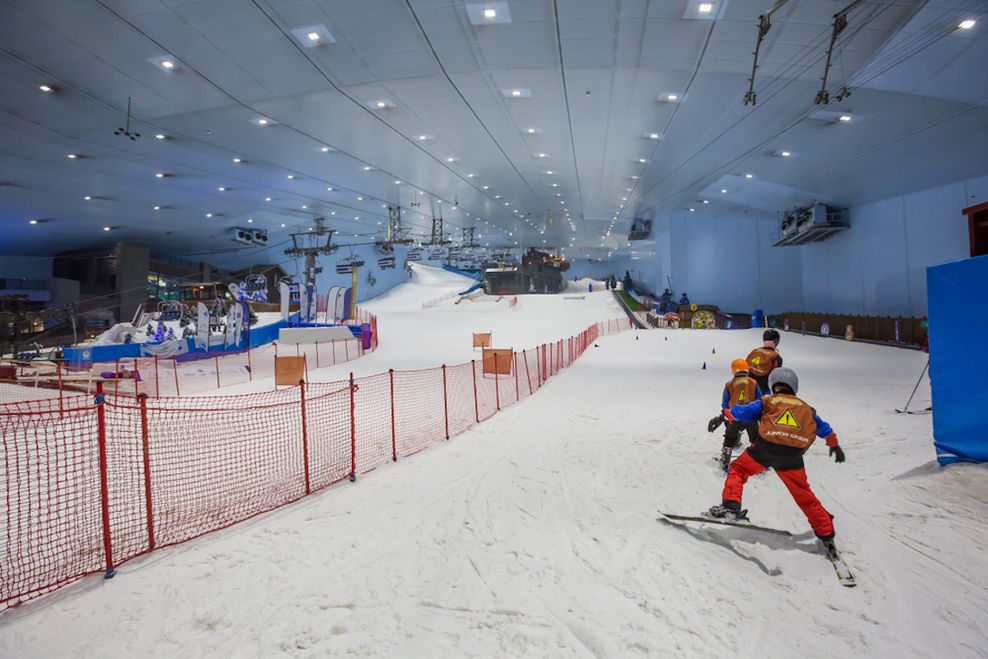
Ski Dubai indoor ski hill. (M101Studio/Shutterstock)
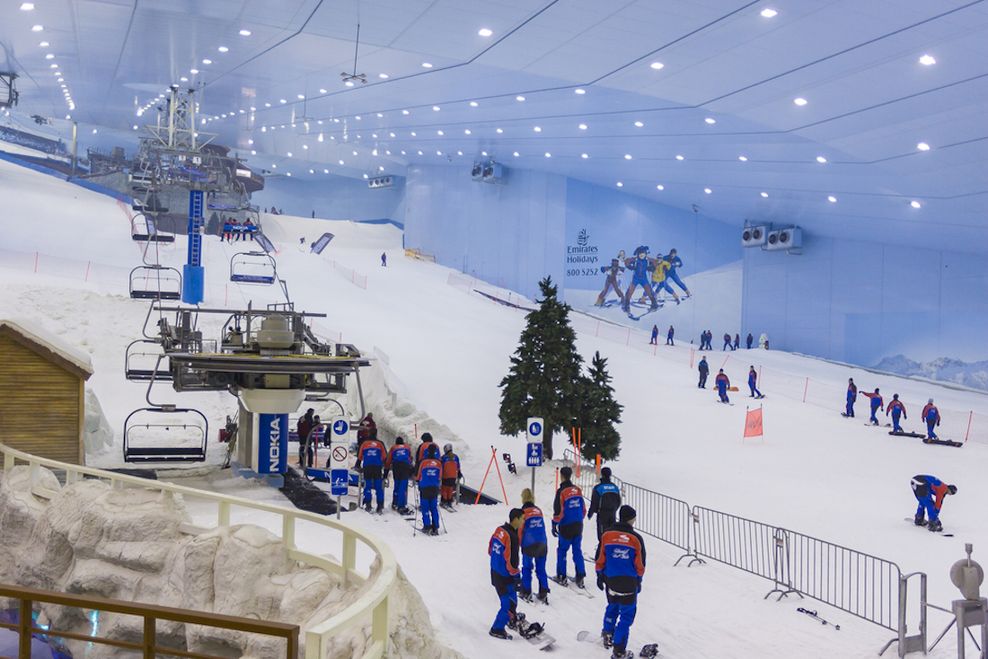
Ski Dubai indoor ski hill. (M101Studio/Shutterstock)
If built, the entire Zeno Peak complex — including its hotels and other mixed uses — would generate over 4.5 million sq. ft. of indoor building floor area.
The complex is planned for the north-facing slope of Burnaby Mountain to minimize solar exposure, improving energy efficiency and therefore reducing the electricity required for the indoor ski run’s refrigeration. Solar panels would still be installed on strategic surfaces to help offset a portion of the facility’s energy needs.
From an engineering perspective, the project presents very significant challenges. Constructing a long, sloped structure across steep terrain while maintaining a consistent ski gradient would require highly advanced design solutions. Maintaining indoor snow conditions over such a distance would also demand sophisticated climate control systems. These systems would need to ensure consistent temperature, humidity, and snow quality throughout the entire slope.
Extensive new utilities and infrastructure would require careful planning, including a new BC Hydro electrical substation, an additional municipal water booster pumping station, and expanded sewerage connections.
The large rooftop would double as a rainwater runoff collection system, with the water stored and treated in large tanks for indoor artificial snowmaking use.
Environmental considerations would likely play a major role in determining the proposal’s feasibility. Burnaby Mountain contains sensitive ecosystems and streams, making it essential to minimize impacts on vegetation and wildlife. The project would require the removal of mountaintop and waterfront parkland and over 4,000 trees — factors likely to draw significant scrutiny. To address the mountain’s wildfire risk, advanced suppression systems — including heavy-duty sprinklers — would be installed along both sides of the structure for its entire length.
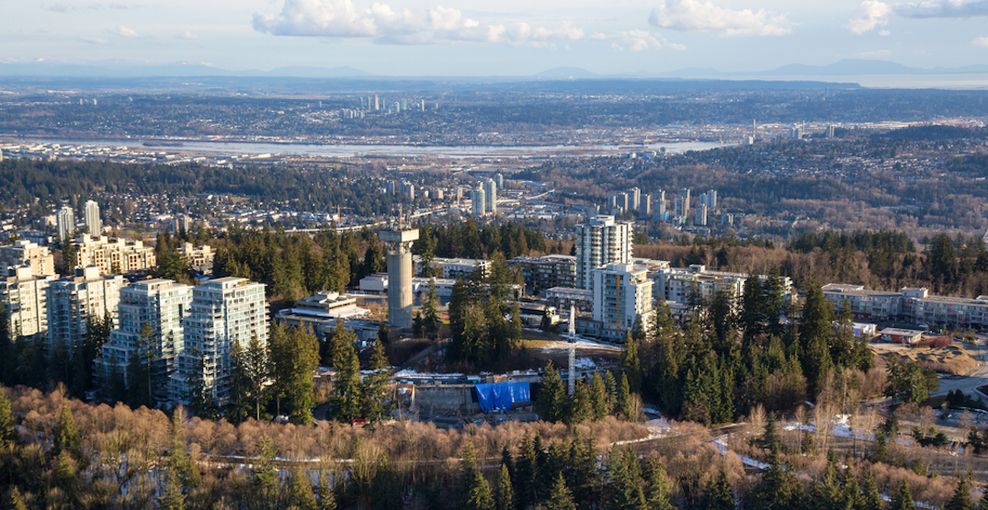
Views of the Metro Vancouver region from Simon Fraser University’s campus atop Burnaby Mountain. (EB Adventure Photography/Shutterstock)
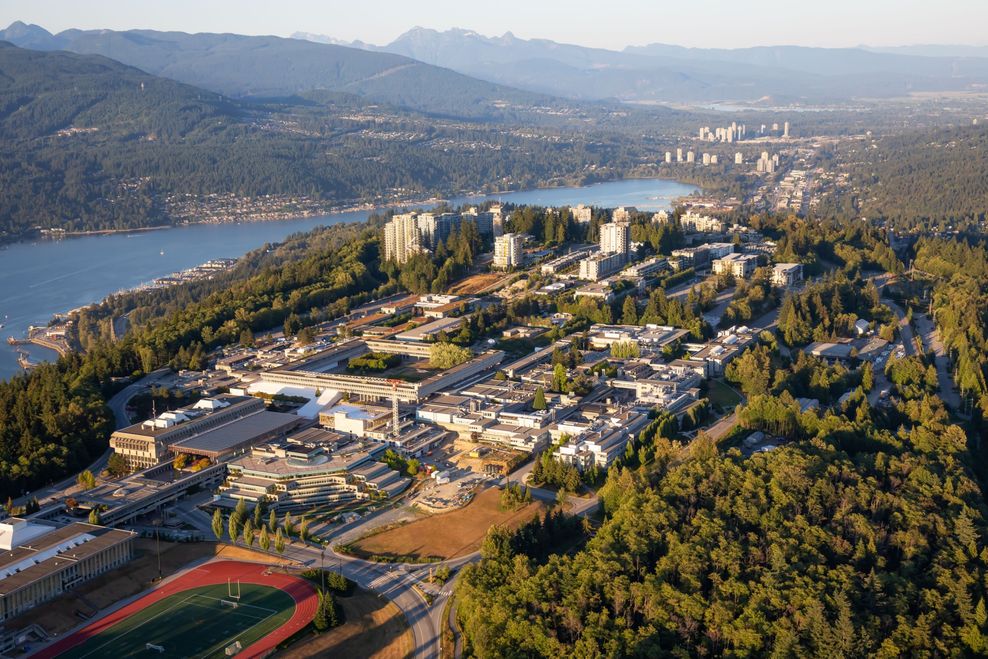
Views of the Metro Vancouver region from Simon Fraser University’s campus atop Burnaby Mountain. (EB Adventure Photography/Shutterstock)
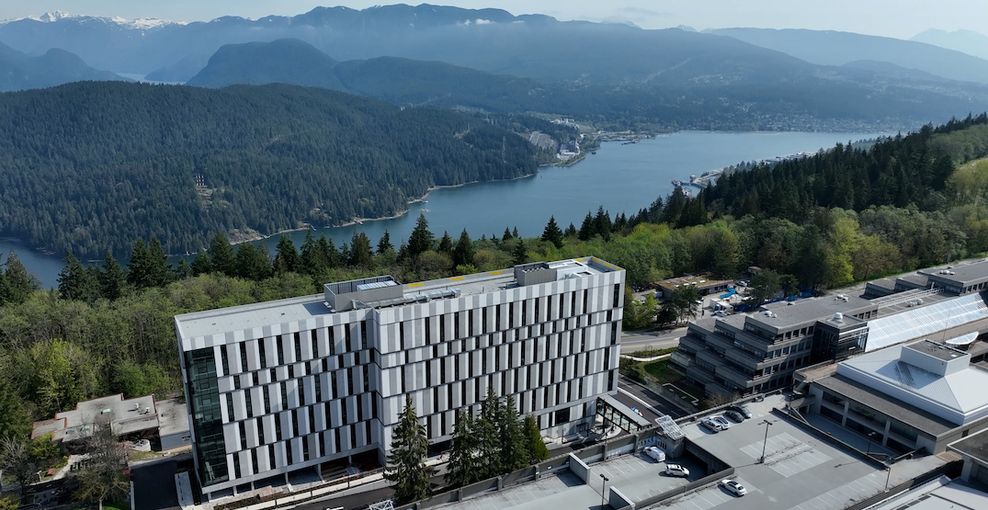
Burrard Inlet and mountain views from Simon Fraser University’s campus atop Burnaby Mountain. (Ledcor)
Significantly higher visitation if TransLink’s gondola is also built
As well, the scale of this development would require upgraded transportation infrastructure to handle visitor flow. About 1,400 underground vehicle parking stalls would be provided — 600 located at the mountaintop and 800 at the base, with the complex’s existing mountaintop access road of Centennial Way widened with new shoulder lanes and the base seeing the addition of a new traffic signal-controlled intersection on Barnet Highway to establish a new access road.
Additionally, TransLink bus routes that serve SFU could be rerouted to make an additional stop at Zeno Peak’s summit entrance, while major developer-funded upgrades could be made to the free SFU campus community shuttle bus service, with a new connection reaching TransLink’s future Burnaby Mountain gondola line from SkyTrain’s Production Way-University Station.
If the various approvals are timely, construction on Zeno Peak could begin in 2030 for an opening by late 2035.
Once built, Zeno Peak could potentially generate up to $250 million in local economic spinoffs per year and support up to 900 full-time jobs, including job opportunities for SFU students.
It is expected to see over 2.2 million skiers, snowboarders, and tubers annually. If TransLink’s Burnaby Mountain gondola line is also achieved, this figure rises to over 3.6 million per year.
“Our goal is to create a destination that becomes part of the region’s identity,” said Macdonald.
“Zeno Peak has the potential to bring new energy to tourism, create lasting economic opportunities, and position Burnaby on the global map as a place where innovation and experience come together.”
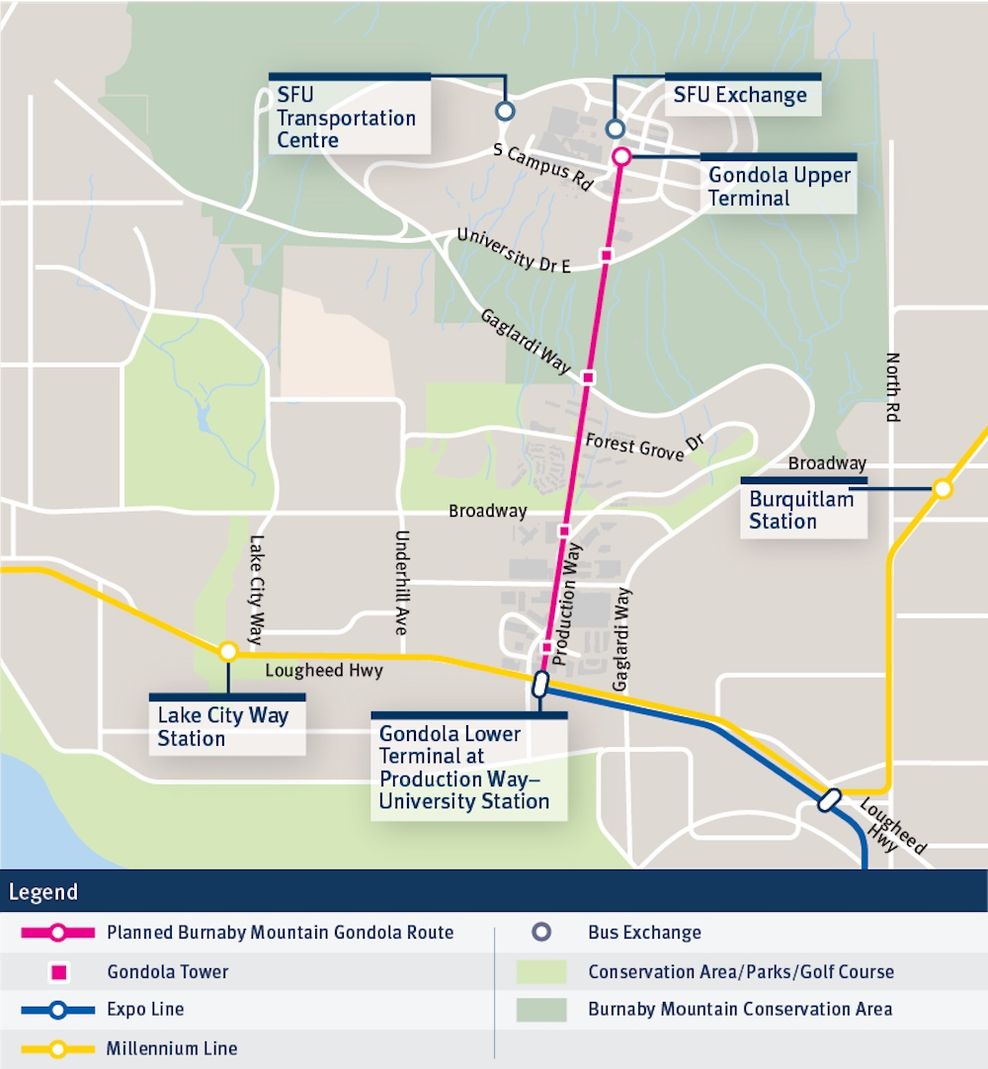
SFU Burnaby Mountain gondola route map. (TransLink)
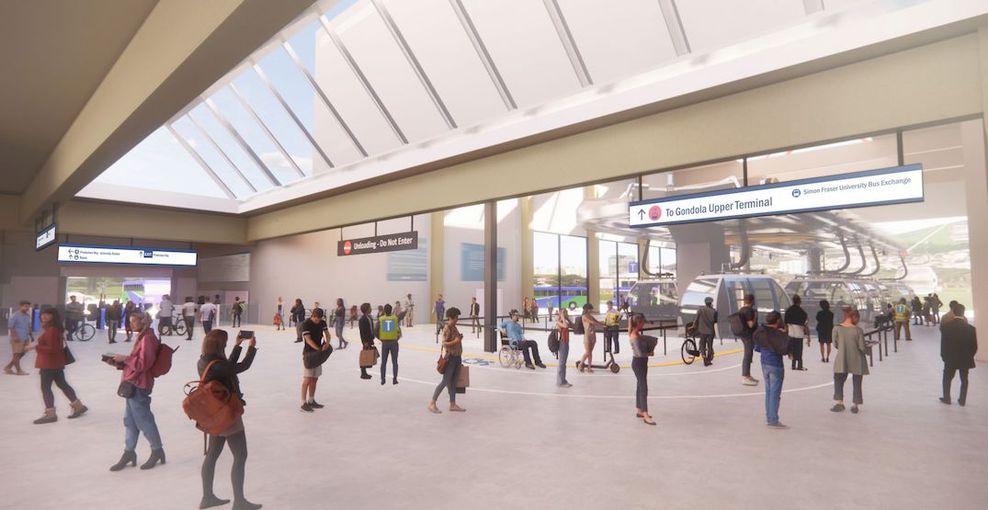
Artistic rendering of the SFU Burnaby gondola lower terminal building next to SkyTrain Production Way-University Station. (TransLink)
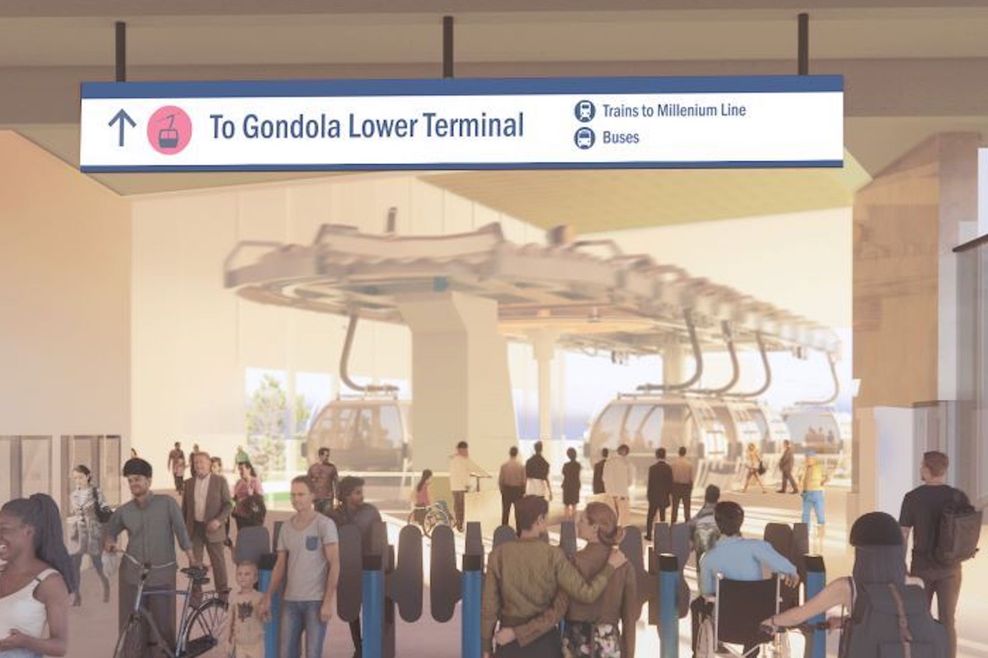
Artistic rendering of the SFU Burnaby gondola upper terminal located atop Burnaby Mountain. (TransLink)
- You might also like:
- There's still no timeline to build the SFU Burnaby Mountain gondola
- SFU campus atop Burnaby Mountain finally protected by a new permanent fire hall
- SFU opens long-awaited, $25-million First Peoples’ Gathering House
- Burnaby City Council rejects off-campus SFU student housing proposal with 1,400 units