


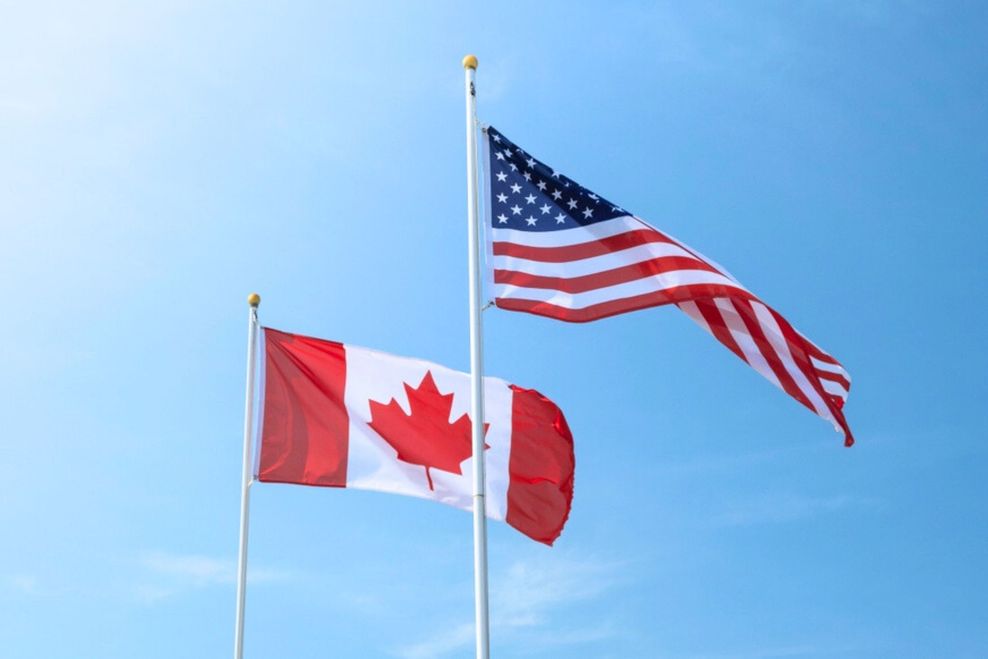
The Canada-United States tariffs spat is already costing Canadian families quite a bit in taxes, according to a new report.
Public policy think tank MEI calculated how much Ottawa’s counter-tariffs on American goods have cost Canadians in taxes and released its findings on Tuesday.
It has been four months since President Donald Trump first slapped taxes on Canadian products in March. According to MEI, the Government of Canada’s retaliatory tariffs on the U.S. added $1.51 billion in new taxes in April and May alone.
“Tariffs, whether they are applied unilaterally or in retaliation, are taxes by another name and they squeeze families just the same,” said Emmanuelle B. Faubert, economist at the think tank. “They artificially drive up the cost of goods imported into Canada, and it’s Canadian families and businesses who end up footing the bill.”
MEI referred to the Finance Department’s latest numbers, which show a 179.8 per cent increase in tariff collections compared to the previous year. It says this is a result of the government’s “tit-for-tat response” to U.S. tariffs.

Ultraskrip/Shutterstock
The think tank says this works out to $91.50 in new taxes paid by every Canadian household for the months of April and May alone. It adds that if this trend persists, Canadians can expect to pay an extra $9.1 billion in new taxes this year. This would cost families $548.97 in extra tariff costs per household by the end of Ottawa’s budget year on March 31, 2026.
In an MEI-Ipsos poll released on July 10, 77 per cent of Canadians said that retaliatory tariffs on American goods contribute to raising the price of essentials in Canada.
It doesn’t help that Canadians have already been feeling the pinch for the past few months, struggling through the cost-of-living crisis.
With the deadline for Ottawa and Washington to reach an agreement coming up on Friday, the think tank suggests Canada “ditch trade barriers altogether, not just with the U.S., but with the entire world.”
“Protectionism should not be doubled down on,” says Faubert. “If we want to strengthen our economy, boost investment, and see standards of living rise, we need to be tearing down barriers, not erecting new ones.”
The MEI cited a Business Council of Canada study from 2016 that found that unilateral free trade would boost Canadian GDP by 1.67 per cent and lower consumer prices in the country by 1.51 per cent.