


Opinion: Vancouver keeps squandering prime urban waterfront sites on oddly placed elementary schools


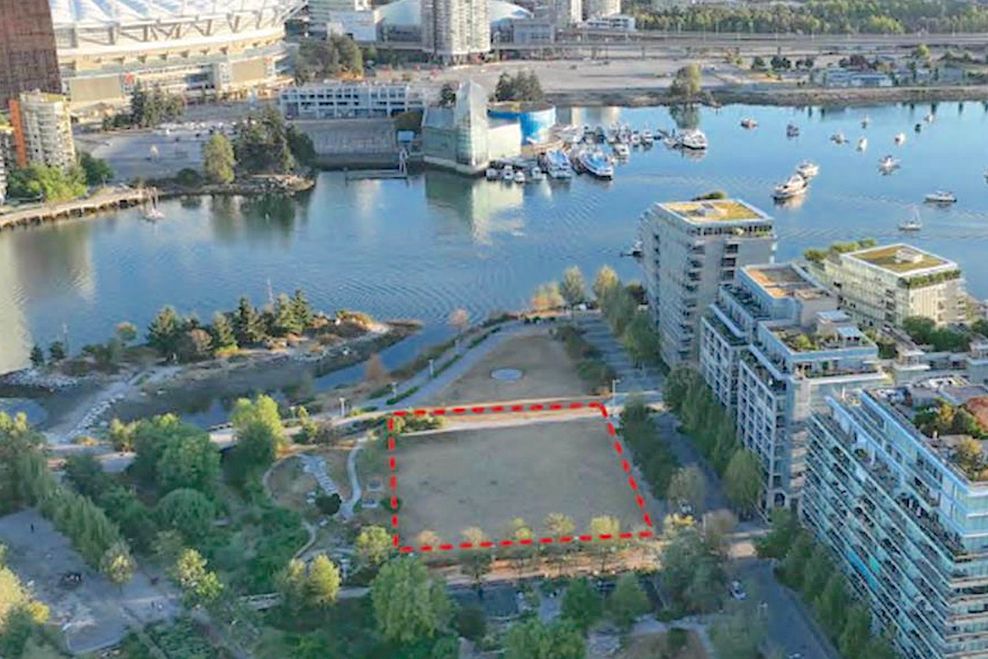
Let us start with what should be very obvious: the area in and around the downtown Vancouver peninsula needs more elementary schools, now and over the very long term.
As the downtown Vancouver peninsula and surrounding area continue to densify with new residential uses, including future developments in Northeast False Creek and across the vast Broadway Plan area, the demographic reality is that many more families with children will be living in the area.
If the city wants stable, multi-generational communities instead of purely transient ones, then walkable, well-located public schools are not optional. These are core, long-term community facilities.
Currently, Vancouver City Council is in the midst of considering the rezoning application by the Vancouver School Board (VSB) to build the long-envisioned Olympic Village Elementary School project right on Hinge Park at the northernmost foot of Columbia Street, immediately adjacent to the Southeast False Creek seawall — a highly central waterfront location.
City Council heard from roughly three dozen speakers during the public hearing on Thursday, Feb. 12, 2026, which ran until 12:30 a.m. and became one of the latest meetings of the current term. Given the late overnight hour, elected officials were unable to move into deliberations for a decision, and a second public hearing date has been scheduled for Thursday, Feb. 26, 2026 to complete the process for this application.
- You might also like:
- Opinion: Let’s face it, Vancouver's waterfront is boring
- New Olympic Village Elementary School to feature rooftop play area
- New Coal Harbour elementary school below social housing gets a name
- Times Square-style transformation ahead: 800 Granville project approved by Vancouver City Council
- A Whitecaps soccer stadium with an entertainment district — and maybe SkyTrain? What’s next for Vancouver's Hastings Park and the PNE
Supporters of the project said the Olympic Village neighbourhood has a very high number of children and has waited nearly two decades for a promised elementary school. Existing public schools nearby are overcrowded and families face stressful lotteries and long commutes. A larger school on this site would finally meet demand, let more kids walk to school, reduce longer-distance driving, and avoid more years of delay. Adding height for a vertical school is seen as the only way to fit enough long-term capacity without expanding the building further into the surrounding park space.
Conversely, opponents during the public hearing said they want a school, but not one this big on this particular site. They argue the size — four levels for an enrolment capacity of up to 630 students — would worsen traffic, curbside parking shortages, and emergency access, and would overwhelm a narrow street network. They object to losing open grassy park space, changing the neighbourhood’s character, and adding noise and lighting impacts, and assert the project should be smaller or moved to a better location after more public consultation.
There were some suggestions that an elementary school of this size, creating the largest in the VSB system, would lead to less-than-optimal child development and educational outcomes.
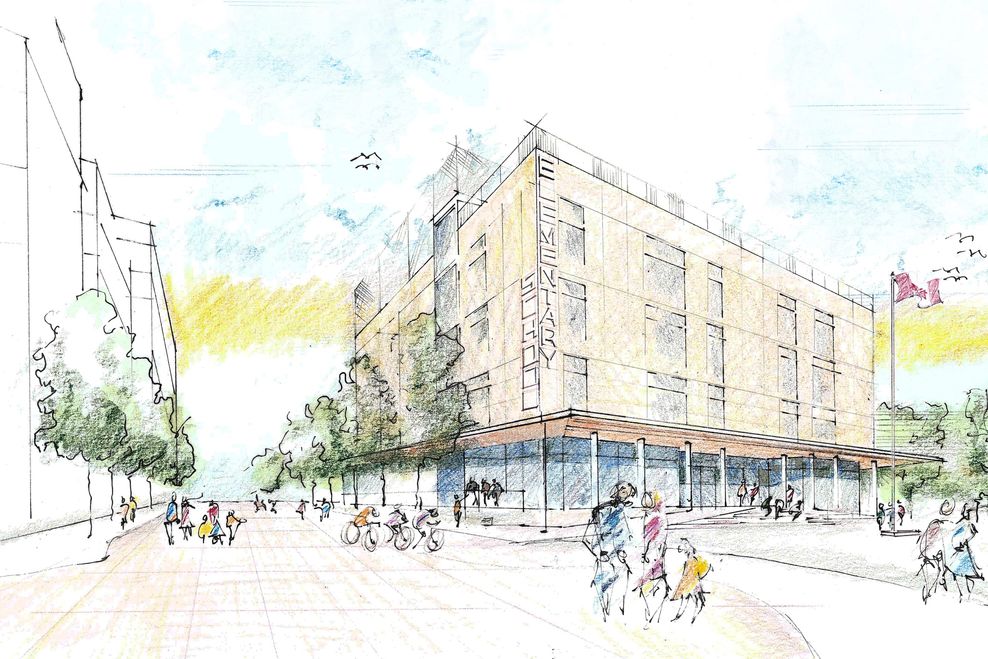
May 2025 highly preliminary concept of Olympic Village Elementary School. (McFarland Marceau Architects/Vancouver School Board)
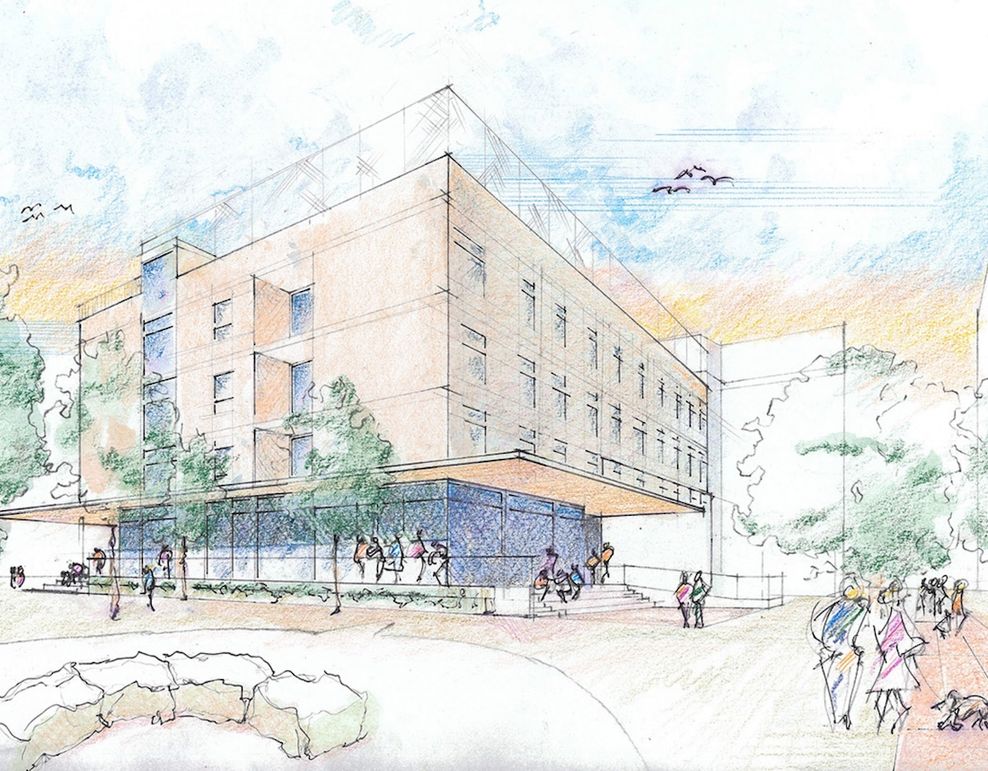
May 2025 highly preliminary concept of Olympic Village Elementary School. (McFarland Marceau Architects/Vancouver School Board)
But let us zoom out to consider another argument against this project. It is not an argument against building elementary schools or larger schools; it is an argument about where Vancouver keeps choosing to locate them in and around downtown.
Over the past quarter century, based on following previously established area plans for new high-density residential neighbourhoods, the City and VSB have developed a strange and entrenched consistent habit: placing elementary schools on some of the most prominent, high-value, high-profile pieces of urban land it has — especially along the downtown Vancouver waterfront and next to major entertainment anchors.
Every new elementary school built to accommodate the changing and growing needs of the immense residential developments since the 1990s has been situated in such a location.
There is Elsie Roy Elementary School right on the North False Creek waterfront in Yaletown. The new Seaside Elementary School on the Coal Harbour waterfront, opening in September 2026. The controversial proposed Olympic Village Elementary School right on the Southeast False Creek seawall.
And then there is Crosstown Elementary School, sitting oddly immediately adjacent to Rogers Arena and near BC Place Stadium.
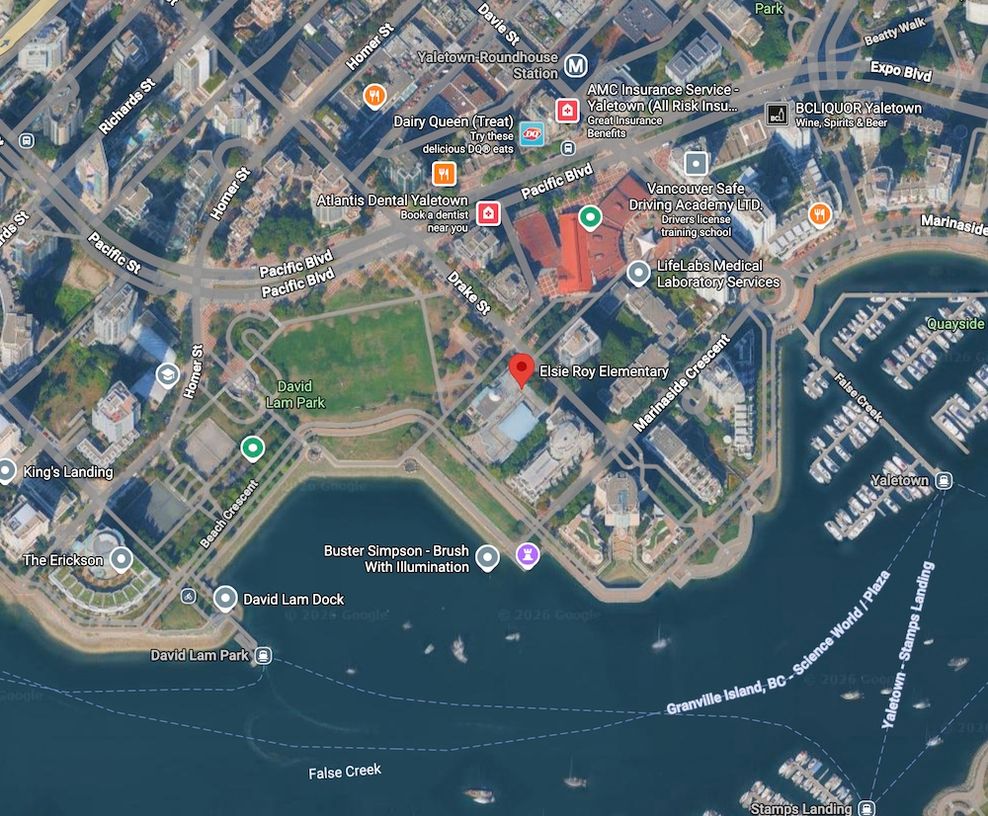
Elsie Roy Elementary School built next to the North False Creek seawall. (Google Maps)
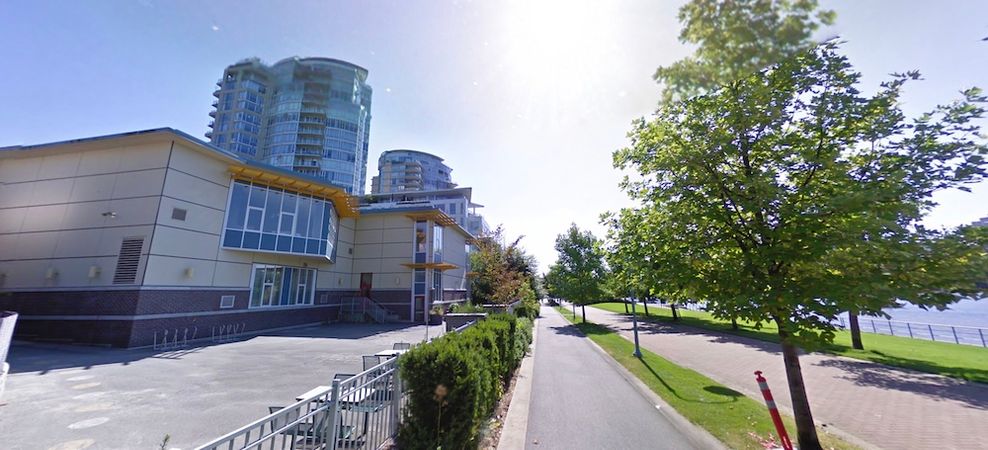
Elsie Roy Elementary School built next to the North False Creek seawall. (Google Maps)
Adding to the boring waterfront, instead of creating active and vibrant uses
In major great cities, the most central waterfronts, harbourfronts, and/or riverfronts are treated as civic front stages. These places are packed with vibrant life: shops, restaurants, cafes, museums, galleries, cultural venues, community and recreational centres, hotels, convention centres, attractions, and other active commercial uses — spaces that generally stay active from morning to late at night.
They are not just visually attractive. They are economically productive, culturally expressive, and socially magnetic. They are where a city shows itself — to residents and visitors.
Vancouver’s downtown and False Creek waterfront areas, by contrast, are lined with uses that are, by design, quiet, inward-facing, and mostly closed to the general public for large parts of the day, the week, and the year. An elementary school is vital to a residential neighbourhood, but it is not a waterfront-defining civic destination.
This is part of the even bigger problem that much of Vancouver’s central waterfront areas have been given over almost entirely to residential use, with long continuous stretches of the seawall and adjacent public realm fronted not by retail, restaurants, and cultural spaces, but by ground-oriented residential suite entrances and living room windows. Instead of an active, public-facing edge, the municipal government has created kilometres of polite urban frontage — pleasant to walk past, perhaps, but offering very little reason to stop or linger.
Placing elementary schools on the waterfront follows the same logic: it further dedicates some of the city’s most valuable and visible public edges to inward-looking, single uses that are largely inactive outside school hours, reinforcing a pattern that prioritizes private or semi-private uses over truly civic, all-day public life.
This is not to say that elementary schools and residential uses are a poor fit for such central waterfront areas, but at the bare minimum they are certainly not suitable for ground-level frontage uses.
It cannot be emphasized enough that such uses are a poor fit for Vancouver’s most irreplaceable public stages.
Built in 2004, Elsie Roy Elementary School in Yaletown was the earliest signal of this approach. It occupies a piece of the North False Creek waterfront that could have been used by something far more broadly public, given its location immediately adjacent to the seawall pathway.
Coal Harbour’s new Seaside Elementary School continues the same mantra for the most prominent of the school locations built over the past few decades. Located at the northernmost foot of Broughton Street, it is fronted by the Coal Harbour seawall. This is one of the most visible, postcard-perfect parts of Vancouver — mountains, marina, seawall, tourists, and residents all colliding in a single, high-profile place.
Seaside Elementary School occupies the the first four levels of a new 11-storey building, with the upper levels dedicated to a childcare facility and 60 social housing units. Previously, this site, adjacent to Coal Harbour Community Centre, was a surface vehicle parking lot, with the school component planned for the parcel under the City’s 1990-approved Coal Harbour Official Development Plan (ODP).
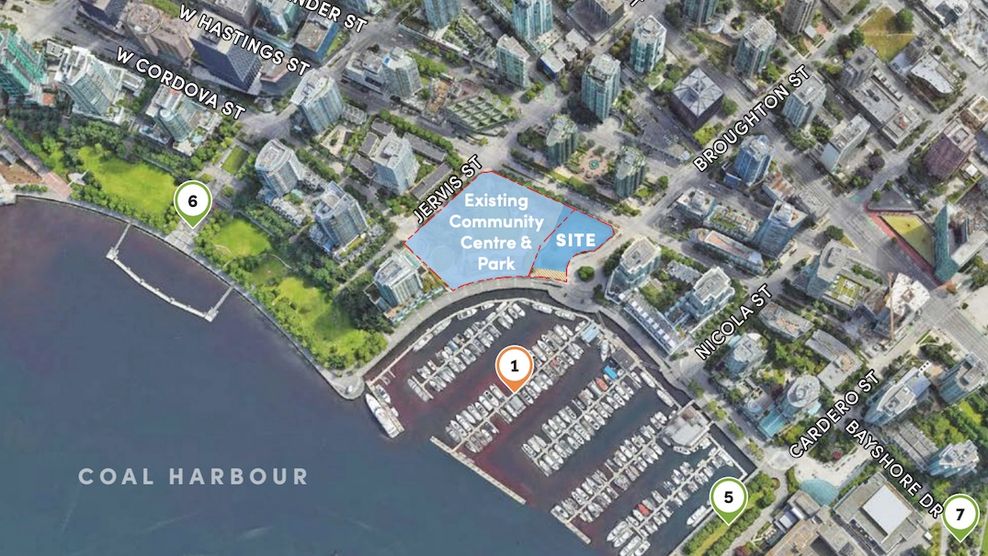
Site of the Coal Harbour elementary school, childcare, and social housing complex. (Henriquez Partners Architects/Vancouver School Board/City of Vancouver)
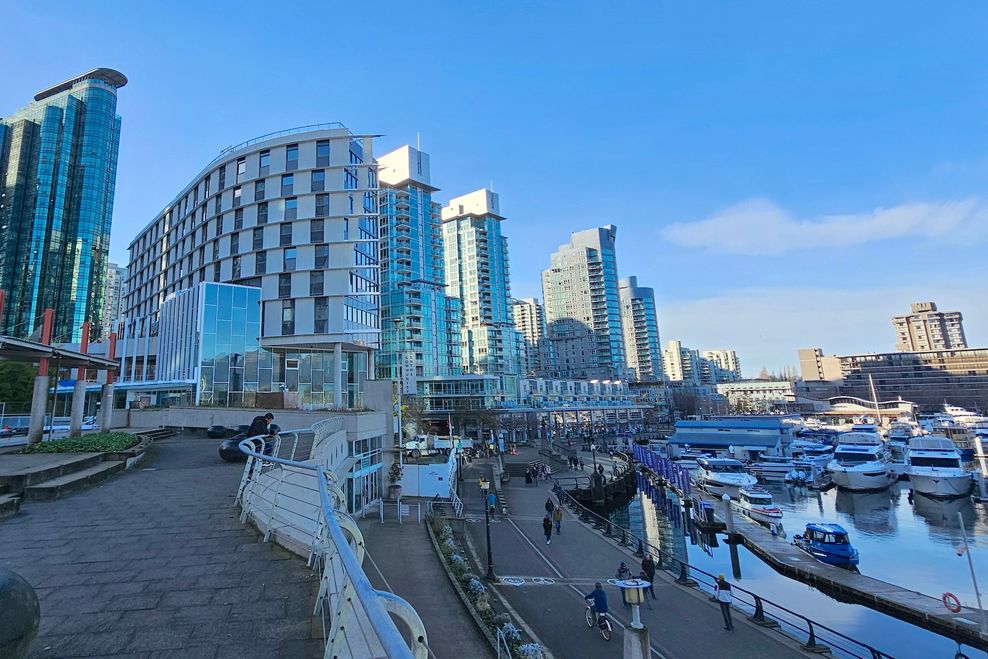
Construction progress on the new 11-storey Coal Harbour building with social housing and Seaside Elementary School, as of Nov. 28, 2025. (Kenneth Chan)
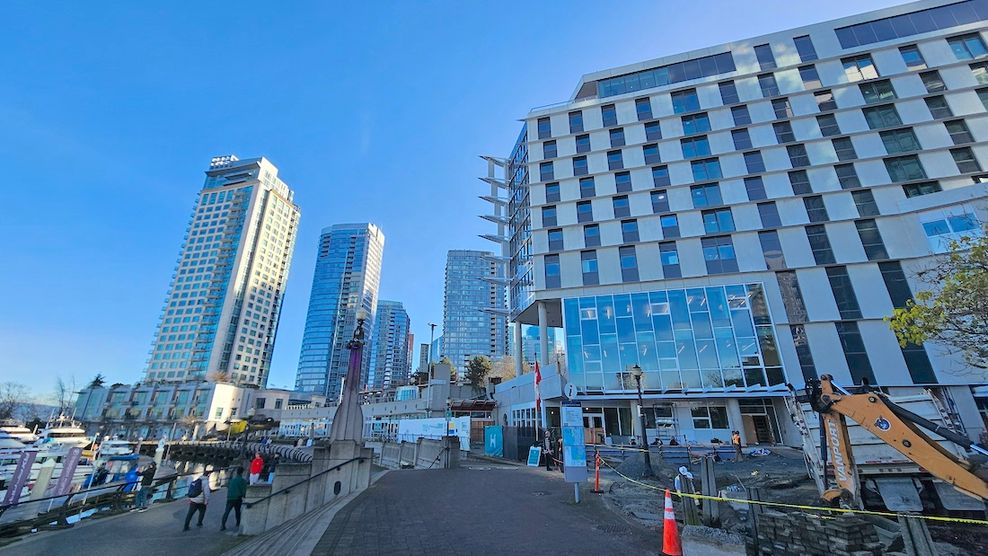
Construction progress on the new 11-storey Coal Harbour building with social housing and Seaside Elementary School, as of Nov. 28, 2025. (Kenneth Chan)
Olympic Village Elementary School’s contribution to the boring waterfront
The proposed Olympic Village Elementary School mirrors this by placing a school directly on the Southeast False Creek seawall. The location was based on the City’s 2005-approved Southeast False Creek ODP, which was created to help support the construction of the new Olympic Village neighbourhood in time for the 2010 Winter Games. However, this area plan spans a much larger overall area — the entire southeast corner of False Creek, as the name suggests, reaching up to the Cambie Street Bridge.
The area plan prescribed the creation of the waterfront Hinge Park, which was built as a part of the Olympic Village project. The park’s 29,000 sq. ft. roughly square open grassy area was intended to be a semi-permanent public space for interim public enjoyment and recreational use — until plans were ready to proceed with the construction of the new school on the site.
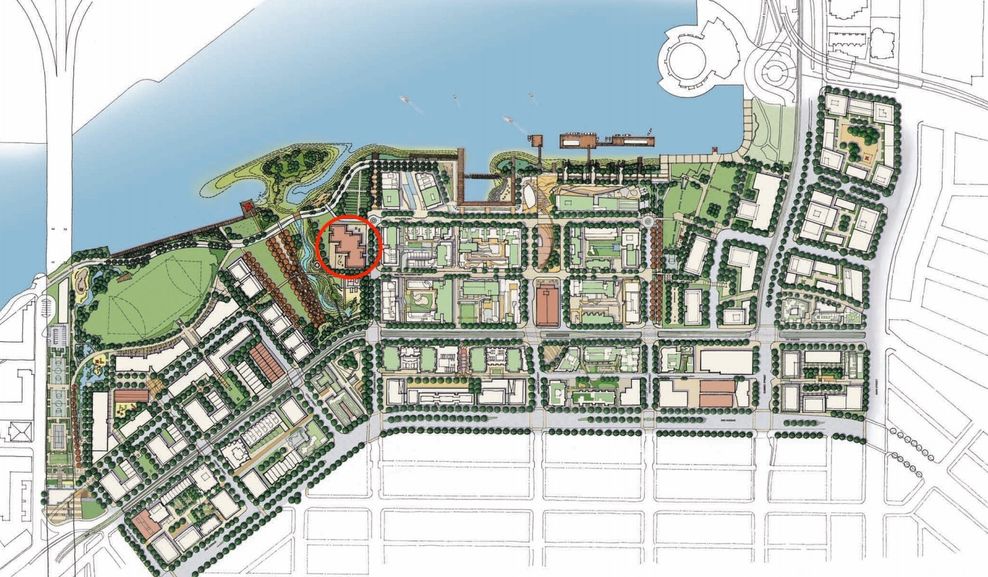
2005-approved Southeast False Creek ODP, which includes the Olympic Village. The location of the planned Olympic Village Elementary School at Hinge Park is circled in red. (City of Vancouver/Daily Hive)
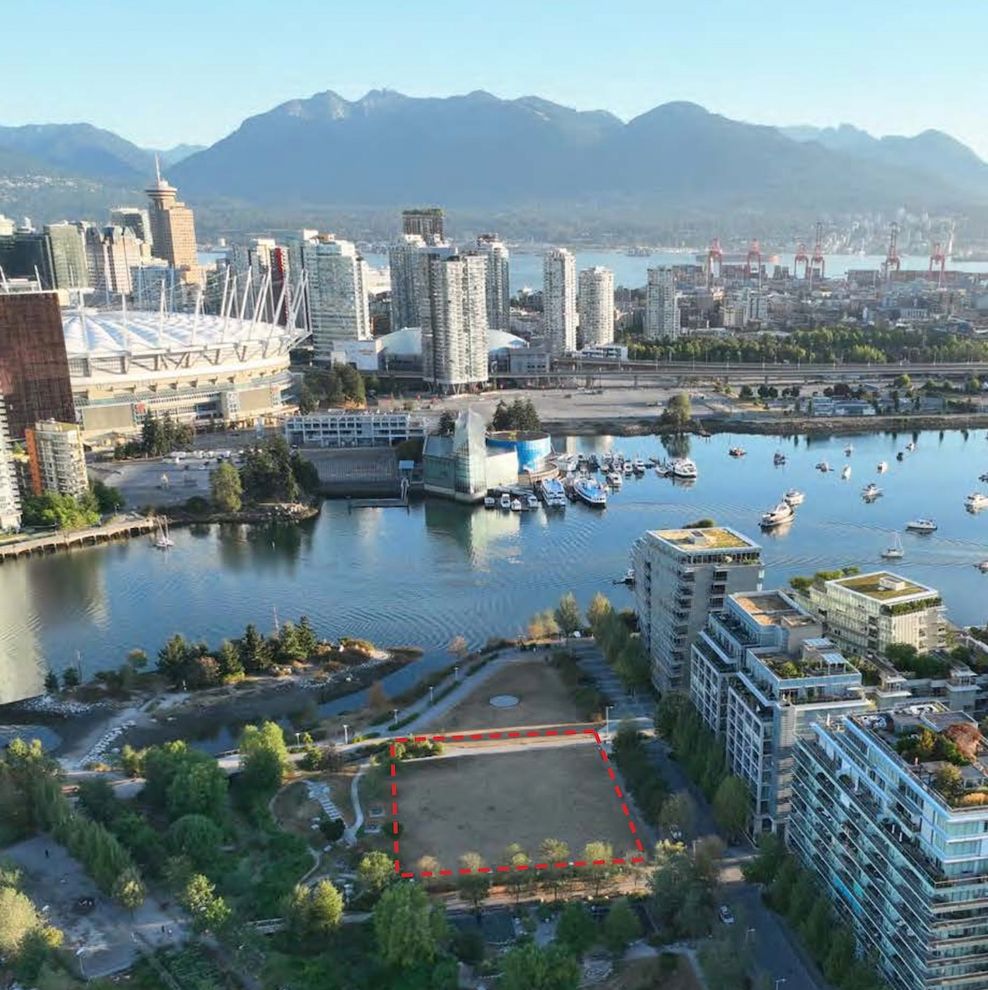
Site of Olympic Village Elementary School. (McFarland Marceau Architects/Vancouver School Board)
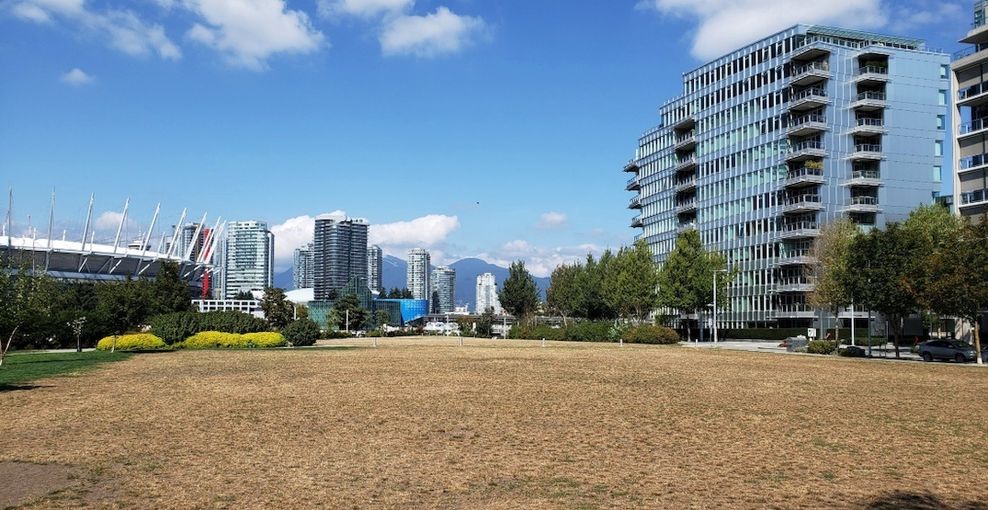
This large open grassy site at Hinge Park is the future site of the Olympic Village Elementary School building. (Kenneth Chan)
While this future elementary school site is stipulated in the area plan, it was not widely known by the general public that this specific location was slated to become an elementary school, which created false expectations as people grew accustomed to using it as open park space. Those expectations only grew stronger as prolonged funding challenges further entrenched and extended the site’s informal use as park space, and as more residential developments on former industrial sites reached completion nearby and grew the area’s population.
This also happens to be the largest open grassy space at Hinge Park.
The only other open grassy area is a triangular-shaped lawn immediately to the north, spanning an area of 18,000 sq. ft. But a revision to the rezoning application in September 2025 now envisions expanding the school project into this triangular parcel for the desire to create a dedicated outdoor play space for students, which would introduce restricted general public uses to the space.
This ground-level outdoor play space would be in addition to the outdoor play space planned for the school building’s entire rooftop, with the expanded footprint intended to better accommodate the needs of the school’s larger enrolment that is nearly double of what was originally envisioned in the area plan.
“Do you view this as an overreach of extending into the green space, because it’s fundamentally changing the nature of it and the social contract with the residents of Olympic Village?” questioned ABC city councillor Sarah Kirby-Yung during the public hearing.
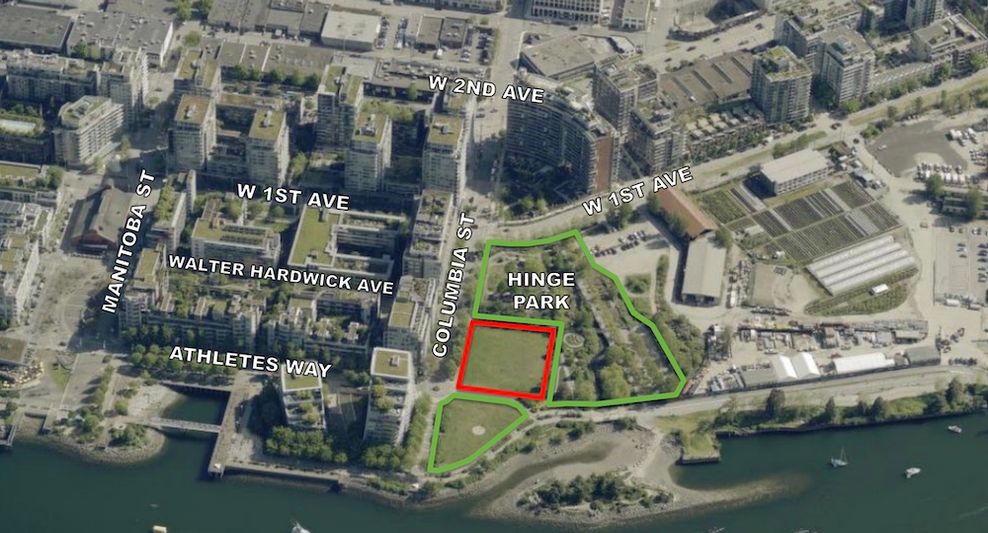
Site of Olympic Village Elementary School. (McFarland Marceau Architects/Vancouver School Board)
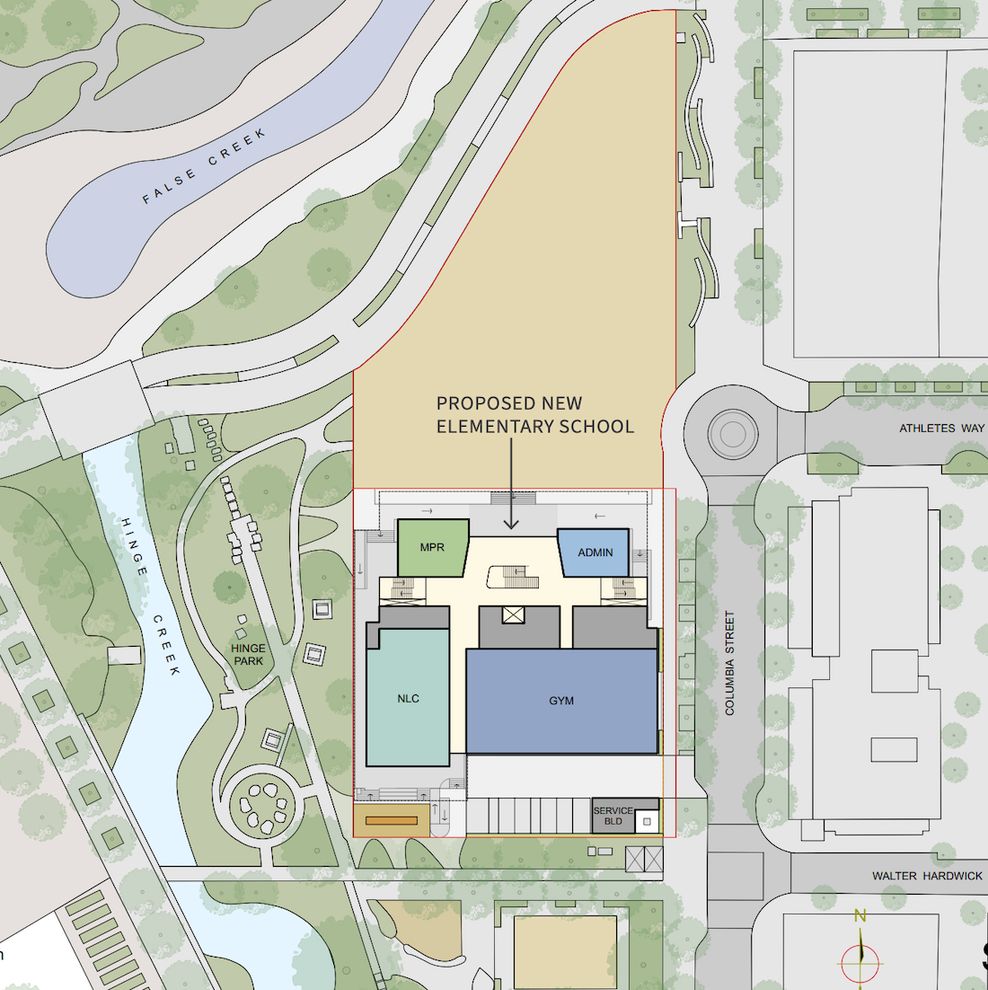
May 2025 highly preliminary concept of Olympic Village Elementary School. (McFarland Marceau Architects/Vancouver School Board)
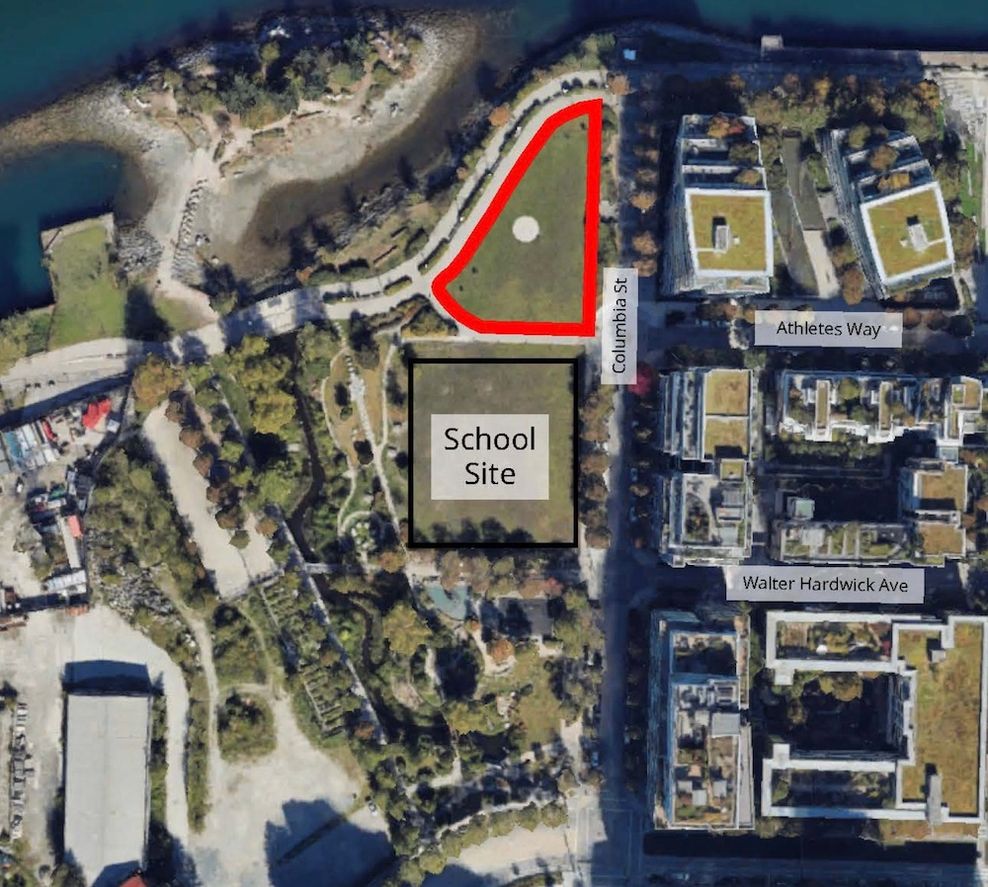
September 2025 revision of the application, expanding the Olympic Village Elementary project to also include a dedicated outdoor play space on the triangular-shaped open grassy area. (City of Vancouver)
An elementary school 30 metres away from Rogers Arena makes sense?
Then there is the 2017-built Crosstown Elementary School, just 30 metres to the east of Rogers Arena — the home of the NHL’s Vancouver Canucks, and one of British Columbia’s largest and busiest entertainment venues.
In most cities, major arenas and stadiums anchor an entertainment district: restaurants, bars, nightlife, active retail, plazas, and late-night foot traffic that all feed off event crowds. It is a chance to create density of energy, not just density of buildings.
Vancouver, instead, put an elementary school next door.
Land that could have helped stitch together a coherent, lively entertainment zone is locked into a low-intensity use that does not complement the arena’s rhythms — it completely conflicts with them.
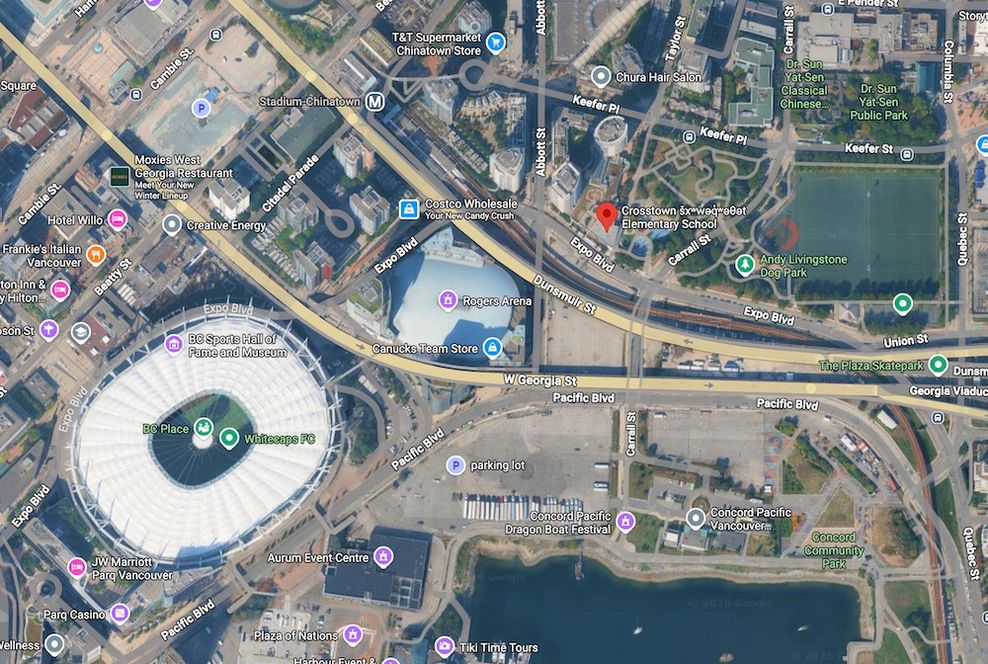
Crosstown Elementary School built next to Rogers Arena. (Google Maps)
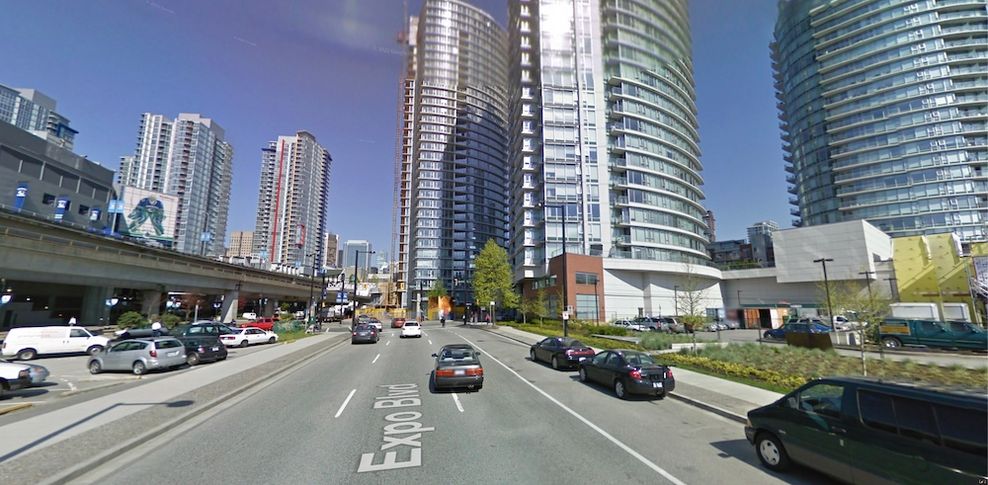
2009 condition of the future site of Crosstown Elementary School next to Rogers Arena. (Google Maps)
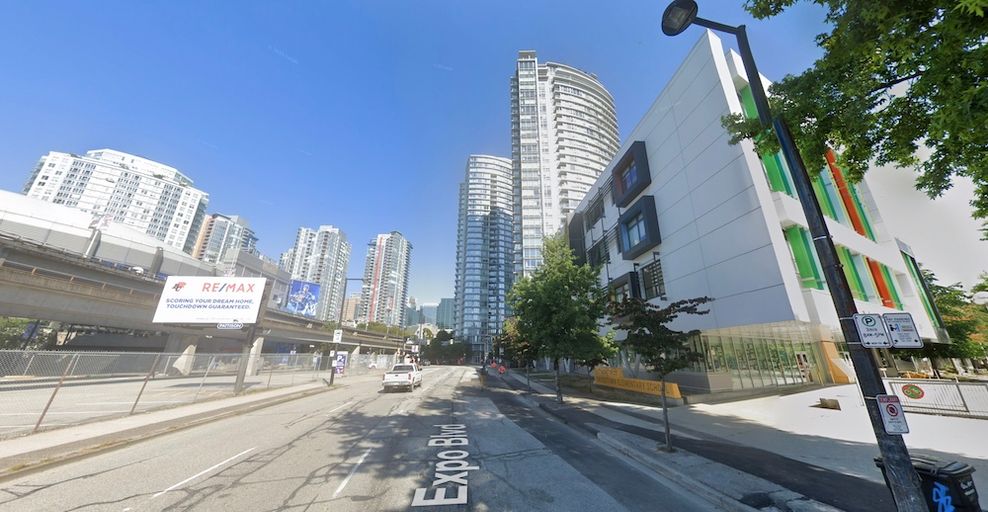
Crosstown Elementary School built next to Rogers Arena. (Google Maps)
A real need for more elementary school capacity and long-term future proofing
Again, this is not anti-school. It is anti-bad-adjacency.
To be absolutely clear: downtown Vancouver and the False Creek neighbourhoods absolutely need more elementary schools. If more families are to live in the area, if student trips to their school are to be kept relatively short within their own neighbourhoods, if there is to be a real long-term community instead of constant turnover, and if there is to be density that works for more than just young adults, professionals, and investors, then local schools are absolutely essential.
Olympic Village Elementary School is also rightly designed to be larger, with greater capacity, in order to achieve better economies of scale and maximize the value of both capital investment and ongoing operating costs. VSB, along with the municipal and provincial governments, cannot afford to keep returning so frequently to the same cycle of pursuing new school projects in an area that will continue to experience immense residential densification. There will always be a need to build new and expanded schools to meet demand, but where possible, this should be done as efficiently and strategically as possible.
On these points, the City and VSB are absolutely right.
According to VSB officials during the public hearing, the existing catchment facility of Simon Fraser Elementary School is experiencing major capacity issues, and the nearby schools to the north in downtown Vancouver and to the south are also above capacity. Students who live in the area are consistently being placed at schools located further away.
In fact, VSB notes that there are currently about 800 more elementary students than capacity enables across the four closest schools. Typical elementary schools in the Vancouver system have a capacity range of roughly between 300 to 400 students.
This means Olympic Village Elementary School’s planned capacity of 630 students functions as catch-up capacity — and even then, it would not fully address the current shortfall, let alone whatever that gap may grow into by the time the school is finally completed, assuming the project proceeds at all. The current rezoning application is just one step.
Over the coming decades, the Broadway Plan will add at least 64,000 more people to the area, with the school catchment area extending into a larger portion of the area plan, specifically where some of the entire area plan’s highest residential densities are permitted. Southeast False Creek will also become more built out, and there could also be a spillover of demand from the future development of Northeast False Creek.
Facilities like schools therefore need to be planned with a very long-term horizon in mind — on the order of 40 to 50 years — which also happens to be roughly the lifespan of such buildings before they require major renewal or replacement.
Problematic decades-old area plans
Area plans exist, in part, to preserve sites for future community and infrastructure needs.
With all that said, acknowledging the need for schools does not mean pretending that every site is equally appropriate.
Cities are shaped by the trade-offs they make. Some land is simply more valuable — not just in dollars, but in what it can offer to public life, culture, and the city’s identity. Waterfronts and major entertainment areas clearly fall into that category. When those kinds of sites are used for low-intensity, mostly closed-off purposes, the cost is not abstract. You feel it in quieter, less lively public spaces and a weaker street life — in a city that ends up settling for less than it could be.
Over the decades, some of these school sites have also been strategically placed adjacent to public parks, but the orientation and siting for at least some of these schools could have made all the difference.
For example, from the outset, the Southeast False Creek ODP could have placed Olympic Village Elementary School at any other location — perhaps at the southern end of Hinge Park, fronting the larger and more accessible road of West 1st Avenue and meaningfully away from the prominence of the seawall. Just 50 metres to the south would have made all the difference.
That same ODP should have also prescribed ground-level retail/restaurant uses for the Olympic Village residential buildings fronting the waterfront, specifically Canada House fronting the seawall and the buildings that front Athletes Way.
Crosstown Elementary School adjacent to Andy Livingstone Park could have been better placed just 50 metres to the north to front Keefer Place, instead of the chosen location to the south fronting Expo Boulevard, immediately adjacent to Rogers Arena.
More broadly, all four schools — Elsie Roy, Crosstown, Seaside, and Olympic Village — are products of City-enacted area plans that transformed former industrial lands into the contemporary urban Vancouver we see today. Because these neighbourhoods were built completely from scratch, there was no real necessity or constraint that required park-adjacent schools to be placed right on the seawall or even next to a stadium.
Those area plans were created decades ago, based on outdated planning exercises, assumptions, and priorities, and reflected a much narrower set of values about city-building than most Vancouverites would likely accept today. These same values gave us blanket “Living First” policies for the city centre without consideration to the specific location’s context and condition, as well as the protected mountain view cones that were incredibly restrictive for city-building — up until the recent amendments that provided much-needed balance.
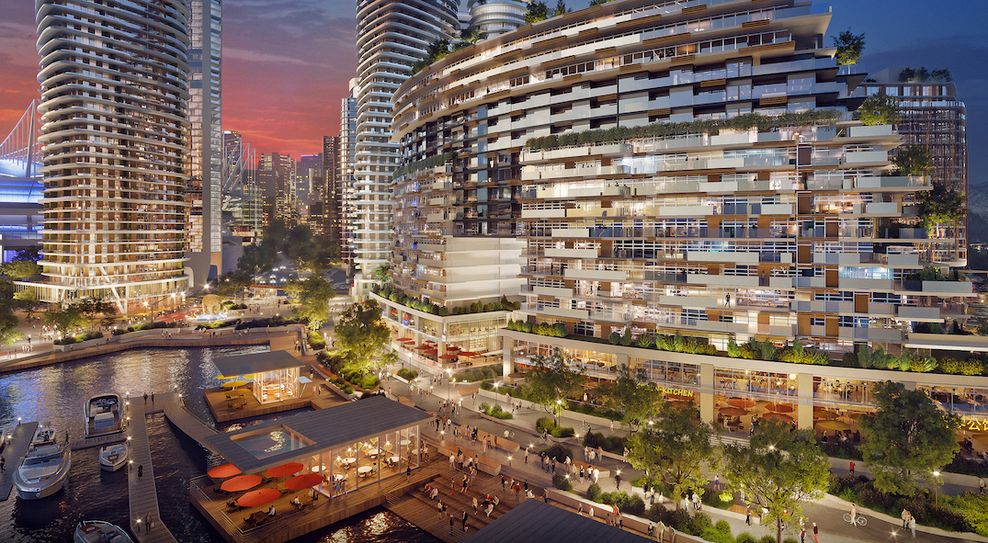
2024 revised concept for Concord Landing at Northeast False Creek. (Civitas Urban Design & Architecture/Concord Pacific)
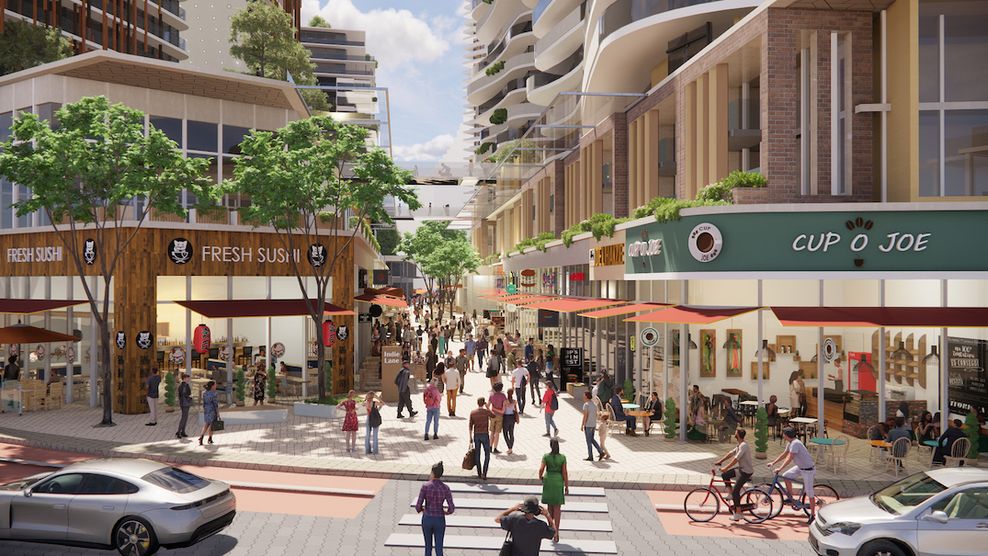
2024 revised concept for Concord Landing at Northeast False Creek. (Civitas Urban Design & Architecture/Concord Pacific)
This is certainly not to say that schools belong in hidden or marginalized places, but that there is a balance to be struck. Beyond adopting more sensible urban planning strategies, the City could have done a better job working with developers to secure more suitable locations for schools. It also controls vast tracts of land through the Property Endowment Fund, where there are almost certainly other sites that could have accommodated new schools just as well — without sacrificing some of Vancouver’s most valuable and symbolic urban spaces.
There has been a change in thinking more recently.
For example, as opposed to continuous inactive residential frontage, more recent City area planning strategies encourage far more ground-level retail/restaurant uses to activate streets and public spaces — something that was often ignored in older planning work. This pivot is evident in the Northeast False Creek Plan — with the developers of the Plaza of Nations and Concord Landing taking a strong note to this by incorporating significant ground-level active commercial frontage — and in many strategic areas of the Broadway Plan and Rupert and Renfrew Station Area Plan, and the broader citywide strategies of the Vancouver Plan and the upcoming Vancouver ODP.
Build the schools, absolutely. The city needs them for long-term growth. But stop putting them in the weirdest, most valuable places — and start treating Vancouver’s waterfronts and entertainment districts like the civic front stages they are supposed to be.
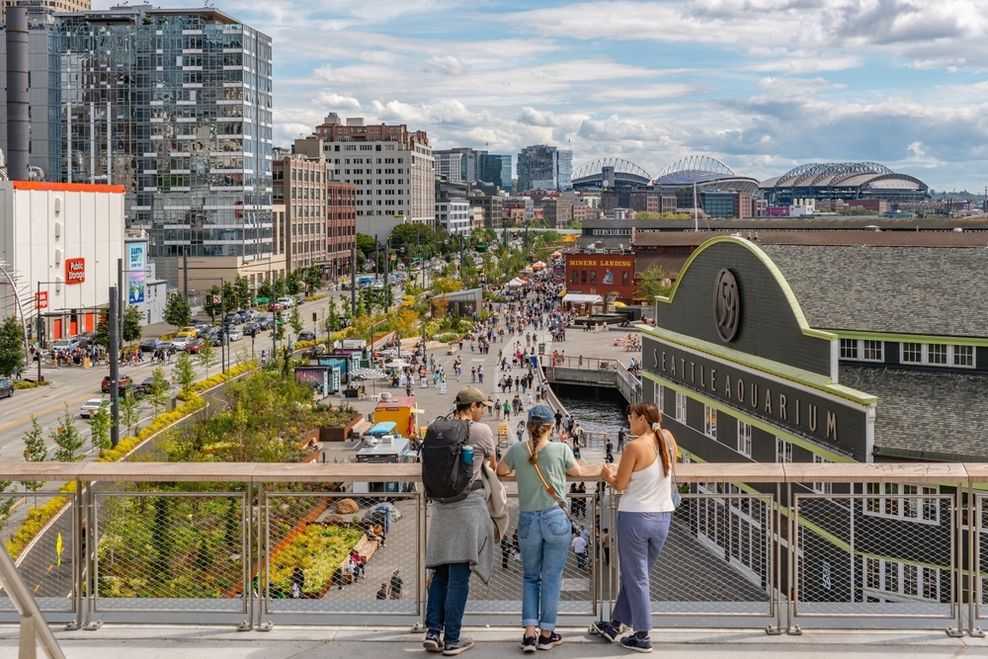
New waterfront of downtown Seattle. (Heidi Besen/Shutterstock)
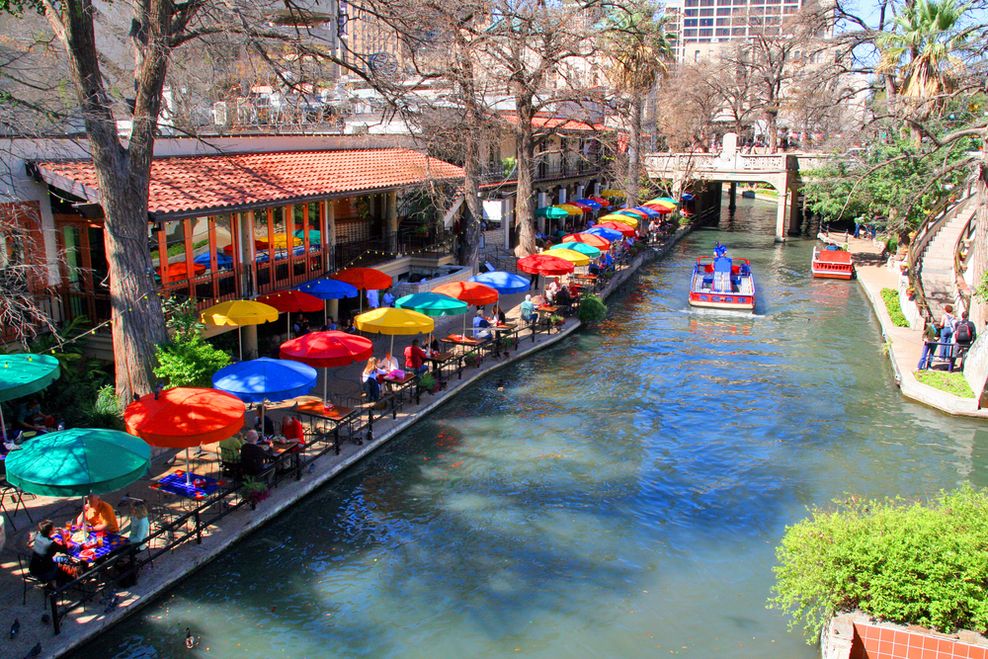
San Antonio Riverwalk. (Brandon Seidel/Shutterstock)
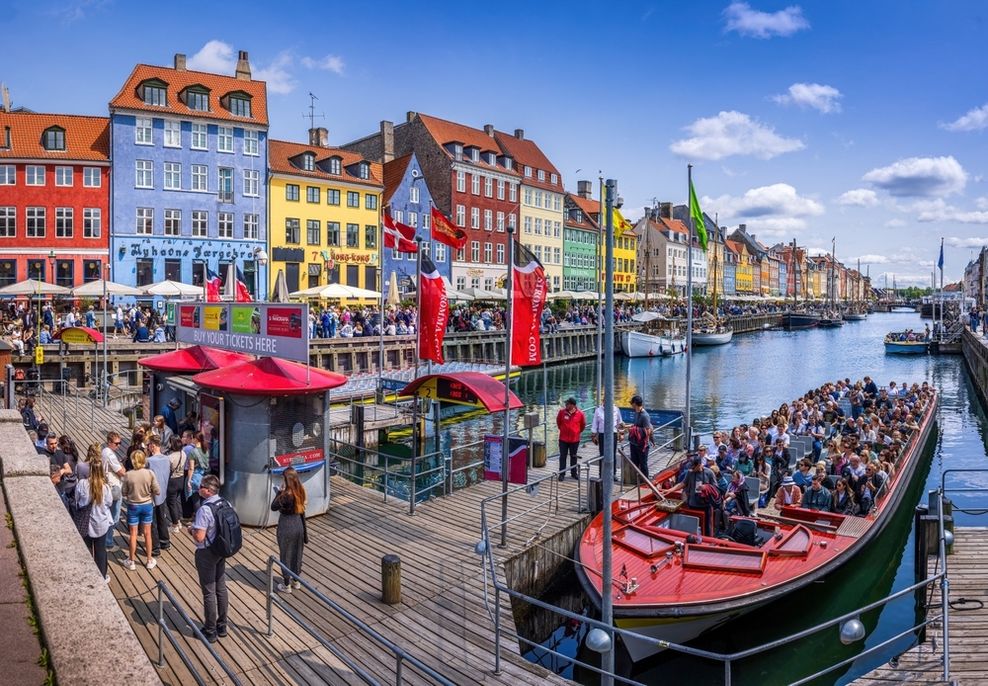
Nyhavn waterfront in Copenhagen. (Elena Suvorova/Shutterstock)
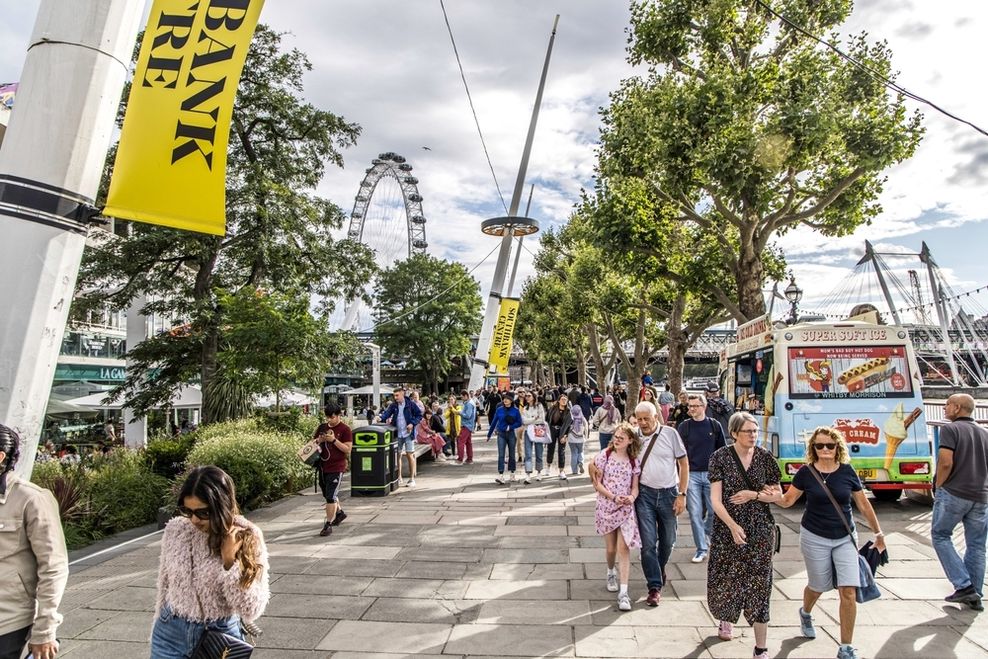
Thames River waterfront in Central London. (Mareks Perkons/Shutterstock)
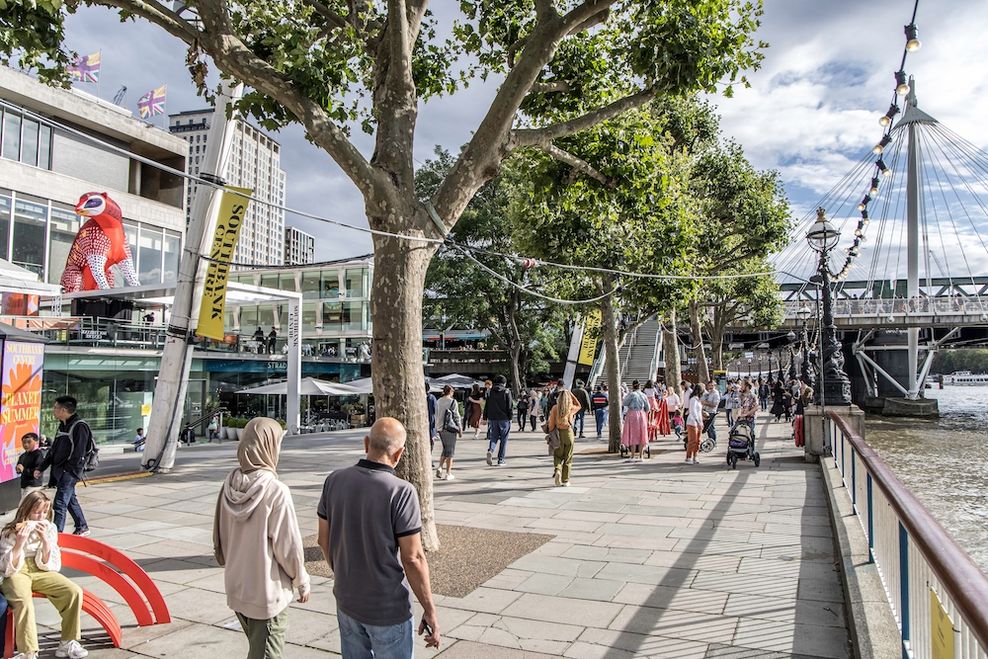
Thames River waterfront in Central London. (Mareks Perkons/Shutterstock)
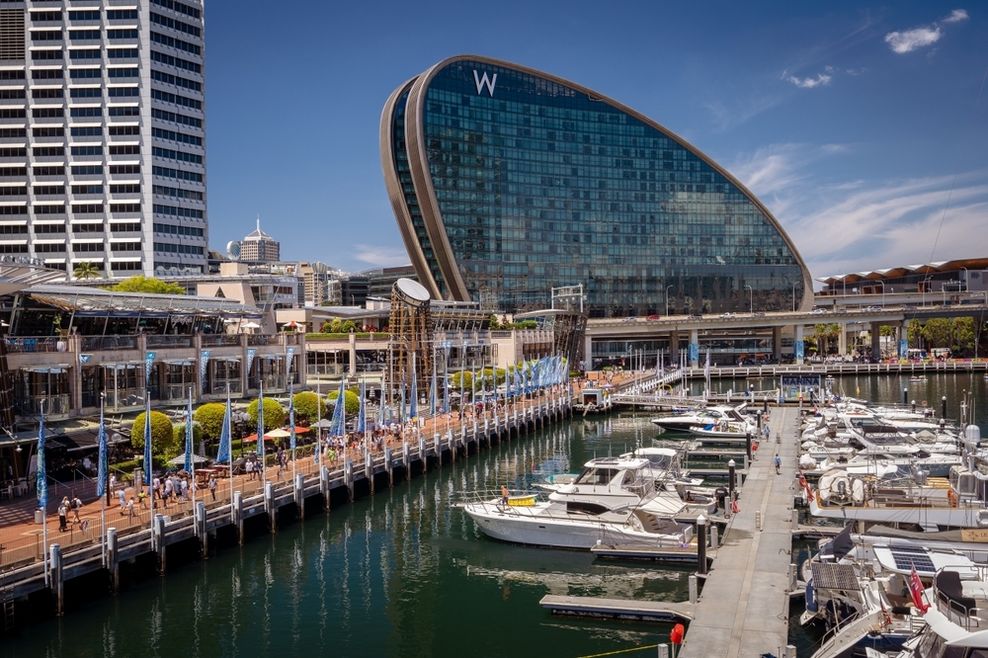
Darling Harbour waterfront in Sydney. (Alex Cimbal/Shutterstock)
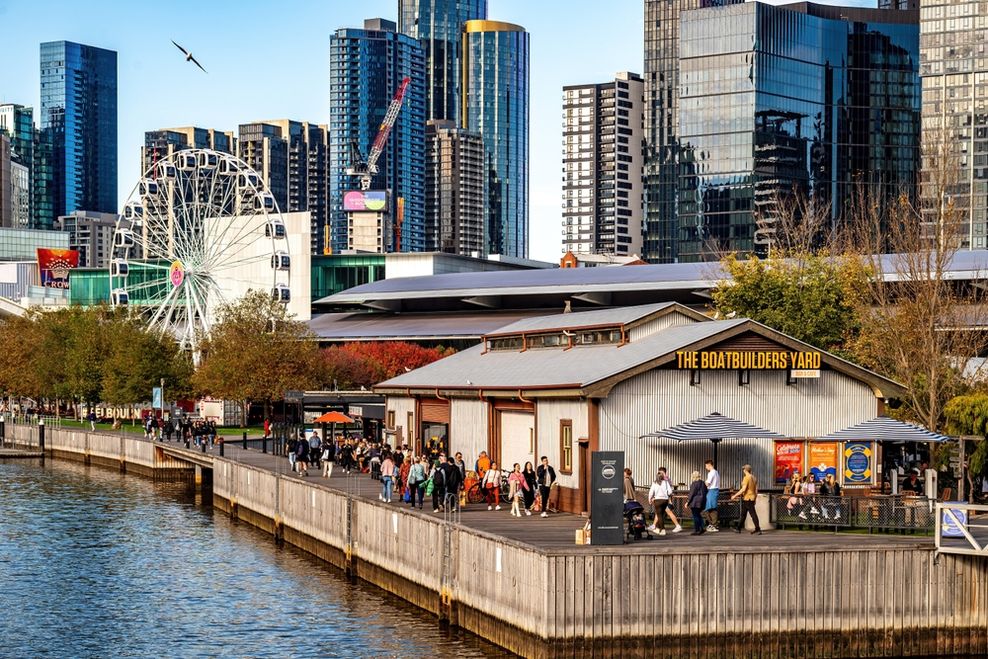
Yarra River waterfront in Melbourne. (Paul Harding/Shutterstock)
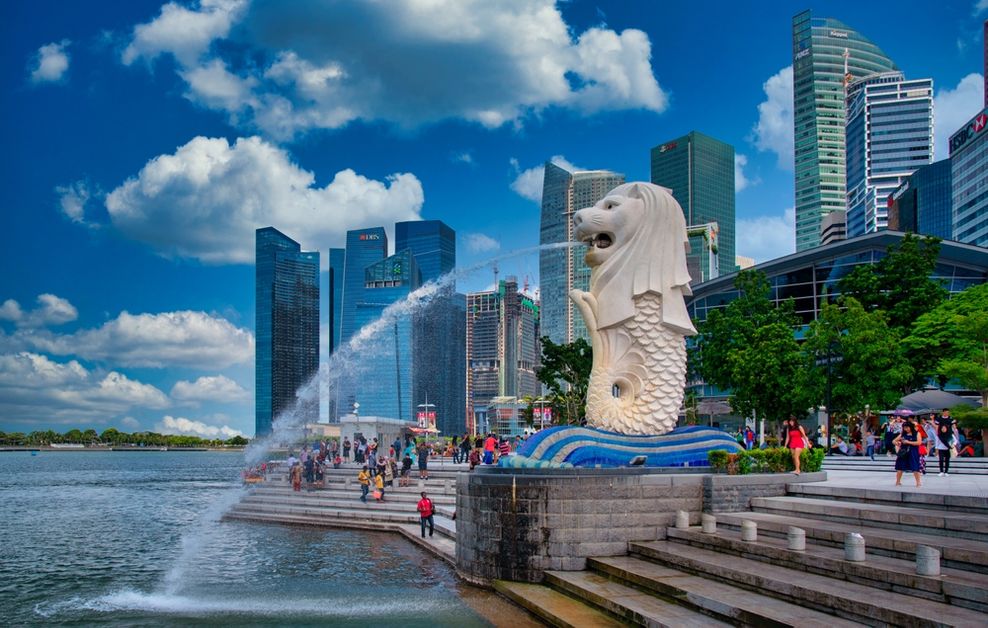
Marina Bay waterfront in Singapore. (Nuttawut Uttamaharad/Shutterstock)
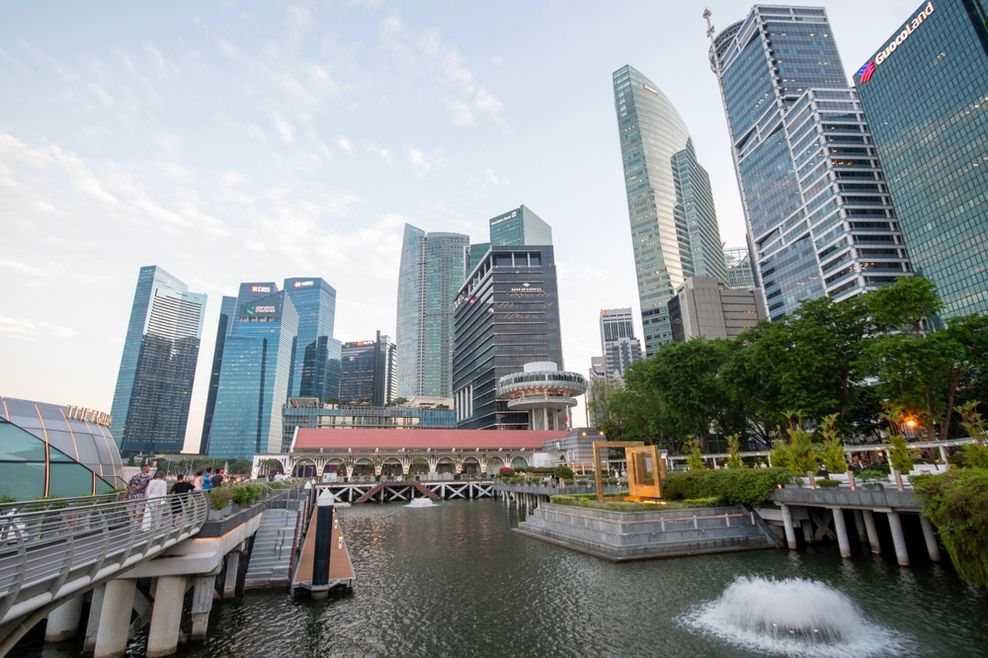
Marina Bay waterfront in Singapore. (Tang Yan Song/Shutterstock)
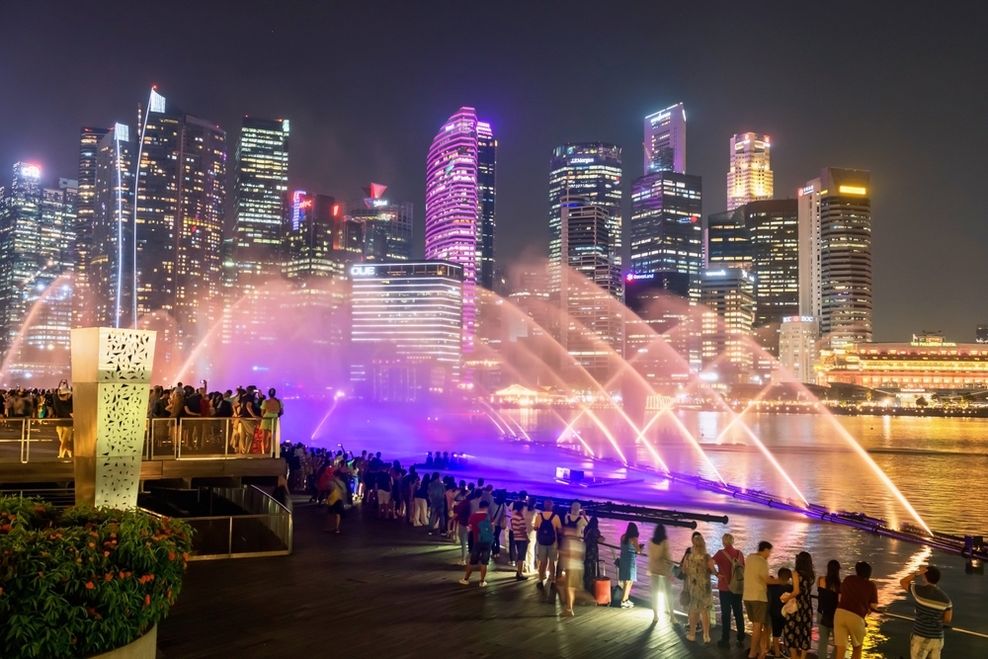
Marina Bay waterfront in Singapore. (Blanscape/Shutterstock)
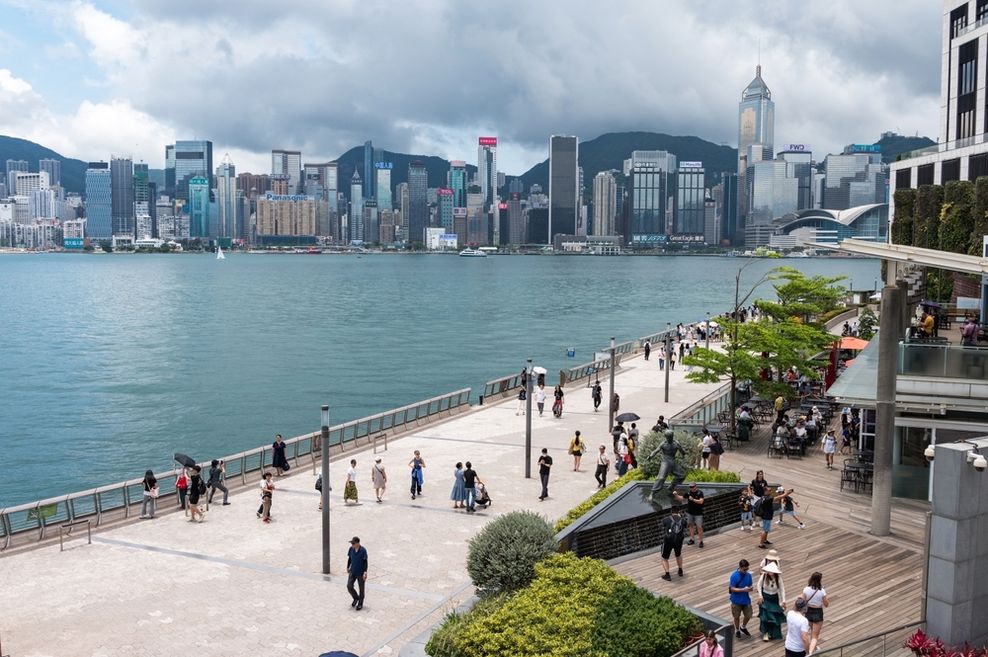
Kowloon waterfront of Hong Kong. (extradeda/Shutterstock)
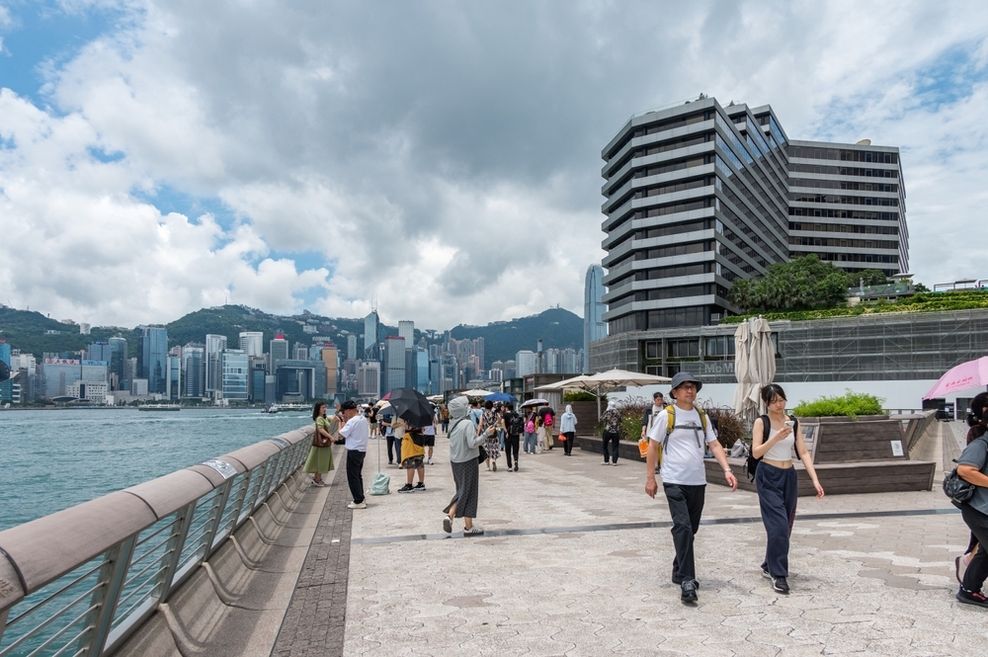
Kowloon waterfront of Hong Kong. (extradeda/Shutterstock)
- You might also like:
- Opinion: Let’s face it, Vancouver's waterfront is boring
- New Olympic Village Elementary School to feature rooftop play area
- New Coal Harbour elementary school below social housing gets a name
- Times Square-style transformation ahead: 800 Granville project approved by Vancouver City Council
- A Whitecaps soccer stadium with an entertainment district — and maybe SkyTrain? What’s next for Vancouver's Hastings Park and the PNE