


Metro Vancouver home flipping hits record lows at 1.7% of overall sales


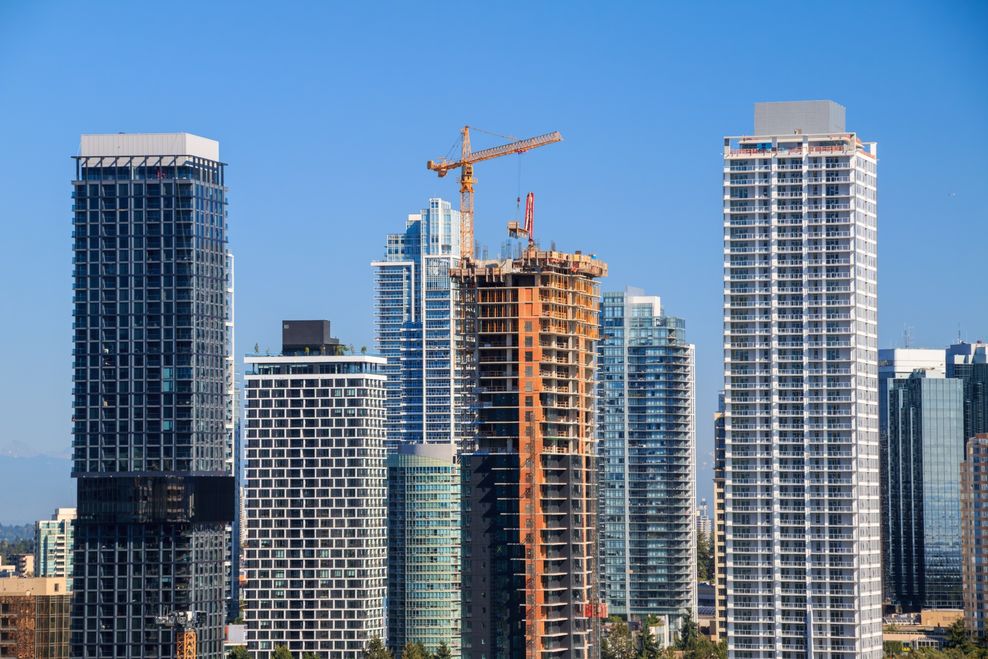
Home flipping in Metro Vancouver now makes up less than two per cent of sales.
This is according to data from Greater Vancouver Realtors that the Saretsky Group, a team of real estate advisors, compiled. Now, most home sales are for end-users, or people who actually want to live in the homes they’ve purchased.
Steve Saretsky, the founder of Saretsky Group, said this trend is “indicative” of home sales hitting 25-year lows.
For example, if someone bought a home a year and a half ago and wanted to resell it today, they’d be taking a loss.
He said home flippers aren’t necessarily speculators, or someone who buys a home with the sole intention of flipping it in a short time frame. Often, they’re someone who bought a residential unit, saw the price shoot up, and wanted to capitalize on the moment.
“It’s actually people that just like people are like, ‘Holy smokes, I bought this condo 20 months ago, and it’s up $150,000. Why don’t I flip it to go buy a townhouse?'”
“I wouldn’t really call those people speculators. I would just say they got lucky.”
B.C.’s home flipping tax
In January 2025, the Province implemented a home flipping tax on the income from sales of residential units for less than 730 days or two full years. The purpose of the tax is to discourage speculation and flipping homes for a quick profit (and further drive the cost up).
If a property is sold within 365 days, the tax is 20 per cent. Over the next year, the rate decreases and no longer applies at 730 days.
If it is the owner’s primary residence and they owned it for at least one full year, there’s a $20,000 deduction from what they owe.
But Saretsky is skeptical that the home flipping tax did much, saying it was introduced when “house flipping was really already near record lows.”
Saretsky also disagrees with the idea that house flipping is responsible for driving up housing costs. He thinks that “investors are the symptom, not the cause.”
Home flipping activity in Metro Vancouver has crashed to record lows, representing less than 2% of all sales. pic.twitter.com/jK0aPTUH0B
— Steve Saretsky (@SteveSaretsky) February 3, 2026
“Rising prices will bring speculation, whether that’s in housing or stocks or gold or Bitcoin, whatever you want to pick. As prices rise, people like jump in and speculate.”
Between 2000 and the start of 2026, there have been three house flipping peaks: in February 2007, December 2017, and January 2022, which Saretsky have followed rising prices.
The year that saw the biggest peak was 2007, at over 15 per cent.
“So [flipping has] really been falling as a percentage of sales for two decades. Despite that, you’ve had enormous price growth in the housing market,” he said.
Instead, he said the drivers of house price appreciation in recent years were “rock bottom interest rates, record immigration, and inability to expand your housing supply.”
“Killed off your investor base”
Saretsky said that investors have become “demonized” in the housing market.
“Which is fair enough, when you have that much price run up, I get it, but ironically, now what’s going to happen is there’s no new investment in new construction housing.”
He said that housing starts are already dropping, and they will continue to do so “aggressively.”
For governments to reach their housing targets, “the capital has to come from somewhere.”
“It’s a trade-off. You can’t have both. You can’t have a bunch of new housing supply getting built, but then say, ‘we don’t want investors.'”
He said the provincial government’s speculation tax, luxury home tax, and short-term rental legislation “are designed to basically curb investment.”
Housing prices predicted to increase
A recent report from the B.C. Real Estate Association (BCREA) warned that unsold housing inventory, weak construction activity, and stalled pre-sales could cause B.C. home prices to jump by 27 per cent by 2032.
The report compares the current time period to the period that followed the 2008 recession, when low demand caused inventories to rise and homebuilding to slow. But when demand returned, the lack of supply caused a huge spike in housing prices.
Between 2010 and 2019, B.C. home prices rose by about 47 per cent.
The construction slowdown poses a major long-term risk. Because housing demand usually recovers, insufficient new supply would cause prices to once again jump to unaffordable levels.
With files from Kenneth Chan