


Why ships are slowing down off B.C.'s south coast this month


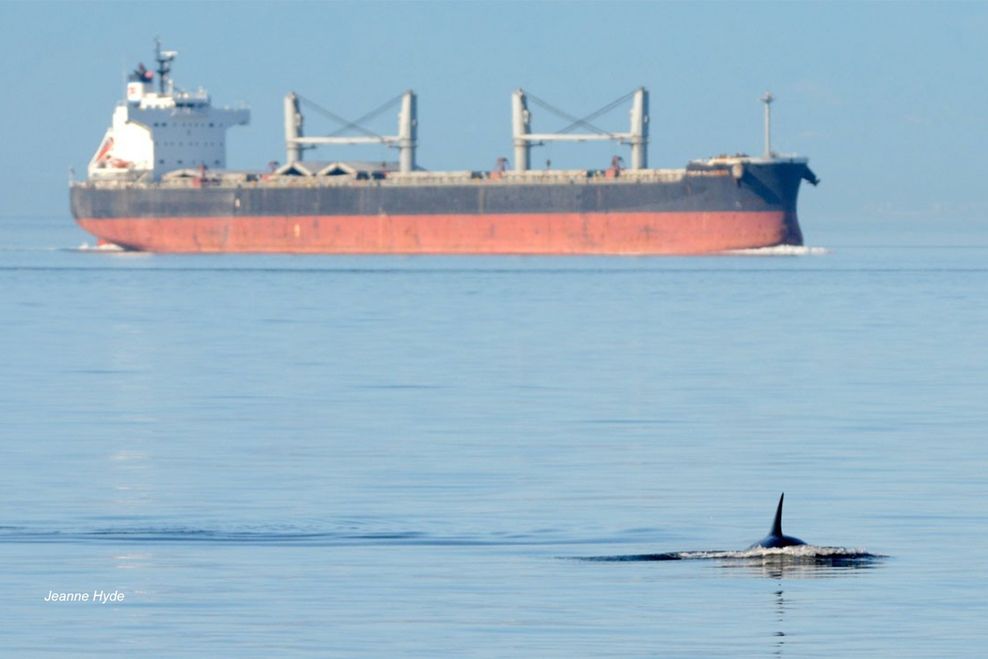
In an effort to protect B.C.’s beloved (and endangered) killer whales, the Vancouver Fraser Port Authority is encouraging ships to start slowing down this month as they pass through the Haro Straight and Boundary Pass at the southern tip of Vancouver Island.
March is one of the busiest months for the endangered southern resident killer whale population in this stretch of sea, and the noise disturbance from commercial ships affects their ability to communicate, navigate, and hunt (as they rely on sound to do so).
There are just over 70 whales left of this population, with three key threats to their survival: contaminants, declining Chinook salmon, and physical and acoustic disturbance.
Slowing vessels can reduce underwater noise by up to 50 per cent. Further, slowdowns can reduce the risk of whale strikes by nearly a third, and air emissions by around 25 per cent. Ships are encouraged to slow down at or below 14.5 knots (for vehicle carriers, cruise and container ships) and 11 knots (for bulkers, tankers and government ships).
This trial is an extension of the Vancouver Fraser Port Authority’s Enhancing Cetacean and Habitat Observation (ECHO) Program, which has been coordinating voluntary measures to try and reduce the impacts of commercial shipping on whales off B.C.’s southern coast for 10 years.
“Over the last 10 years, the ECHO Program has continually adapted its initiatives to reflect the latest research on where southern resident killer whales live and how we can mitigate threats from shipping,” said Jennifer Natland, vice-president of properties and environment at the port authority.
“By starting voluntary slowdowns earlier in the year, we affirm our commitment to taking action when and where it will make the greatest difference for the whales.”
In April, the voluntary slowdown in Haro Straight and Boundary Pass will pause, then resume from June to November, with the exact start and end dates dependent on the presence of the orcas.
More than 70 marine transportation organizations plan to participate in the ECHO Program’s measures this year by either slowing down or moving away from key areas of whale habitat.
The ECHO Program also runs a voluntary ship slowdown at Swiftsure Bank and a route alternation for the Strait of Juan de Fuca from June to October.
In 2025, over 5,300 slowed down or distanced themselves in critical southern killer whale habitat, by more than 80 marine organizations.