


$30-million proposal to reconnect Stanley Park's Lost Lagoon to ocean water in English Bay and Coal Harbour


Vancouver Park Board is weighing a proposal to restore historic tidal connections between Stanley Park’s Lost Lagoon and the surrounding ocean, a project that Park Board staff suggest could dramatically improve water quality and habitat in the highly prominent large water body.
A Park Board staff report recommends that the Park Board commissioners endorse a “Lost Lagoon tidal reconnection” concept, which would reintroduce daily tidal flushing from Coal Harbour and English Bay into the lagoon for the first time since the early 20th century.
According to Park Board staff, the change would address long-standing environmental issues that have emerged after more than a century of isolating the lagoon from its natural marine ecosystem.
- You might also like:
- Estimated $7 million cost to repair historic fountain in Lost Lagoon in Stanley Park
- New Britannia aquatic and community centre and ice rink in East Vancouver back in planning phase after long pause
- Vancouver city councillor calls for fewer studies, more realistic and timely shovel-ready projects in next capital plan
- Vancouver Park Board mobility study ponders new multi-level parkades in Stanley Park
- New looping TransLink bus route on Stanley Park Drive could launch in 2027
- Spanish Banks Beach now has a new naturalized water-flowing creek from Pacific Spirit Regional Park
In the late 1800s, a timber bridge between the main area of the downtown Vancouver peninsula and Stanley Park allowed water to flow between the lagoon and the ocean. But in 1916, the bridge was replaced by the Stanley Park Causeway — a berm that permanently severed the tidal connection, and eventually became the critical access link to the Lions Gate Bridge.
The lagoon was subsequently transformed into a freshwater pond used for recreation. Over the decades, the Park Board introduced features including the Jubilee Fountain — built in 1936 to commemorate the 50th anniversary of the City of Vancouver’s incorporation — and stocked fish, which fundamentally changed the area’s ecological conditions. The provincial government also widened the causeway in the late 1990s to improve the counterflow traffic system for the Lions Gate Bridge.
In particular, decades of physical isolation from the ocean have led to sediment buildup, declining water quality, and poor habitat conditions in Lost Lagoon. A technical study in 2018 found that most of the lagoon is now very shallow — less than one metre deep, largely due to accumulated sediment.
The shallow water contributes to recurring environmental problems, including summer algae blooms fuelled by nutrients and warm temperatures, reduced oxygen levels for aquatic species, accumulation of contaminants from urban runoff, and limited habitat diversity due to hardened shorelines and poor vegetation.
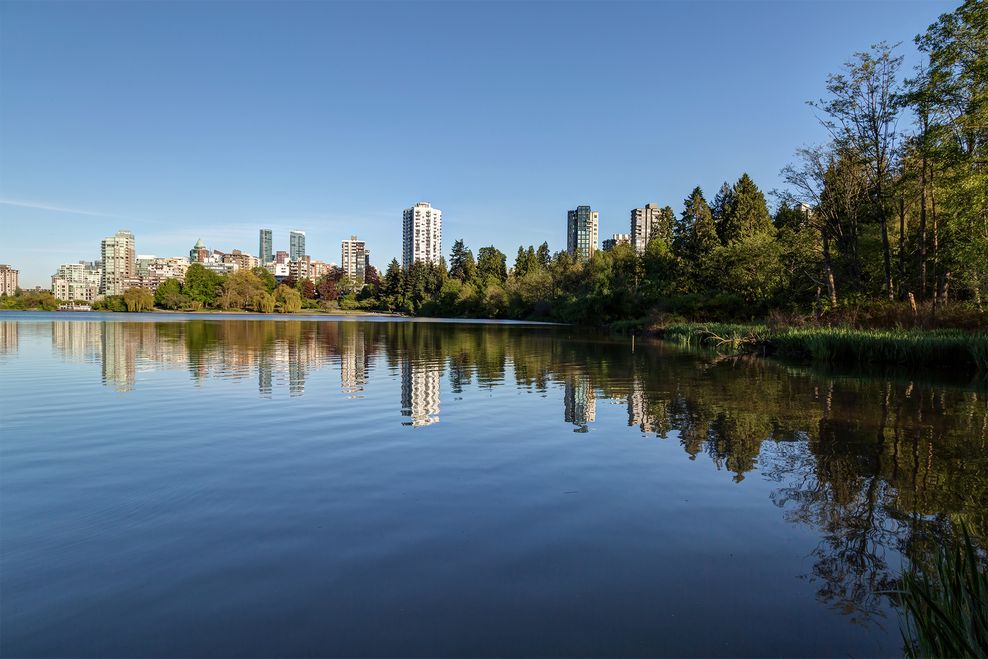
Lost Lagoon in Stanley Park. (JamesChen/Shutterstock)
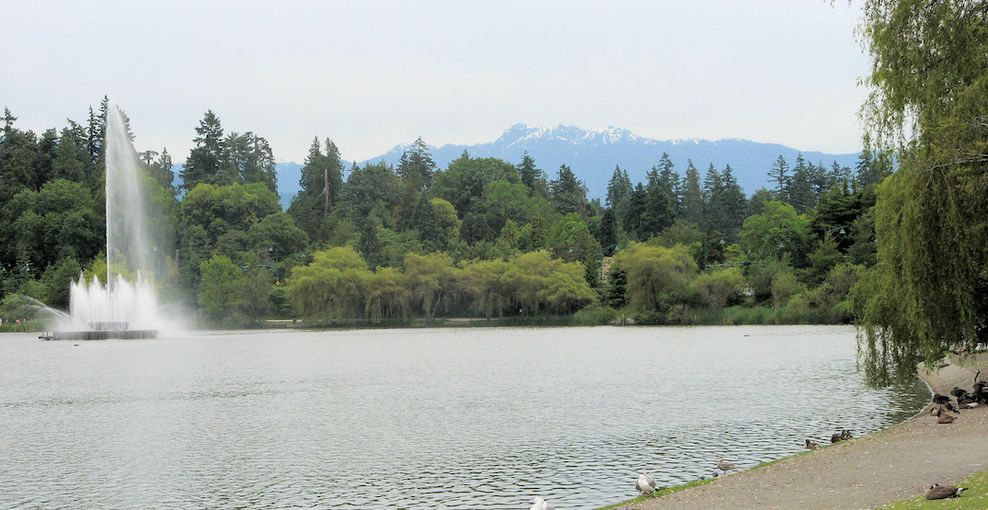
Jubilee Fountain at Lost Lagoon in Stanley Park. (Peter Newton/Shutterstock)
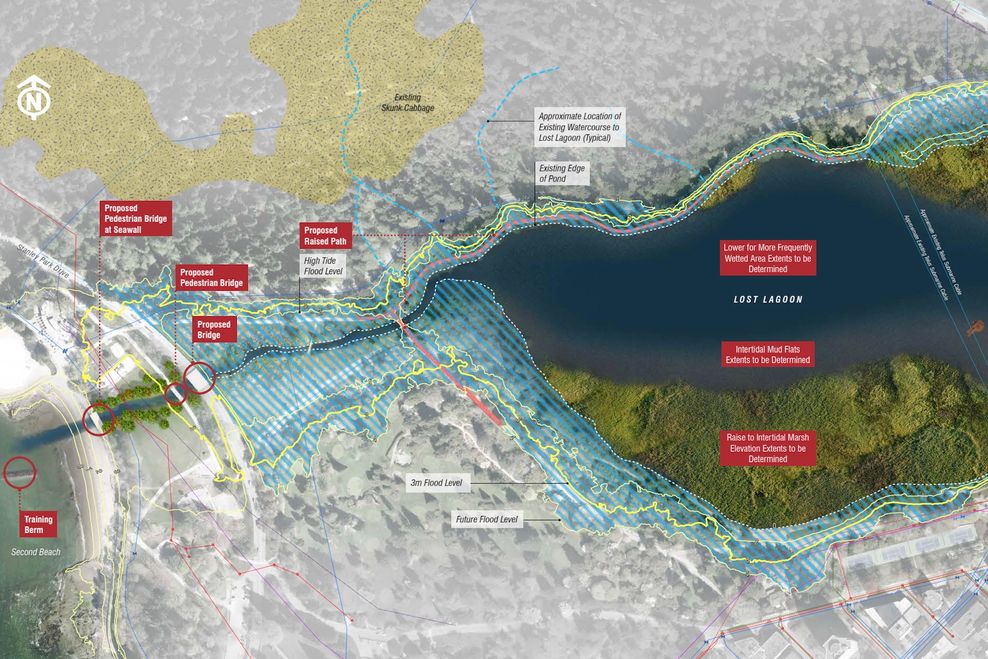
Concept for Lost Lagoon surface water channel through Second Beach, and culverts reaching Coal Harbour
To explore possible solutions, the Vancouver Park Board commissioned engineering firm Kerr Wood Leidal to study whether Lost Lagoon could be reconnected to tidal waters. The resulting feasibility study outlined several possible designs and concluded that restoring tidal exchange is both technically feasible and environmentally beneficial.
The preferred concept would reconnect the lagoon’s waters to the ocean at both its west and east sides, with a new surface water channel linking the lagoon to English Bay at Second Beach, and new culverts under the Stanley Park Causeway connecting the lagoon to Coal Harbour. This system would allow daily tidal flows to circulate through the lagoon, flushing water regularly and reducing the buildup of sediment and nutrients.
If built, the reconnection project could significantly reshape the lagoon’s landscape and ecology.
The design could create about 35 acres of new tidal lagoon habitat, approximately two km of restored shoreline, and intertidal mudflats, marshes, and tidal channels that support diverse species. These changes could help support fish, birds, and other wildlife by recreating conditions similar to the salt marsh ecosystem that existed there more than a century ago.
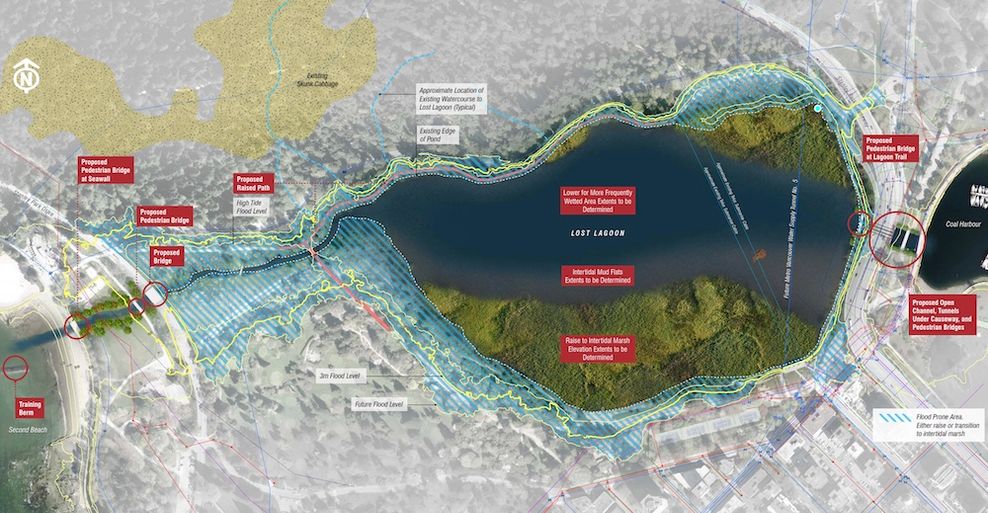
Tidal reconnection concept for Lost Lagoon in Stanley Park. (Kerr Wood Leidal/Vancouver Park Board)
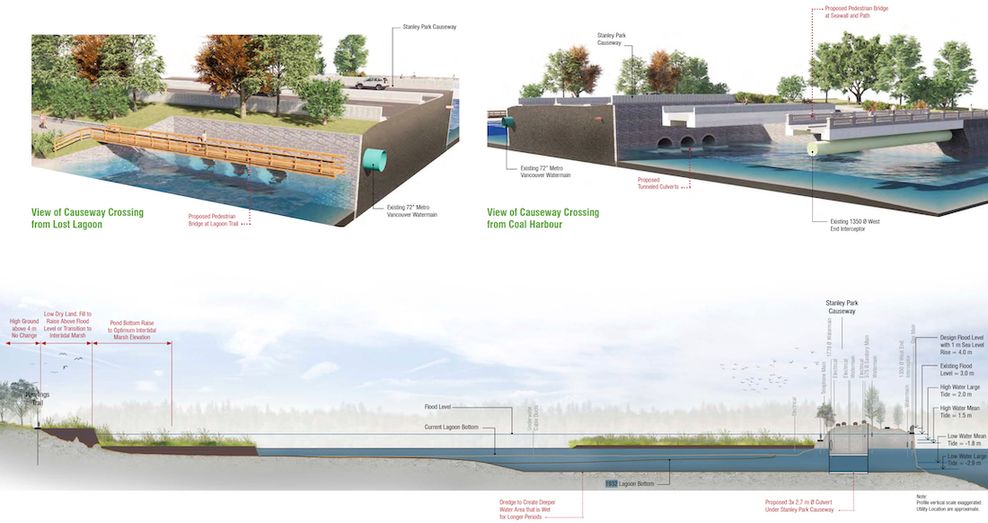
Tidal reconnection concept for Lost Lagoon in Stanley Park. (Kerr Wood Leidal/Vancouver Park Board)
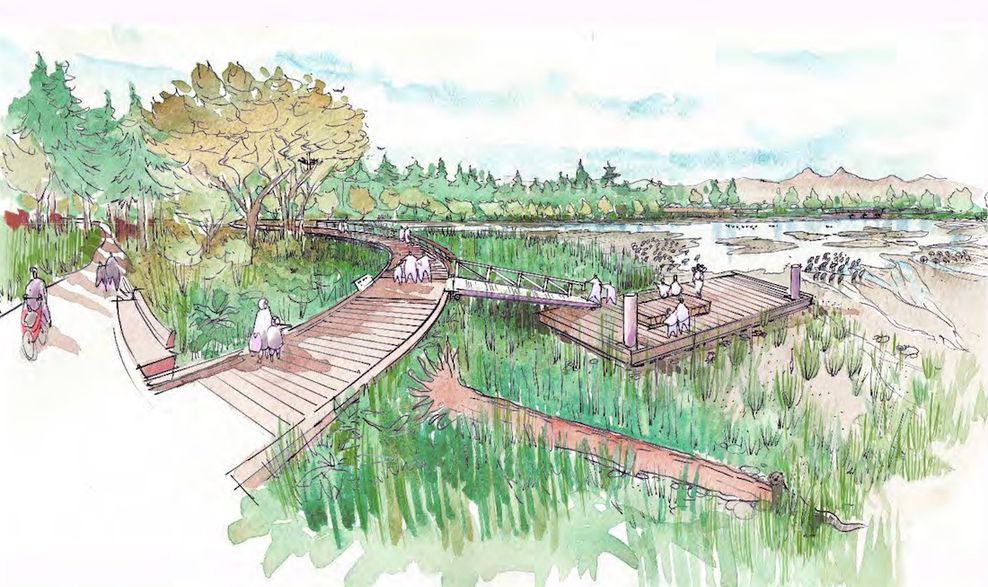
Tidal reconnection concept for Lost Lagoon in Stanley Park. (Vancouver Park Board)
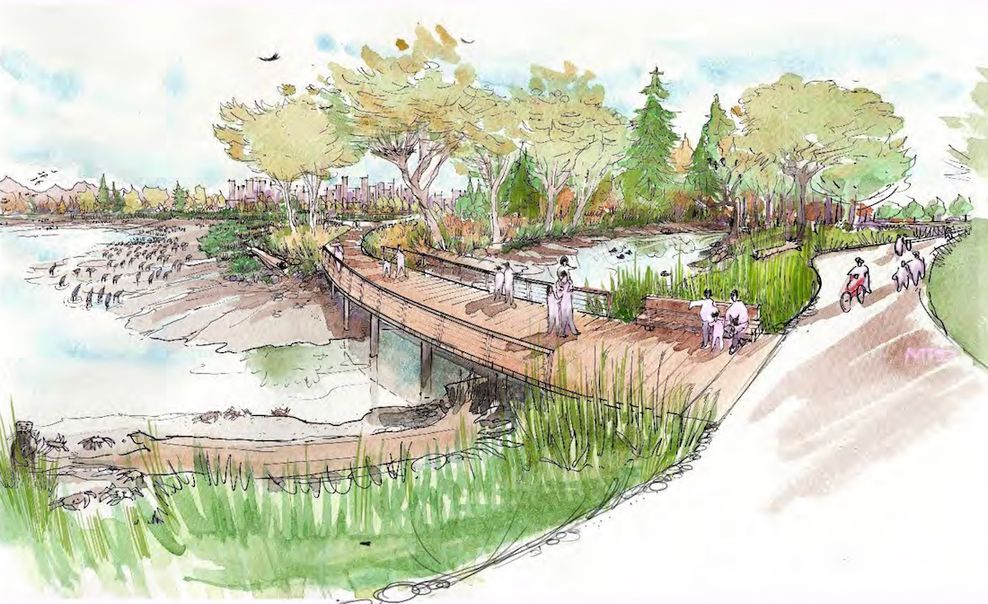
Tidal reconnection concept for Lost Lagoon in Stanley Park. (Vancouver Park Board)
Concrete banks along the lagoon would be removed in many areas and replaced with naturalized shorelines. The lagoon would also be dredged considerably, with sediments reused to build terraces and habitat features at different elevations.
The project would also change how visitors experience the lagoon. Instead of a permanently full large pond, the landscape would shift with the tides. At low tide, visitors could see exposed mudflats and tidal channels, while at high tide the area would appear more like a marsh or shallow lagoon.
The potential concept also includes expanded pedestrian and cycling routes, viewing platforms for observing wildlife and tidal changes, and a potential boardwalk across the restored wetland areas.
Second Beach and Ceperley Park’s large grass field would be split in two, shrinking significantly
Although new amenities would be introduced, there would also be very significant detrimental impacts on existing public park spaces, beaches, and amenities in the area.
The channel would bisect and reduce the size of Second Beach — a notable impact given that, unlike the Canyon Creek channel recently completed at Spanish Banks Beach, Second Beach is relatively small and any reduction in usable sandy area for public enjoyment would likely be noticeable.
Similarly, with such a channel, the large open grass field at Ceperley Park — a popular space next to Second Beach for informal recreational activities and events — would also be bisected and its area considerably reduced.
Due to the presence of a new water channel, the concept involves the construction of a new road bridge for Stanley Park Drive, a new pedestrian bridge, and a new seawall bridge.
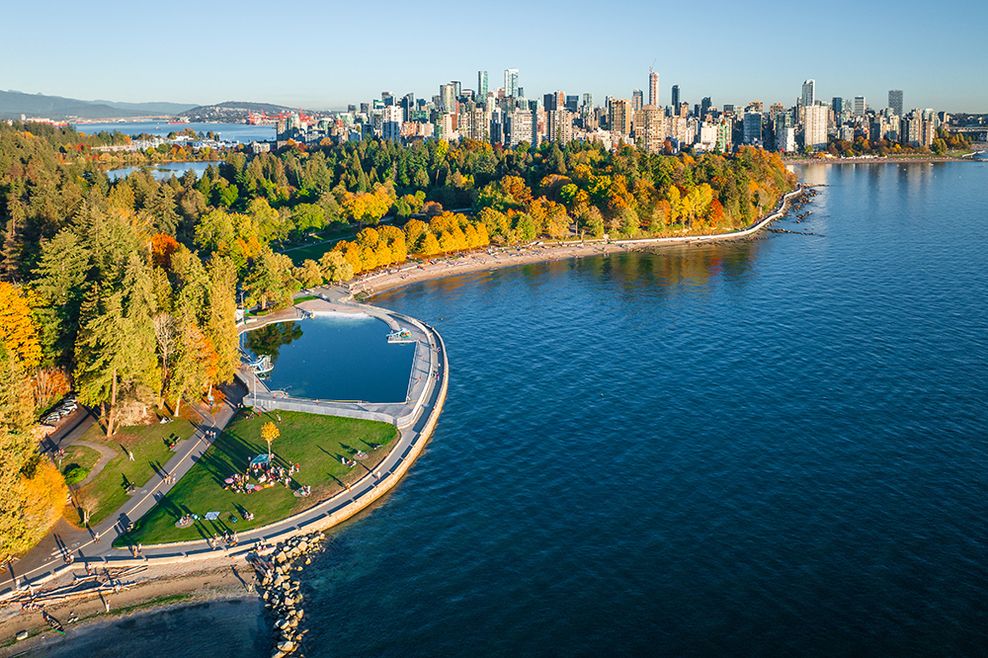
Second Beach at Stanley Park. (Destination Vancouver)
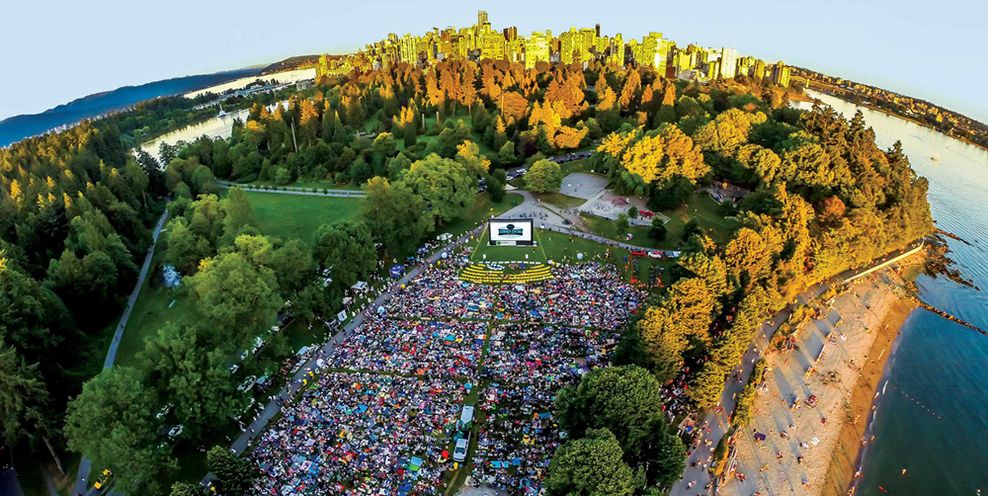
Stanley Park’s Ceperley Park during a free outdoor movie screening event. (Fresh Air Cinema)
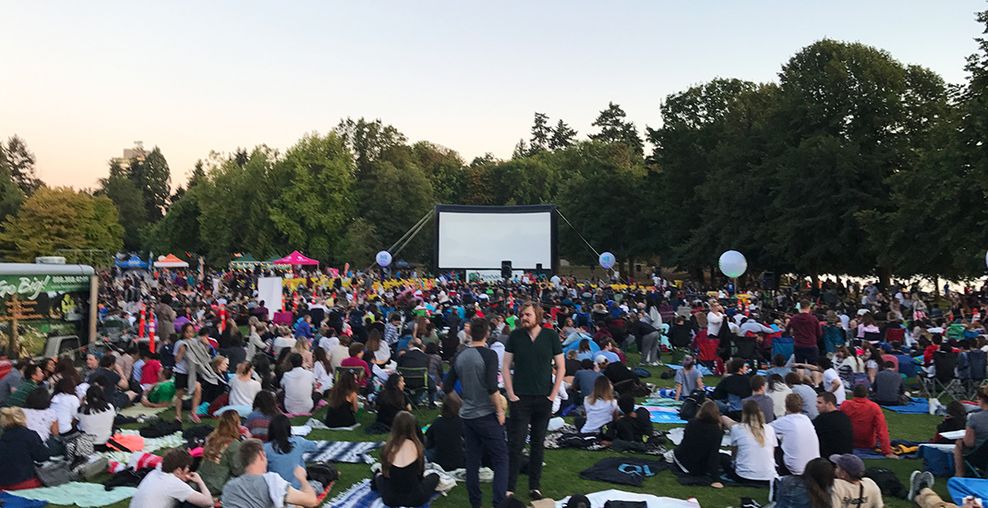
Stanley Park’s Ceperley Park during a free outdoor movie screening event. (Fresh Air Cinema)
While there would be new pedestrian pathways and potentially some boardwalks around the lagoon, the extensive removal of the lagoon’s existing concrete banks — which currently support pedestrian pathways along some areas at the water’s edge — to create naturalized shorelines would pull people farther away from the water and reduce the ability to experience the lagoon as visitors do today.
As well, the stone bridge at the narrow waterway at the westernmost end of the lagoon, Stanley Park Nature House at the southeast corner of the lagoon, part of rhododendron garden, and the Jubilee Fountain could all be removed in this concept.
The landmark Jubilee Fountain has not been operational for about a decade, after flooding damaged its systems. When it was operational, the iconic fountain sent streams of water upwards to a height of over 100 ft., with the water feature also illuminated at nighttime.
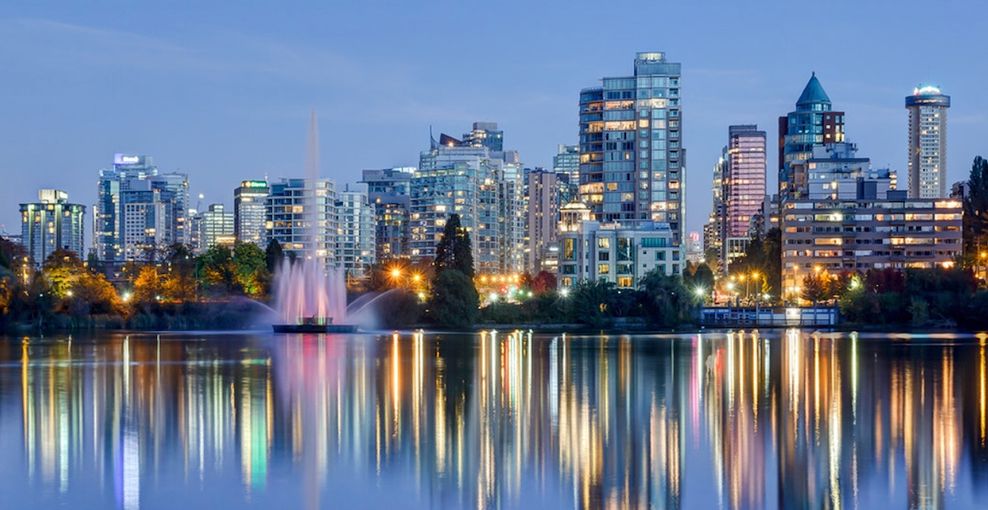
Jubilee Fountain at Lost Lagoon in Stanley Park. (Patrick Lundgren/Flickr)
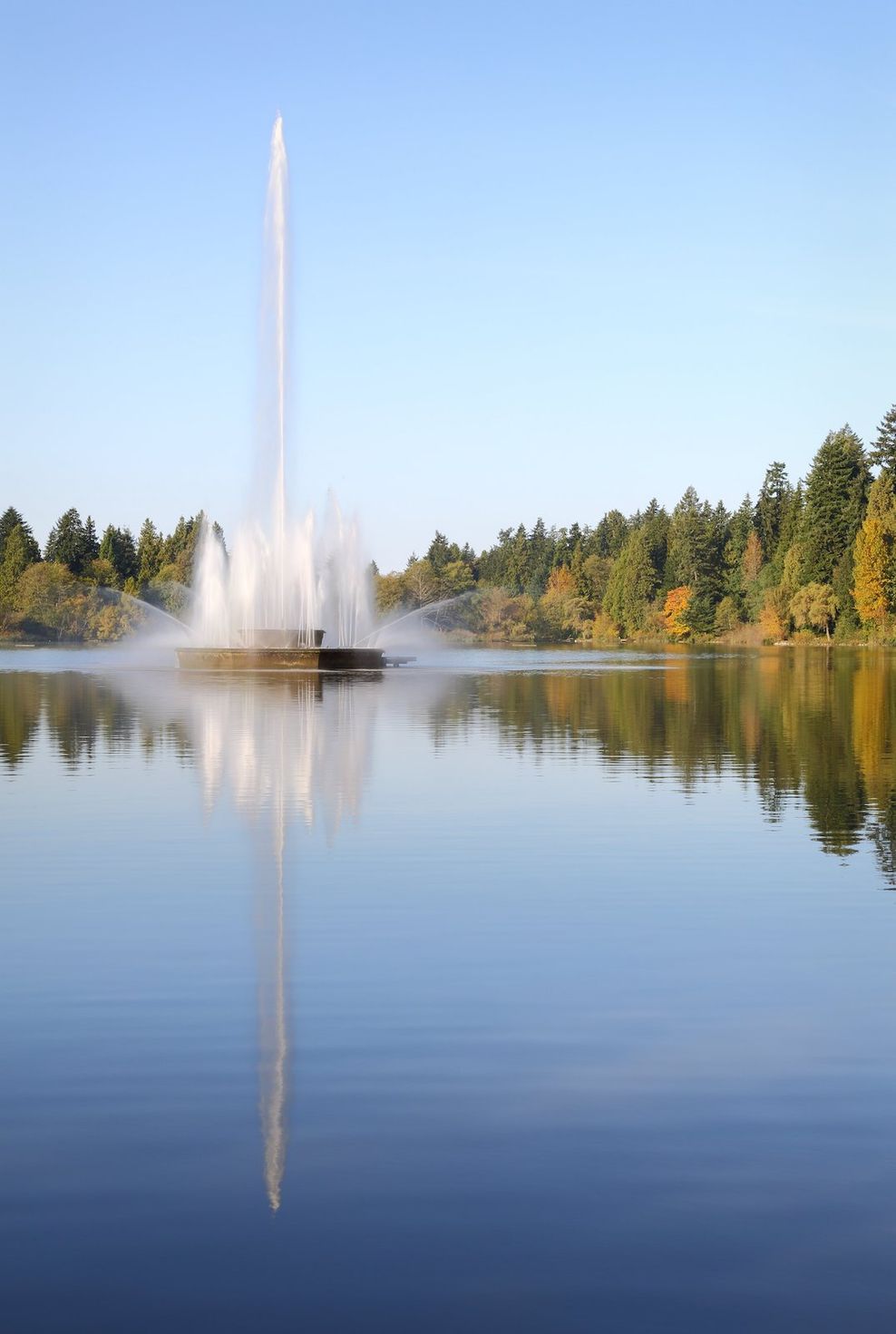
Jubilee Fountain at Lost Lagoon in Stanley Park. (Max Lindenthaler/Shutterstock)
Estimated $30-million cost
Financing also remains a major challenge. Early estimates place the cost of the tidal reconnection project at approximately $30 million, but the Park Board currently does not have any funding allocated to build it.
About three years ago, Park Board staff also estimated repairing the Jubilee Fountain could cost about $7 million.
Park Board staff recommend that Park Board commissioners endorse the Lost Lagoon tidal reconnection concept so that they can begin pursuing funding partnerships involving Vancouver’s main municipal government, as well as the provincial and federal governments.
Currently, the Park Board has $200,000 in available funding to perform detailed design work and complete grant applications. Park Board staff indicate such work could begin as early as 2026, with construction timelines dependent on funding and regulatory approvals.
The concept has the endorsement of the Government of Canada’s Department of Fisheries and Oceans, Vancouver Fraser Port Authority, and the Tsleil-Waututh First Nation.
The Lost Lagoon proposal follows a familiar pattern for the Park Board: commissioning extensive planning and technical studies — often involving outside consultants — before securing funding to build the major projects, funding that in several past cases has not materialized.
One example is Jericho Pier. In 2017, Park Board commissioners approved a Park Board staff design concept for a new permanent replacement Jericho structure built of steel and concrete and elevated to better withstand storms and rising sea levels. At the time, the project was estimated to cost about $16 million, with construction expected to begin in 2020. By 2023, the projected cost had risen to between $21 million and $25 million, and Park Board staff had not secured funding to proceed.
After a storm in early 2022 heavily damaged the existing timber pier, Park Board staff proposed demolishing the existing pier structure — even though there were no guarantees a new permanent replacement pier would ever be built due to the funding challenges. Park Board commissioners rejected that demolition plan in September 2023, opting instead to repair the existing pier. Repairs were finally completed in June 2025 at a cost of about $1 million, with most of the work funded through insurance.
Another example is the redevelopment of the Britannia civic hub. In 2018, Park Board commissioners approved a master plan concept that included a new Britannia aquatic centre, gymnasium, ice rink, public library, expanded park spaces, and other community and recreational facilities, along with some affordable housing on the site. At the time, the multi-phase redevelopment was estimated to cost nearly $500 million and was expected to unfold over 10 to 20 years. However, construction has yet to begin. In Fall 2025, Park Board staff indicated they were restarting planning work and were still at an early stage.
Park Board staff also previously led the West End Waterfront Plan, a joint initiative with City of Vancouver staff launched in 2019 to redesign the English Bay Beach and Sunset Beach Park areas with new spaces and infrastructure for recreation, active transportation, events, and community use.
In 2023, the West End Waterfront Master Plan carried a preliminary implementation cost of about $300 million. At least $2.6 million had already been spent on consulting firms to develop the master plan, excluding municipal staff time and other resources used for public engagement and preparation of the 158-page vision document.
Although Park Board commissioners approved the West End Waterfront Plan strategy in April 2024, the proposal was ultimately rejected the following month by the ABC Vancouver-led majority in Vancouver City Council, which has the final authority over Park Board capital spending. At the time, some ABC councillors described the $300-million plan as “fantasy” and argued the City should instead prioritize limited capital funding for renewing aging community and recreation centres, including the Britannia civic hub.
- You might also like:
- Estimated $7 million cost to repair historic fountain in Lost Lagoon in Stanley Park
- New Britannia aquatic and community centre and ice rink in East Vancouver back in planning phase after long pause
- Vancouver city councillor calls for fewer studies, more realistic and timely shovel-ready projects in next capital plan
- Vancouver Park Board mobility study ponders new multi-level parkades in Stanley Park
- New looping TransLink bus route on Stanley Park Drive could launch in 2027
- Spanish Banks Beach now has a new naturalized water-flowing creek from Pacific Spirit Regional Park