


FIFA World Cup road closures to turn downtown Vancouver into a pedestrian fan zone


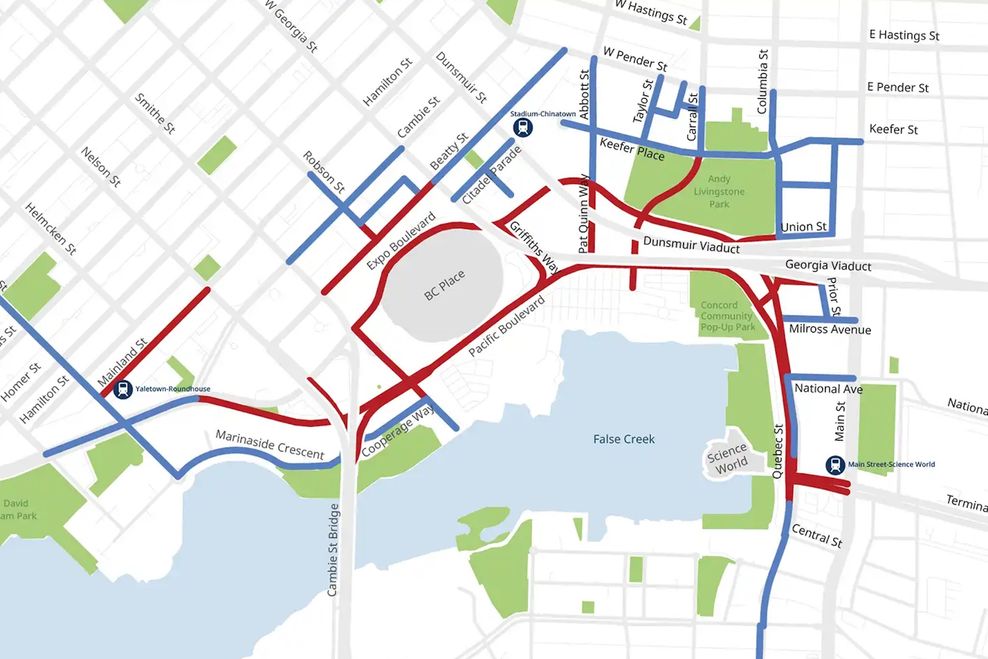
As Vancouver gears up to host seven matches during the 2026 FIFA World Cup, residents, businesses, and visitors are being asked to brace for significant disruptions to vehicle traffic and mobility around BC Place Stadium in downtown Vancouver.
Moreover, extensive FIFA World Cup-branded decorations and dressings will also aid the effort in bringing the tournament’s spirit to the city.
To support the tournament’s operations, safety, and security and to help create the festive atmosphere, Vancouver City Council approved a FIFA World Cup bylaw last week that temporarily loosens some rules and tightens others.
In anticipation of the over 50,000 spectators that will attend each match at the stadium, and the tens of thousands of additional diehard soccer fans who will want to be near the stadium action each match day, the City of Vancouver recently announced its tentative plan — subject to change — to implement a series of temporary full road closures and “local-traffic only” zones, extending beyond match days into the broader five-week tournament period.
- You might also like:
- In the name of FIFA: City of Vancouver loosens some rules and tightens others for World Cup
- Notable impacts that the FIFA World Cup will have on Vancouver, so far
- New renderings of BC Place Stadium renovations ahead of the 2026 FIFA World Cup
- New PNE amphitheatre construction cost grows to $184 million
- 2026 FIFA World Cup costs in Vancouver projected to reach up to $624 million
- Hotel room tax: How the City of Vancouver will pay for its 2026 FIFA World Cup costs
Throughout the tournament period from June 11 to July 19, 2026, there will be a full closure of the Cambie Street Bridge’s northbound off-ramp onto Pacific Boulevard eastbound and the stretch of Pacific Boulevard between Smithe Street (outside Parq Vancouver casino) and Carrall Street. Pacific Boulevard will also see partial road closures over a larger stretch — defined as open to local traffic only (residents and businesses) — between east of Davie Street and Quebec Street, as well as Smithe Street and Cooperage Way near the casino, Griffifths Way, and Pat Quinn Way.
The closures around the stadium will expand substantially during each match day, with a two-km radius “Controlled Area” in place for security and crowd control.
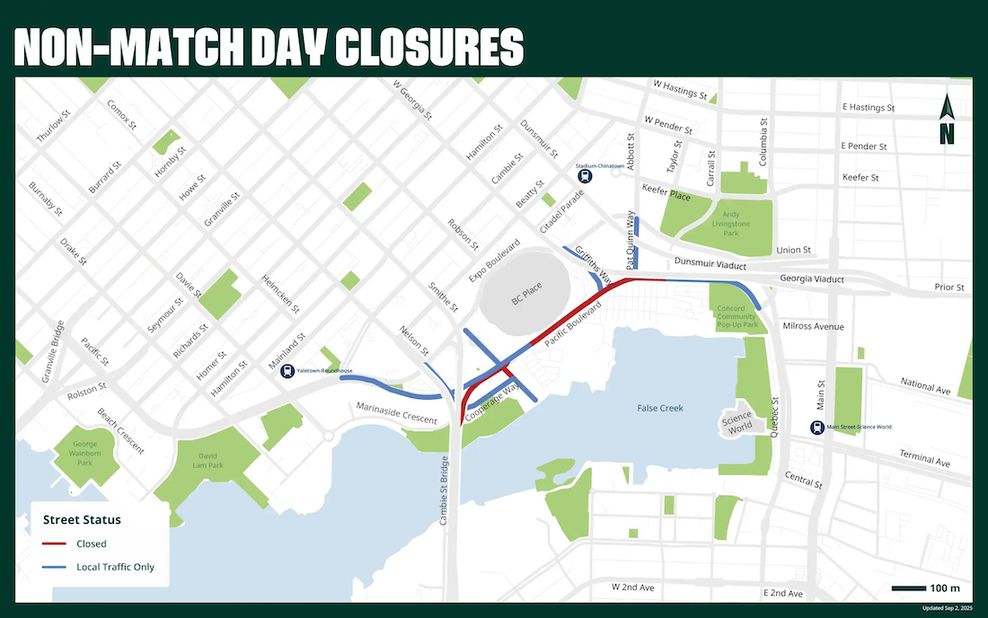
Draft plan for road closures in downtown Vancouver during 2026 FIFA World Cup non-match days. (City of Vancouver)
Pacific Boulevard between Yaletown and Science World to become a party zone for the pedestrian route to BC Place Stadium
During the seven match days, Pacific Boulevard will see a full closure between just east of Davie Street and continuing all the way along Quebec Street to the intersection of Main Street and Terminal Avenue. There will also be a partial road closure of Pacific Boulevard/Pacific Street between Drake Street to east of Davie Street. Together, these full and partial road closures of Pacific Boulevard/Pacific Street form a “last mile” pedestrian-only procession route to the stadium from SkyTrain’s Yaletown-Roundhouse Station and SkyTrain’s Main Street-Science World Station.
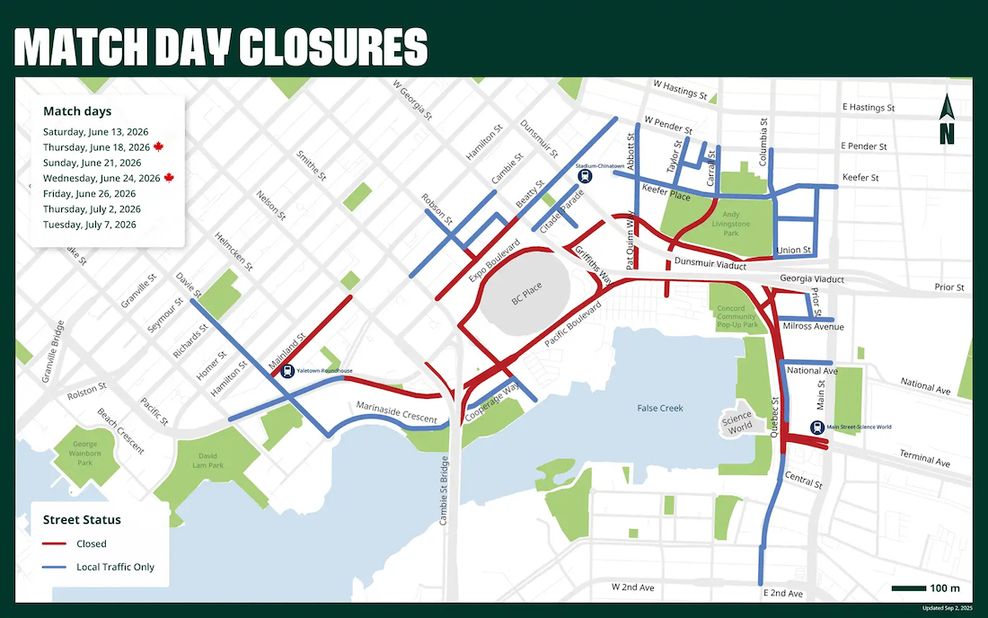
Draft plan for road closures in downtown Vancouver during 2026 FIFA World Cup match days. (City of Vancouver)
The security screening area and entrance into the stadium will be focused on Pacific Boulevard — where all spectators will enter. Departing from typical events, there will be no access into the stadium from the access points on Beatty Street and Robson Street.
Furthermore, there will be a festive fan zone along the Pacific Boulevard/Pacific Street “Last Mile” outside the stadium — in addition to the official FIFA Fan Festival held outside of downtown Vancouver at the PNE fairgrounds in Hastings Park, where the new 10,000-seat amphitheatre will be the centrepiece to the five-week-long festival with an operational programming and activation budget of roughly $20 million.
The municipal government’s bidding process seeking an event production and experience design company specifically for this Last Mile on Pacific Boulevard provides a hint on how elaborate it might be.
“The Last Mile refers to the pedestrian corridors and adjacent public spaces that connect spectators arriving via transit, walking, or micromobility to the secure stadium perimeter at BC Place. The selected contractor will lead the design and delivery of an engaging, inclusive, and operationally sound Last Mile experience that meets FIFA standards and supports a world-class fan journey,” reads the procurement materials.
“Vancouver must deliver a safe, seamless, and culturally resonant Last Mile experience that guides spectators from arrival to entry in a manner that meets FIFA’s operational and branding standards while celebrating the local character of the city… The Last Mile should celebrate the city’s Indigenous and multicultural heritage, public spirit, and creative energy through visual storytelling, cultural activations, and atmosphere design.”
Furthermore, it was stated that the “Last Mile should enrich the overall matchday experience, leave visitors with a memorable impression of the city, and contribute positively to long-term community and civic legacies.” There could be performance stages, cultural programming, thematic zones, activations, and FIFA merchandise retail zones.
The Last Mile concept that will be put in place for the FIFA World Cup will be tested before the tournament during at least one unspecified event in the second quarter of 2026.
The 10-acre Plaza of Nations site, located immediately south of Pacific Boulevard and BC Place, is also expected to play a role in FIFA World Cup operations. It has been identified as a potential space for tournament uses, though whether it will serve as a security screening area, a fan zone, or both has yet to be confirmed.
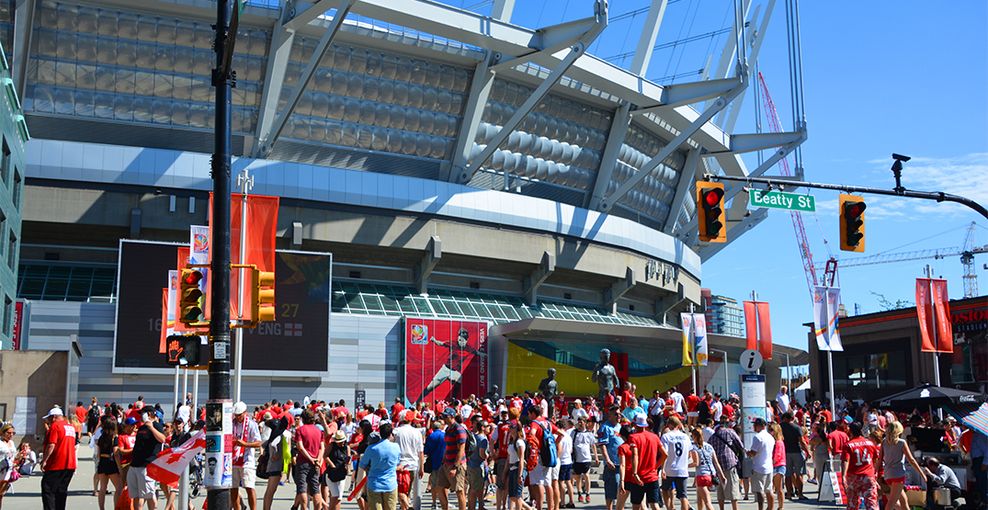
Canadian fans arrive at BC Place for the FIFA Women’s World Cup in 2015. (meunierd/Shutterstock)
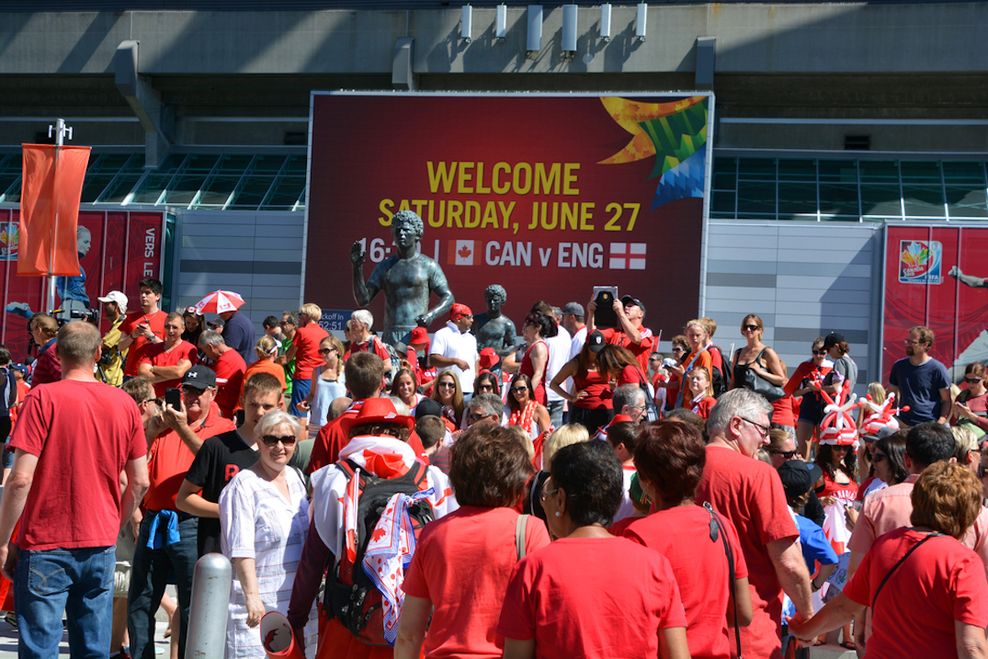
Crowds for the 2015 FIFA Women’s World Cup in downtown Vancouver. (meunierd/Shutterstock)
During the match days, other full road closures can also be expected for Beatty Street between Smithe Street and West Georgia Street, Expo Boulevard between Smithe Street and Quebec Street, Carrall Street between Keefer Street and Pacific Boulevard, and Mainland Street between Davie Street and Nelson Street (next to Yaletown-Roundhouse Station).
Partial road closures open to local traffic only will be far more expansive on match days, including Davie Street between Seymour Street and Marinaside Crescent, Marinaside Crescent between Davie Street and the Cambie Street Bridge, Robson Street between Hamilton Street and Beatty Street, Cambie Street between Smithe Street and West Georgia Street, Beatty Street between West Georgia Street and West Pender Street, Keefer Street between Abbott Street and Main Street, Citadel Parade, and short segments of various other streets in and around Andy Livingstone Park and Chinatown.
It is emphasized that businesses can remain open, and residents will have access to their homes, with pedestrian access maintained.
In addition to vehicle traffic impacts, there will be changes to TransLink bus routes that typically run through these streets. Earlier this month, the public transit authority indicated it is “in the process of reviewing various scenarios and developing contingency plans that focus on delivering service to the fans while maintaining safety and minimizing impact on regular transit service.”
BC Place Stadium will host five group stage matches between visiting countries on June 13 (Saturday), June 21 (Sunday), and June 26 (Friday), and two group stage matches with Team Canada on June 18 (Thursday) and June 24 (Wednesday). The stadium will also host a round-of-32 knock-out match on July 2 (Thursday) and a round-of-16 knock-out match on July 7 (Tuesday).
Match kick-off times will be finalized at a later date, and all 16 host cities will learn which teams will play in their stadiums for the group matches after the 2026 FIFA World Cup Final Draw on December 5, 2025.
Vancouver is already expected to see a very significant influx of visitors as a FIFA World Cup host city. However, the draw will determine just how large that surge could become. If high-profile national teams with passionate fans and massive global followings are assigned to BC Place Stadium, the number of travelling supporters could rise even further, amplifying both the crowds and the atmosphere throughout the tournament period.
There will also be substantial FIFA World Cup-branded decorations and dressing around the stadium to further elevate the festive atmosphere beyond simply the gathering of large soccer-loving crowds.
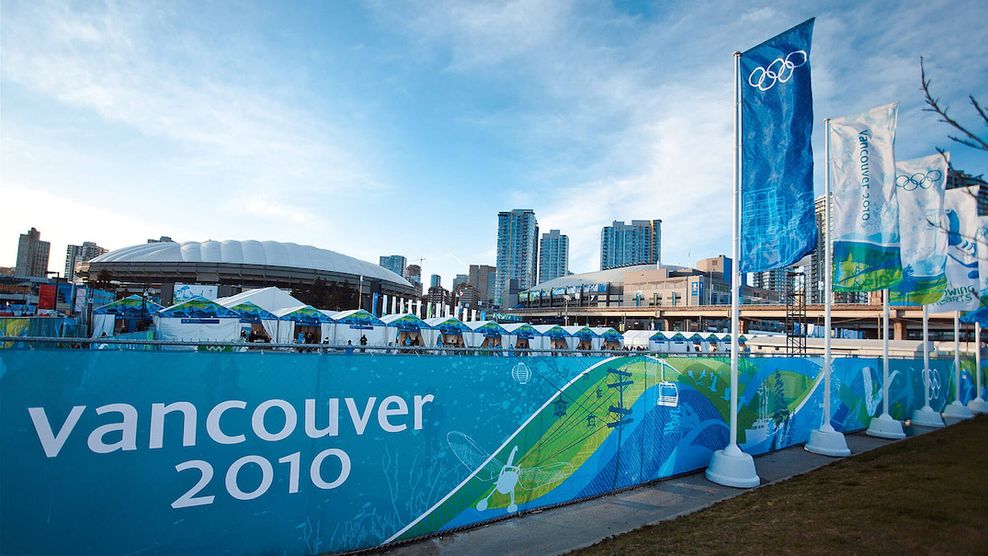
BC Place and Canada Hockey Place (Rogers Arena/GM Place) during the Vancouver 2010 Winter Olympics. (Hulse & Durrell)
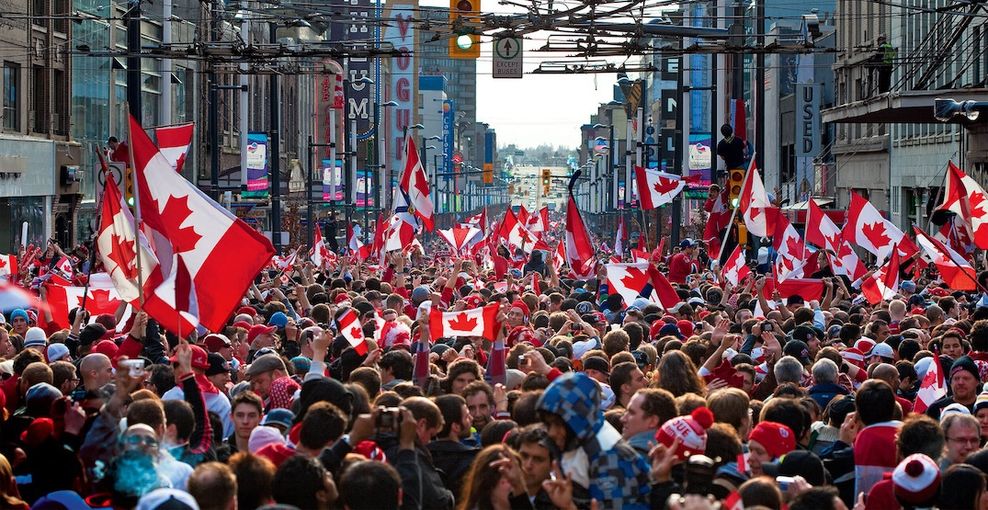
Crowds on Granville Street after Canada’s Men’s Ice Hockey gold medal win during the Vancouver 2010 Winter Olympics. (Hulse & Durrell)
The tentative road closure strategy around the stadium for the FIFA World Cup is not entirely dissimilar to what was put in place for the 2010 Winter Olympics, with a key difference being the full closure of the entire Dunsmuir and Georgia viaducts throughout the Olympics.
Empty parking lots immediately east, southeast, and west of BC Place Stadium and Rogers Arena — venues for the Olympic ceremonies and ice hockey, respectively — saw the erection of numerous tents for spectator security screening operations to enter a secure venue area outside the stadiums.
The FIFA World Cup planning approach appears to draw from the layout used during the 2010 Winter Olympics, while also accounting for the major building developments that have risen in the area since then — including the condominium and casino/hotel complex built over BC Place Stadium’s former west parking lot. As well, during the Olympics, a massive temporary tent structure occupied much of the Plaza of Nations to support rehearsal and operational needs for the opening and closing ceremonies.
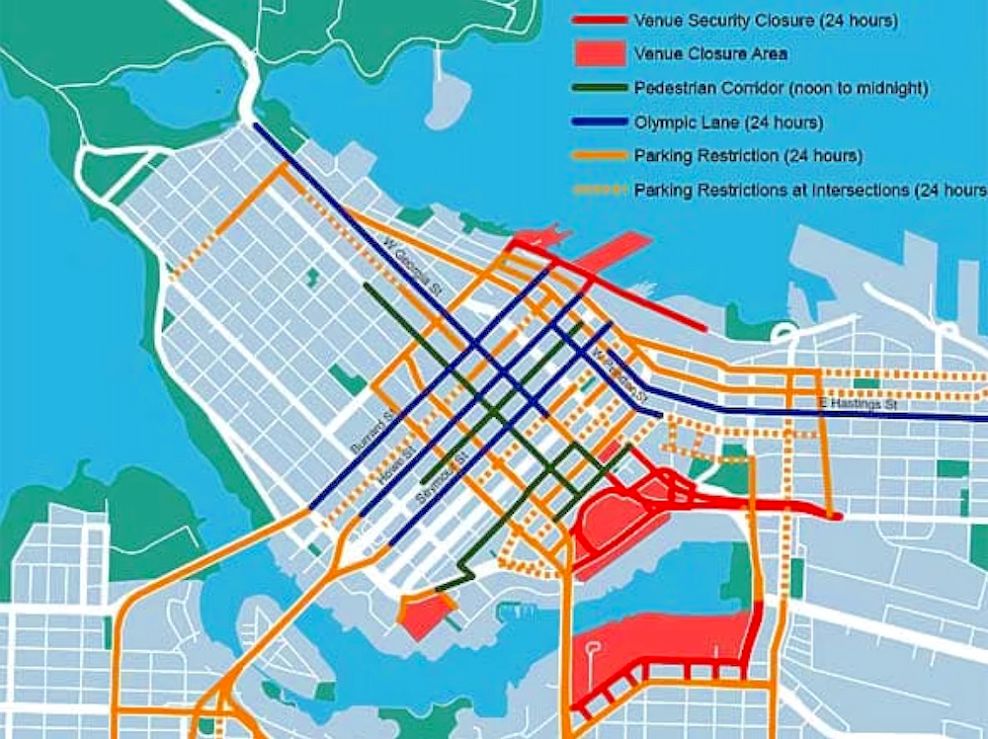
Road closure map in downtown Vancouver during the 2010 Olympic Winter Games. (VANOC)
Vancouver to be blanketed by the “Look of the Tournament”
When it comes to citywide decorations and dressings, Vancouver could actually appear even more vibrant for the 2026 FIFA World Cup than it did during the Olympics.
Due to the impacts of the 2008/2009 recession on its sponsorship revenue, VANOC — the organizing committee for the 2010 Games — was forced to dramatically cut back its “Look of the Games” budget, slashing what was originally planned to exceed $30 million for visual displays across Vancouver and Whistler.
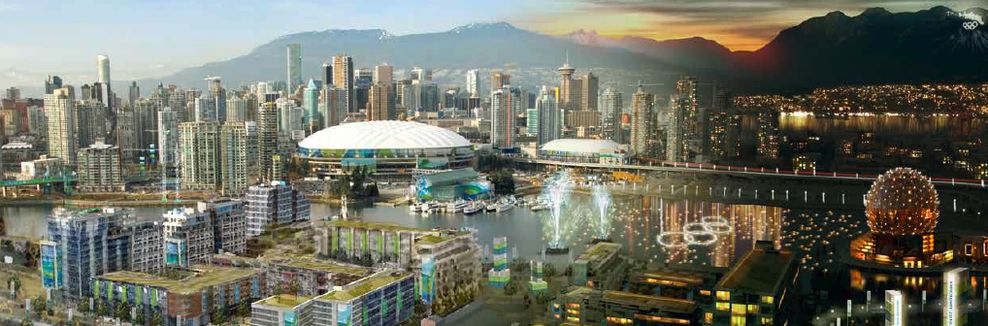
Olympic rings atop Grouse Mountain and in the waters of False Creek were some of the original ‘Look of the Games’ concepts envisioned for Vancouver 2010. (VANOC)
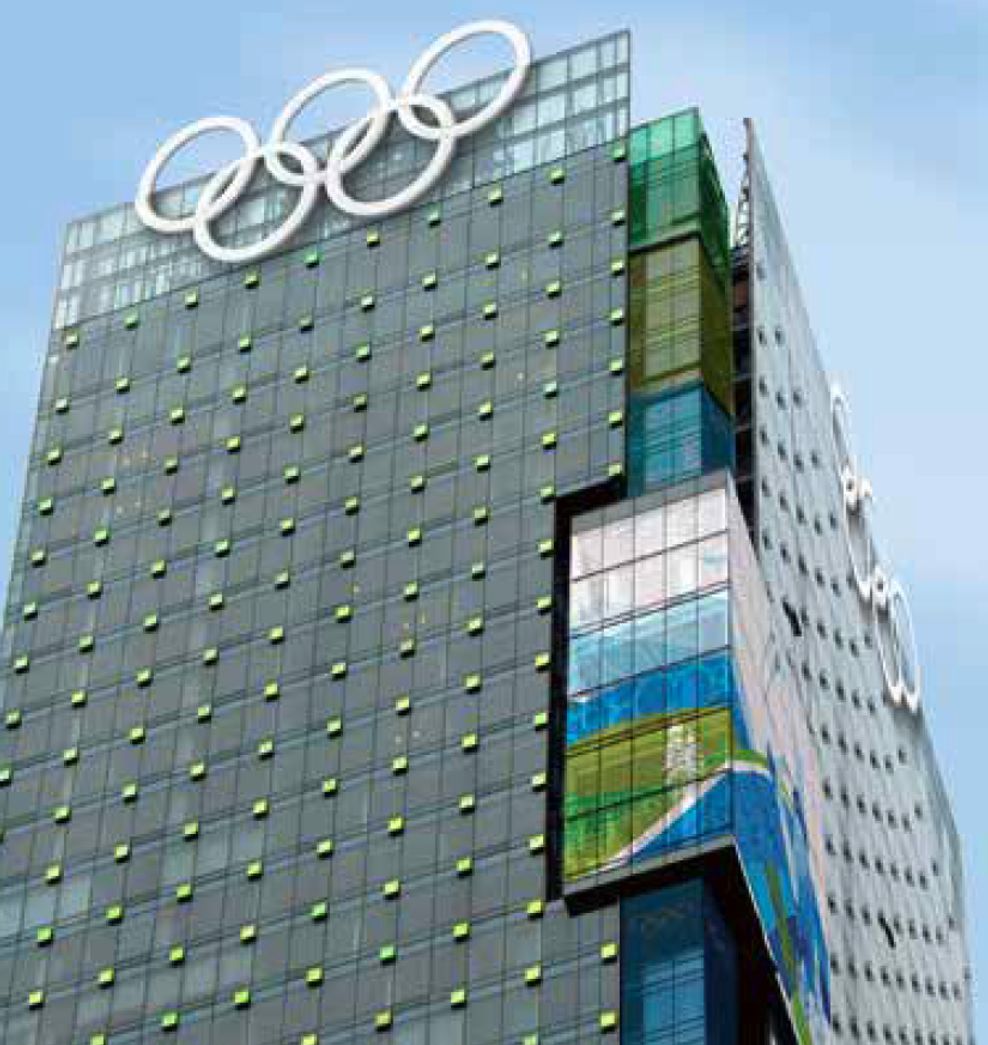
Olympic rings atop Shangri-La Hotel, Vancouver’s tallest building, and branded decorations were some of the original ‘Look of the Games’ concepts envisioned for Vancouver 2010. (VANOC)
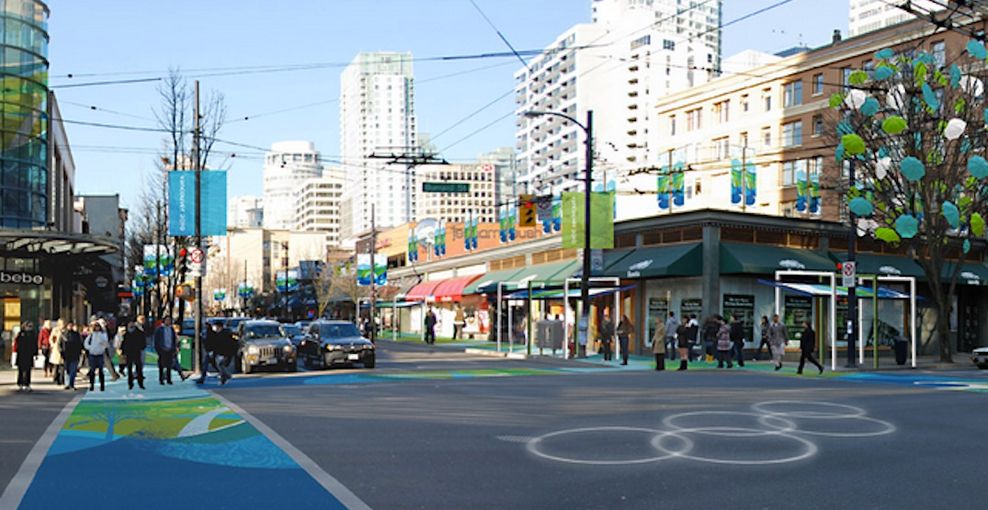
Artistic rendering of Vancouver 2010’s Look of the Games on Robson Street. (VANOC)
A separate procurement process earlier this year, seeking a contractor to design and install FIFA World Cup’s dressing, wayfinding, and signage, notes that there could be branded entry gateways, archways, and welcome zones at key access points in the region, including the Last Mile route, other areas near BC Place Stadium, major public transit hubs, and Vancouver International Airport.
There could be other citywide activations to create a “cohesive and immersive event atmosphere,” as well as branded decorations and thematic elements for public transit — specifically for SkyTrain trains and stations, buses, and bus shelters — and landmark illuminations, themed projections, interactive digital displays, and temporary installations.
Pedestrian zones, public plazas, and commercial areas around the city would also see thematic branding, including street light pole banners, street decals, branded seating, and temporary public art, such as sculptures and other FIFA-branded art displays.
The installation process for the “Look of the Tournament” will begin in early January 2026 and conclude on May 15, 2026, three weeks in advance of the kickoff in Mexico City. The removal process will begin on July 30, 2026 and end in late December.
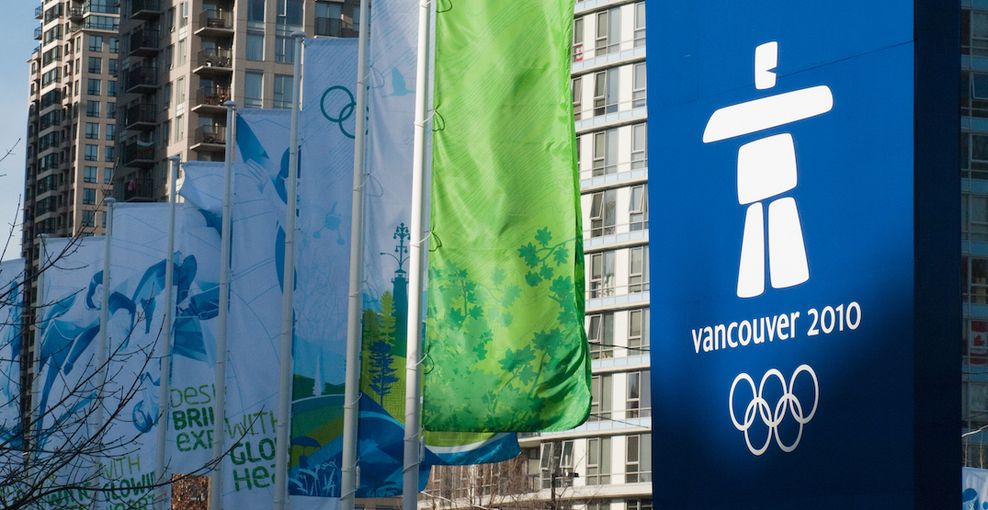
Olympic banners at the Olympic Village during the Vancouver 2010 Games. (Shutterstock)
- You might also like:
- In the name of FIFA: City of Vancouver loosens some rules and tightens others for World Cup
- Notable impacts that the FIFA World Cup will have on Vancouver, so far
- New renderings of BC Place Stadium renovations ahead of the 2026 FIFA World Cup
- New PNE amphitheatre construction cost grows to $184 million
- 2026 FIFA World Cup costs in Vancouver projected to reach up to $624 million
- Hotel room tax: How the City of Vancouver will pay for its 2026 FIFA World Cup costs