


Opinion: Vancouver should turn Langara Golf Course into a public park for everyone


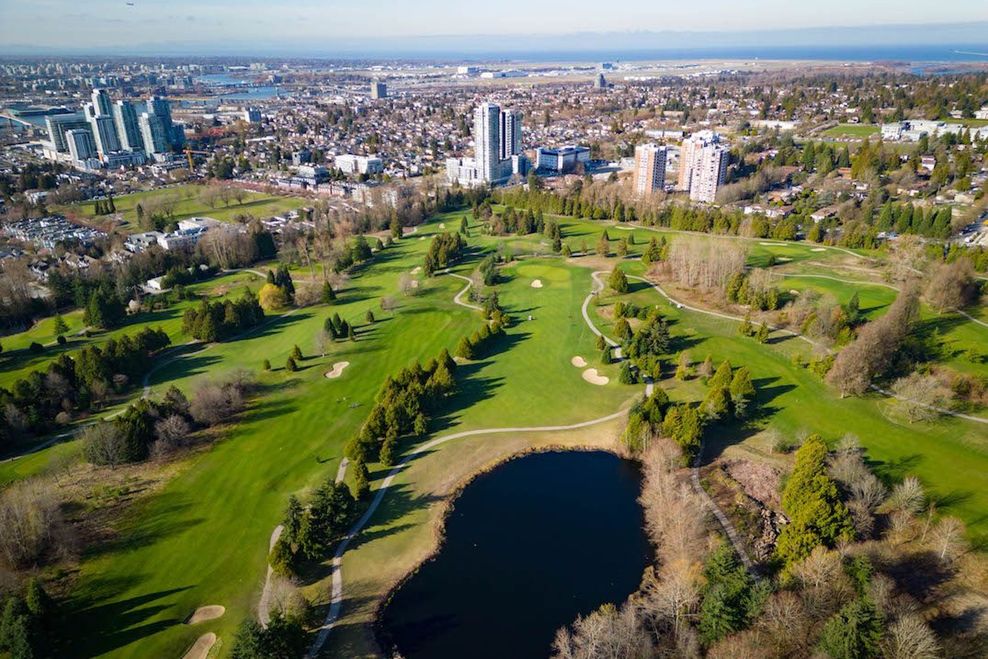
Written for Daily Hive Urbanized by Michael Cox, who is an East Vancouver resident, avid photographer, and former public transit bus driver.
Unlike cities such as Calgary, Vancouver faces significant limits on outward expansion.
The city is constrained by water on three of its sides and by the municipal boundary with Burnaby on the fourth side. As a result, any effort to add parkland requires trade-offs elsewhere.
A recent example is an old house on East 8th Avenue that had stood empty for several years; once demolished, the property was incorporated into the adjacent W.C. Shelly Park, modestly expanding that pocket park.
- You might also like:
- Metro Vancouver golf course to become a public park as new aquatic and community centre plan advances
- No plan to explore turning Vancouver golf courses into housing: Park Board
- 83 km of drainage pipe now installed at Vancouver's Langara Golf Course
- Over 2,600 homes, including rentals, proposed for Langara Gardens redevelopment in Vancouver (RENDERINGS)
- Townhouse neighbourhood north of Langara Golf Course eyed for redevelopment
- Vancouver City Council approves First Nations-led Langara Family YMCA redevelopment with housing, but no replacement pool
- Oakridge Park mall, rooftop public park, and community centre now months away from opening
Within the southern half of Vancouver, however, far larger tracts of land are devoted to golfing. In fact, there are five golf courses in total, three of which are owned by the City of Vancouver: McCleery Golf Course is 49.9 hectares (123 acres), Langara Golf Course is 48.7 hectares (120 acres), and Fraserview Golf Course is 84 hectares (208 acres).
In addition, the City operates three pitch-and-putt courses — the course at Stanley Park is 4.9 hectares (12 acres), Queen Elizabeth Park is 7.3 hectares (18 acres), and Rupert Park is 4.5 hectares (11 acres) — highlighting the significant amount of publicly owned land currently reserved for golf-related uses.
In total, Vancouver has 1,343 hectares (3,319 acres) of parkland, which does not include Pacific Spirit Regional Park, managed by Metro Vancouver Regional District. Of that figure, 199.3 hectares (492 acres) are set aside to be used by one class of citizen — the golfer. Golf courses and pitch and putt courses take up about 15 per cent of all parkland.
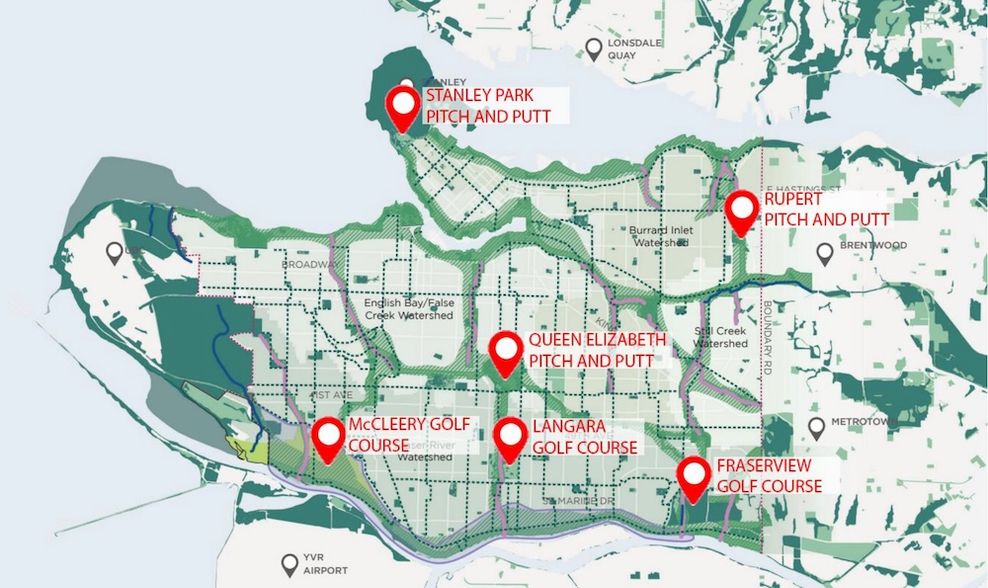
Map of City-owned golf courses in Vancouver. (Vancouver Park Board)
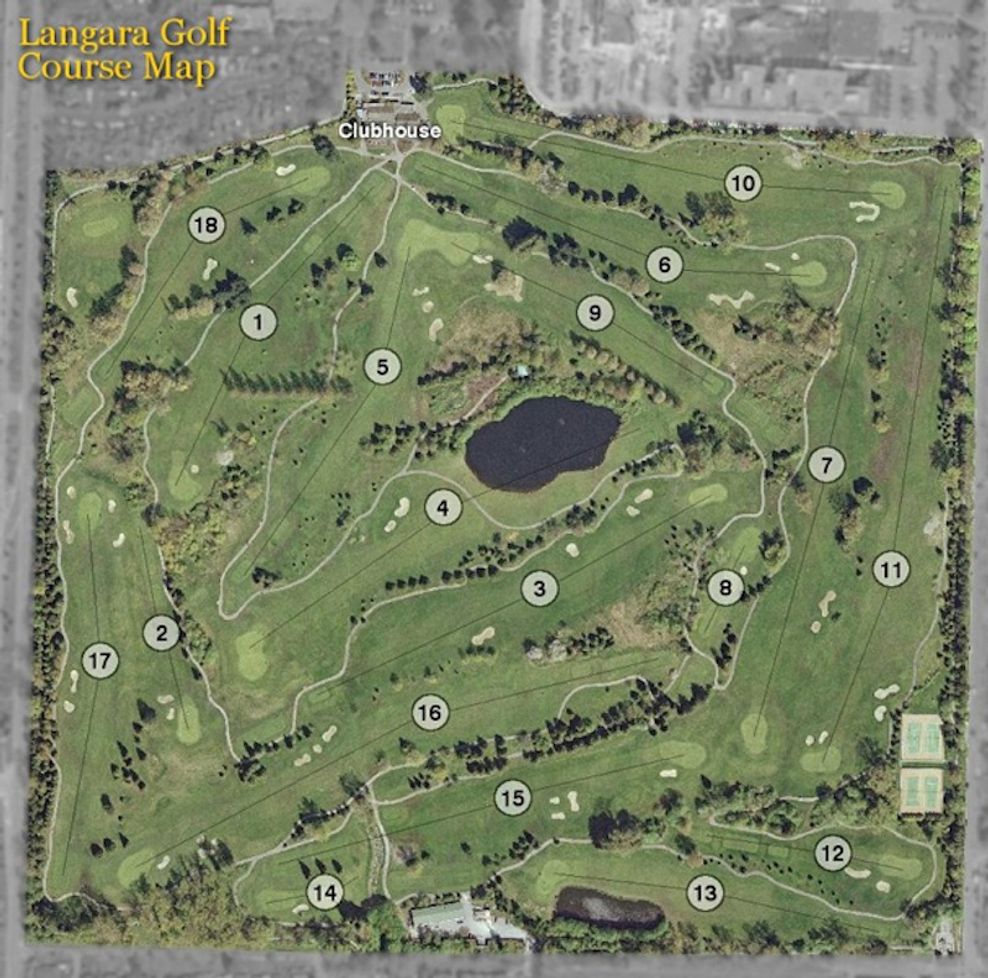
Map of Langara Golf Course. (City of Vancouver)
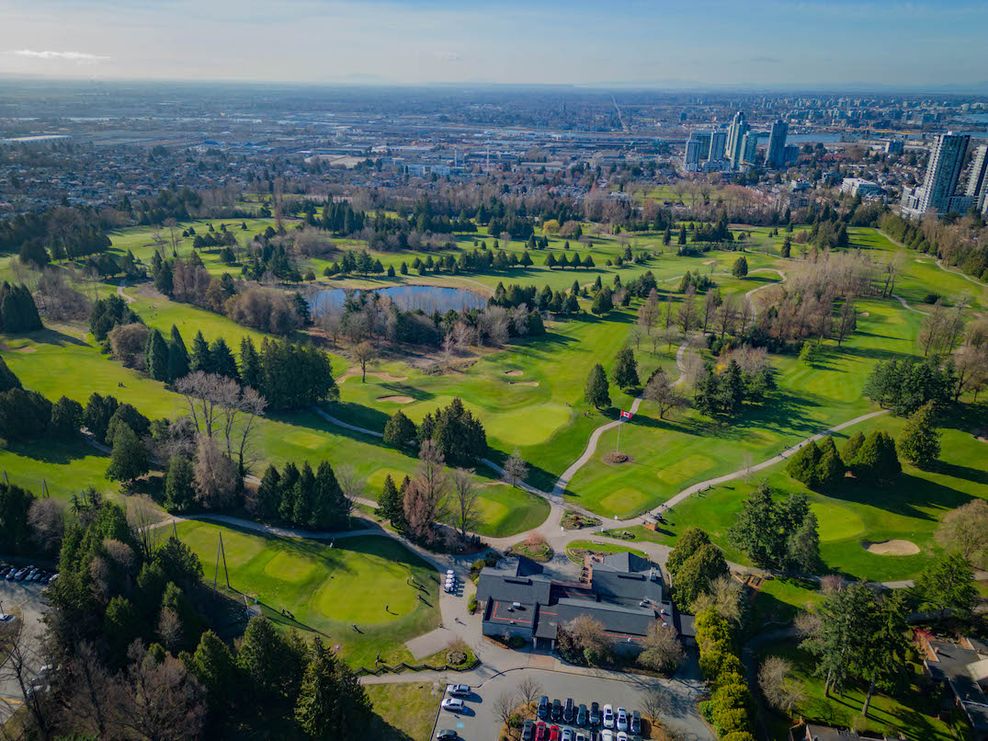
Langara Golf Course. (Vancouver Park Board)
A decade ago, I was interviewed by Rick Cluff on CBC’s Early Edition about a letter I had written to The Vancouver Sun, in which I cited those statistics and argued that one of the three golf courses should be converted into a public park. Cluff, an avid golfer, quickly dismissed my case. I have nothing against golfers — after all, I’m one-quarter Scot, and they invented the game.
The resident who simply wants to walk quietly away from traffic, sit under a tree with a book, meditate, or enjoy a picnic risks being hit by a baseball or soccer ball, struck by a cricket bat, clipped by a frisbee, or knocked over by an off-leash dog. All of these sports and activities have organized interest groups advocating for more land to be set aside or adapted for their use. But who speaks for the quiet walkers, the readers, the picnickers, and the bird watchers?
Select areas within the southern half of Vancouver are experiencing significant population increases with the development of the River District and the densification of the Cambie Street Corridor. The only significant parks nearby are Queen Elizabeth Park at 52 hectares (128 acres) and Everett Crowley Park at 38 hectares (94 acres), which is a former landfill that is now a popular dog-walking park.
“Golf is a sport that requires vast swathes of land compared to many other activities,” wrote Jesse Couture in the 2023 research paper Who Is the City For?, published in the International Journal of Sport Policy and Politics.
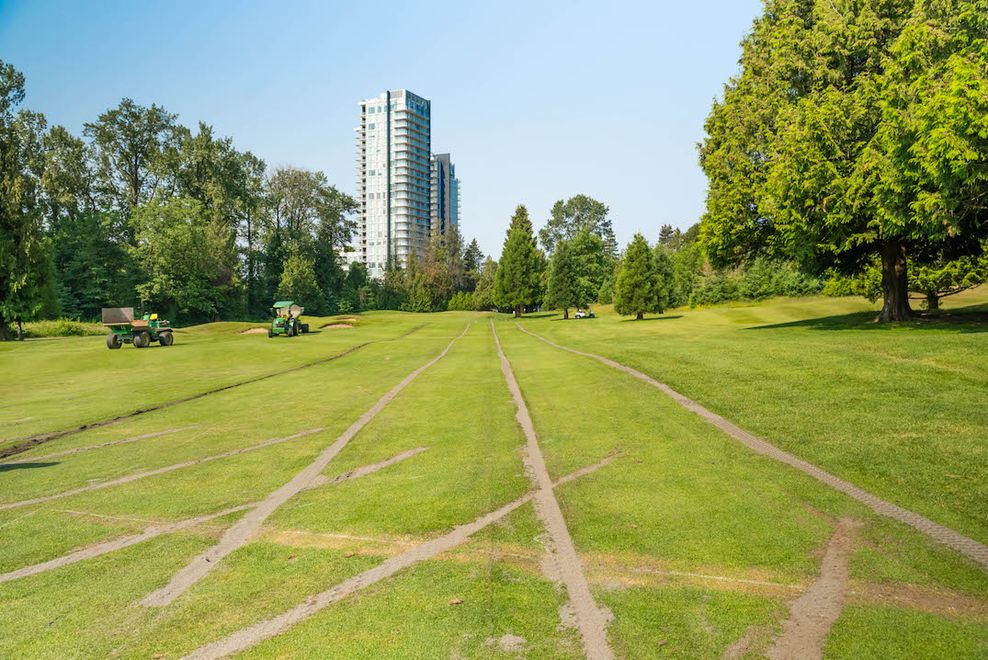
Installation of new drainage at Langara Golf Course. (Vancouver Park Board)
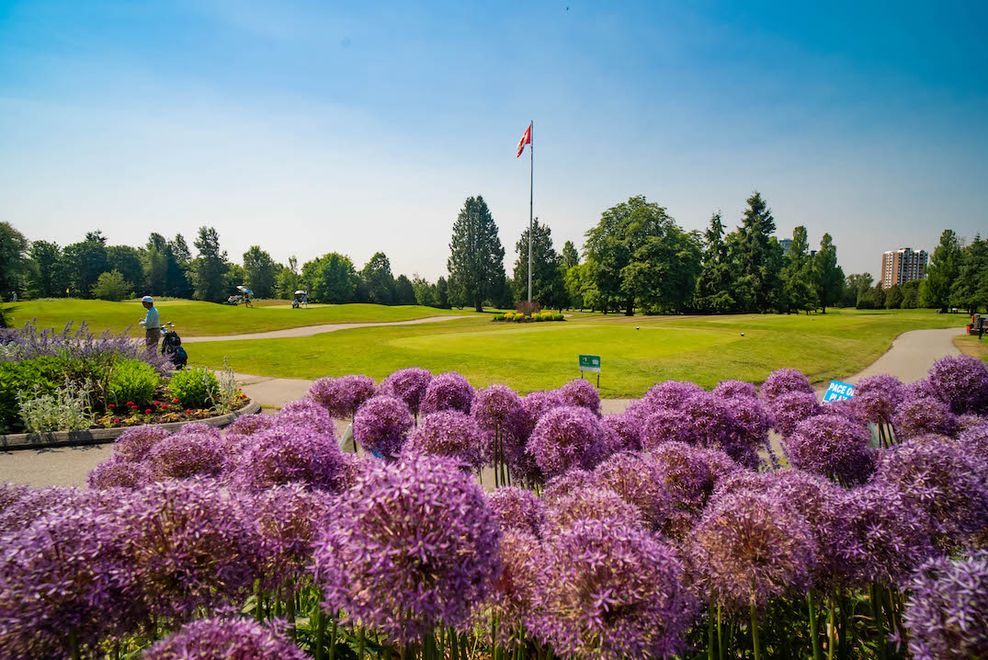
Langara Golf Course. (Vancouver Park Board)
Couture’s research looked at sports and parks in Vancouver. While he and his co-authors did not advocate replacing a golf course, I do.
Langara Golf Course is ideally situated in this increasingly dense area of the city. Abutted to the north by Langara College, the golf course’s main entrance is a seven-minute walk from the SkyTrain’s Langara-49th Avenue Station, and its southwest corner fronting Cambie Street is a 13-minute walk uphill from Marine Drive Station. There is a bus stop halfway up the length of the golf course on Cambie Street.
Oakridge Park, the redevelopment of the former Oakridge Centre mall, will be home to about 6,000 people. More towers are going up in southeast Vancouver, where River District is located.
The Vancouver Park Board will argue that the golf course generates revenue, but it would be interesting to know how much it costs the municipal government to operate that one course at Langara. Gregor Robertson, when he was mayor, had once suggested that some of that land be converted to housing; fortunately, that did not happen, as Vancouver needs every square metre of parkland it has. As for the cost of converting Langara Golf Course into a public park, it could be done gradually, in stages.
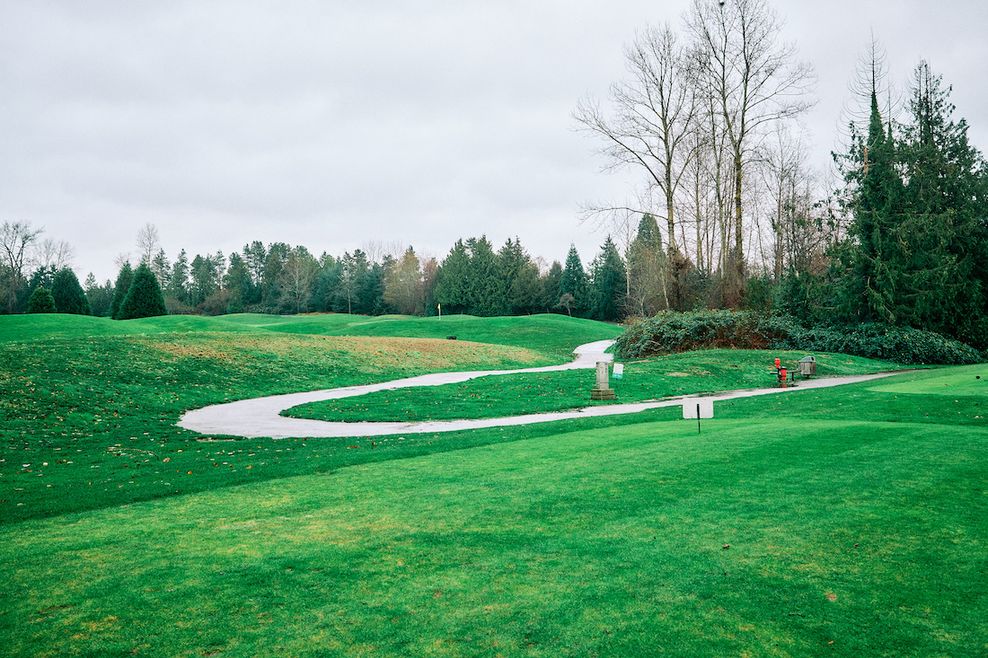
Langara Golf Course. (Michael Cox/submitted)
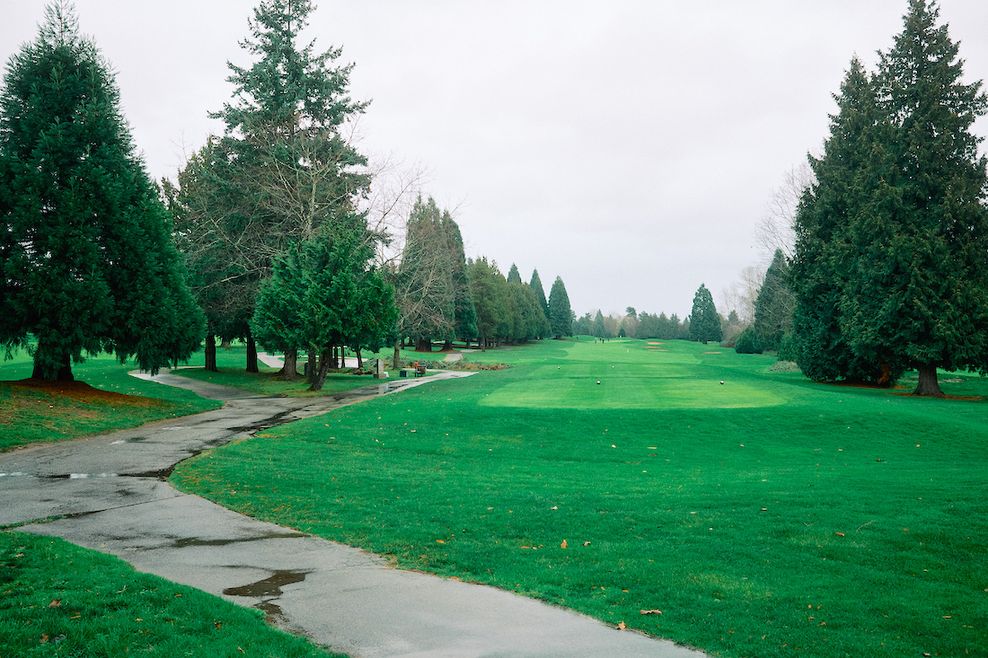
Langara Golf Course. (Michael Cox/submitted)
Langara Golf Course is recognized as a bird sanctuary, with over 100 species of birds, as well as coyotes, rabbits, and other small mammals. So, they could convert the existing Pro Shop into an interpretive centre.
With its existing network of paved pathways, the golf course is already well-suited for people who use mobility aids. The ponds and sand traps could remain as they are — perhaps repurposed as play features for children — while the clubhouse, which currently serves light food and beverages, would stay open and could even see increased use. Washrooms are already located at both the north and south ends of the course, and four tennis courts sit near the southeast corner along Ontario Street.
Currently, non-golfers — the general public — can walk around the perimeter of the golf course on a 2.7-km-long looping trail, which is mostly shaded and level. It is separated from the golf course by a wooden fence, which could remain with a few openings to a new park.
What I’m advocating is a transition of Langara Golf Course from a 48.7-hectare (120-acre), single-use park to one accessible to all, with very little immediate adaptation required. Even the tightly-mowed greens could be allowed to become small meadows.
What I would not want to see is a bulldozer razing the gentle hills into another sports field; Langara Park would be a public park for contemplation and conversation.
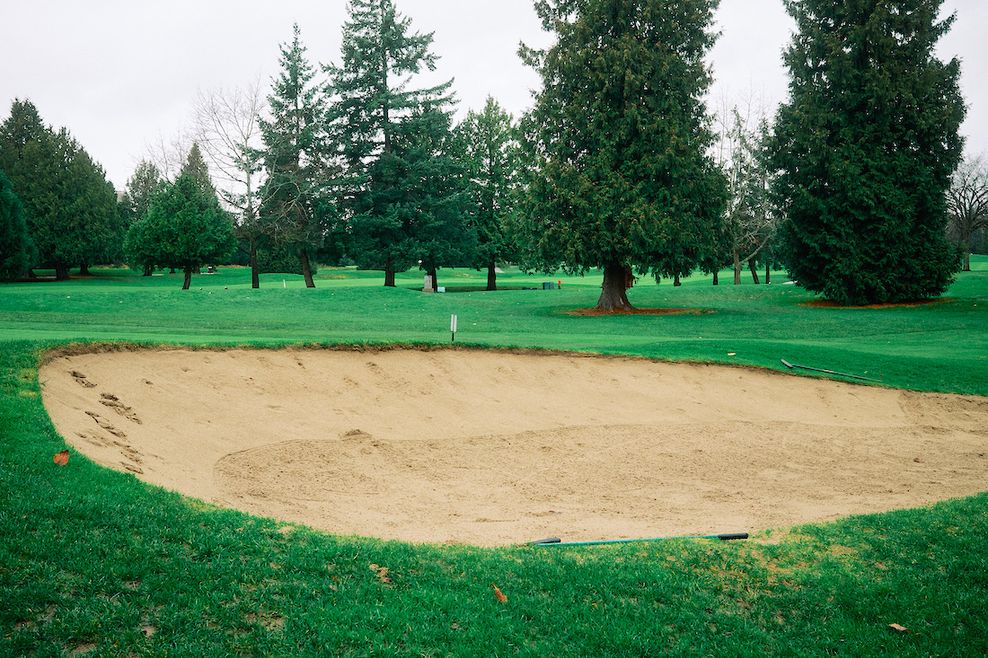
Langara Golf Course. (Michael Cox/submitted)
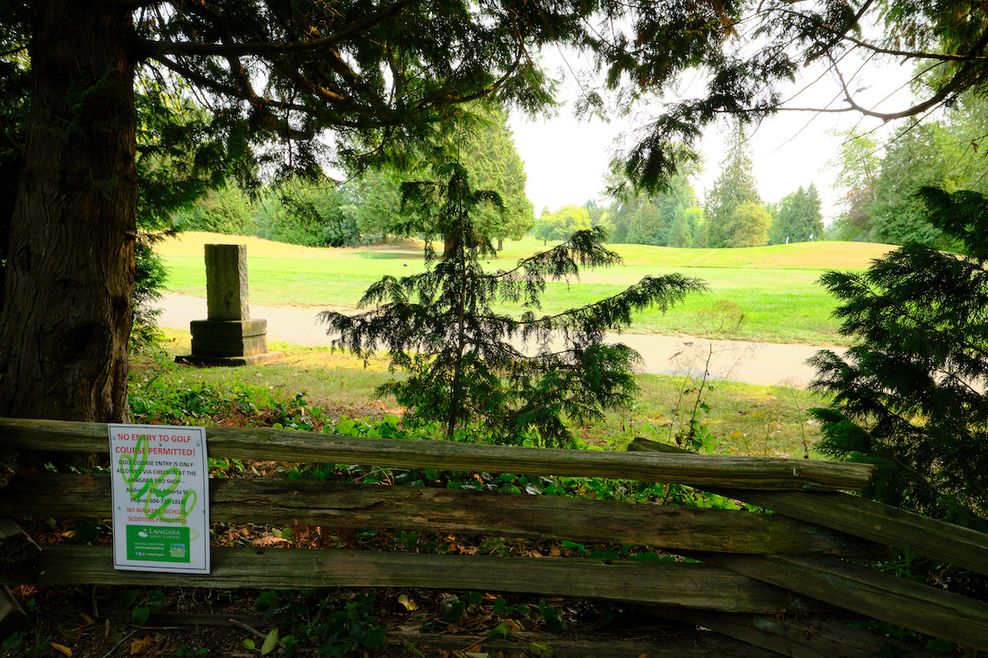
Langara Golf Course. (Michael Cox/submitted)
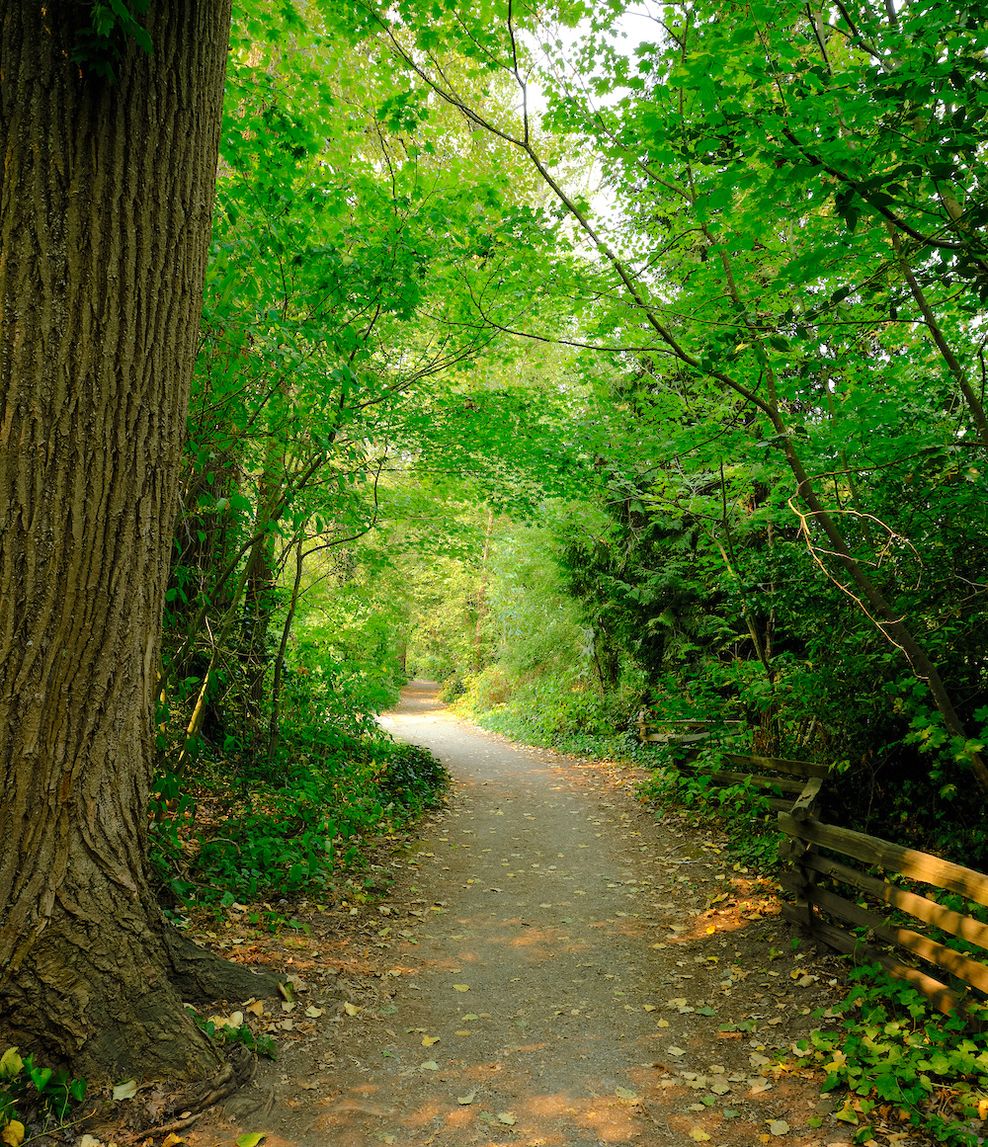
Langara Golf Course. (Michael Cox/submitted)
- You might also like:
- Metro Vancouver golf course to become a public park as new aquatic and community centre plan advances
- No plan to explore turning Vancouver golf courses into housing: Park Board
- 83 km of drainage pipe now installed at Vancouver's Langara Golf Course
- Over 2,600 homes, including rentals, proposed for Langara Gardens redevelopment in Vancouver (RENDERINGS)
- Townhouse neighbourhood north of Langara Golf Course eyed for redevelopment
- Vancouver City Council approves First Nations-led Langara Family YMCA redevelopment with housing, but no replacement pool
- Oakridge Park mall, rooftop public park, and community centre now months away from opening