


Opinion: What does the future hold for Vancouver's former Molson Coors brewery?


The Senakw rental housing complex is now just weeks away from welcoming its first residents.
The initial three towers — marking Phase One of the Squamish Nation’s transformative development of their reserve at the south end of the Burrard Street Bridge — are now in the final stages of construction. Tower 1, a 26-storey building featuring 400 rental homes, is on track for completion in early 2026. The remaining 1,200 homes in this first phase are expected to be ready for occupancy by the end of next year. This first phase is situated immediately west of the bridge, adjacent to Vanier Park.
Meanwhile, some early site preparation work has been performed east of the bridge in anticipation of Phase Two, which will add approximately 1,500 more rental homes before the end of this decade.
- You might also like:
- Vancouver mayor seeks to unlock development potential of five 'exceptional' sites
- Surrey, Delta, and Langley Township want to enable more outward urban growth
- Major mixed-use residential, commercial, and industrial expansion of Marine Gateway includes a rooftop public park
- First residents could move into Senakw's first rental housing tower by early 2026
- Granville Island planning new elevator and staircase tower to Granville Bridge, observation deck, and an additional market building with underground parking
- Opinion: RapidBus route needed from Arbutus Station to downtown Vancouver to serve Senakw
Looking ahead to the early 2030s, Phases Three and Four are expected to complete the full build-out of Senakw — generating a total of 6,000 rental homes, along with neighbourhood-serving retail and dining spaces.
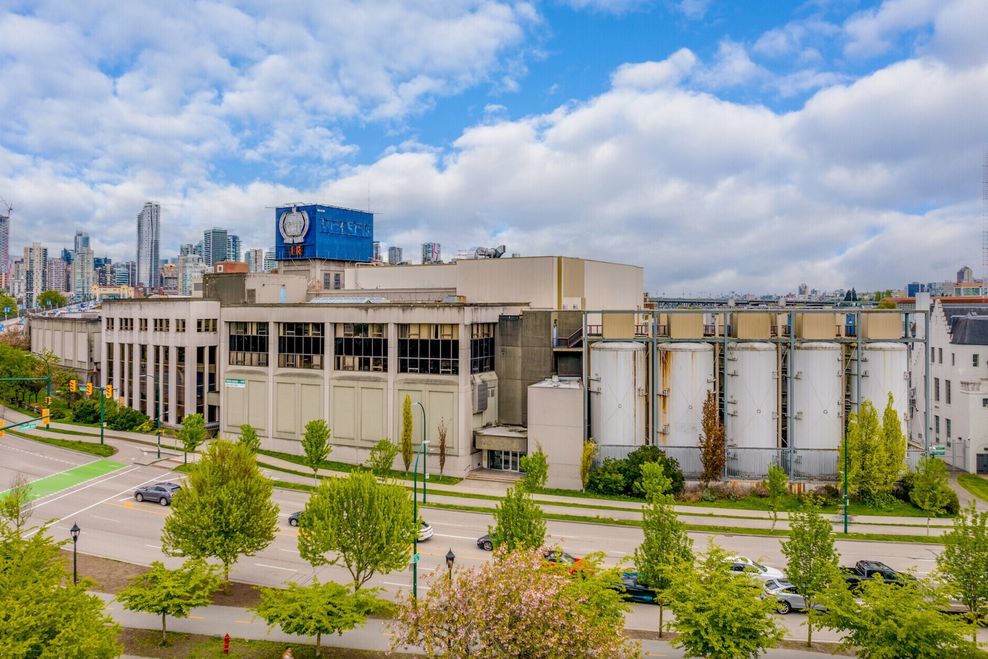
Senakw’s rise increasingly raises questions about the future of the similarly sized parcel of land immediately south of its later phases — specifically, the under-utilized former Molson Coors brewery site.
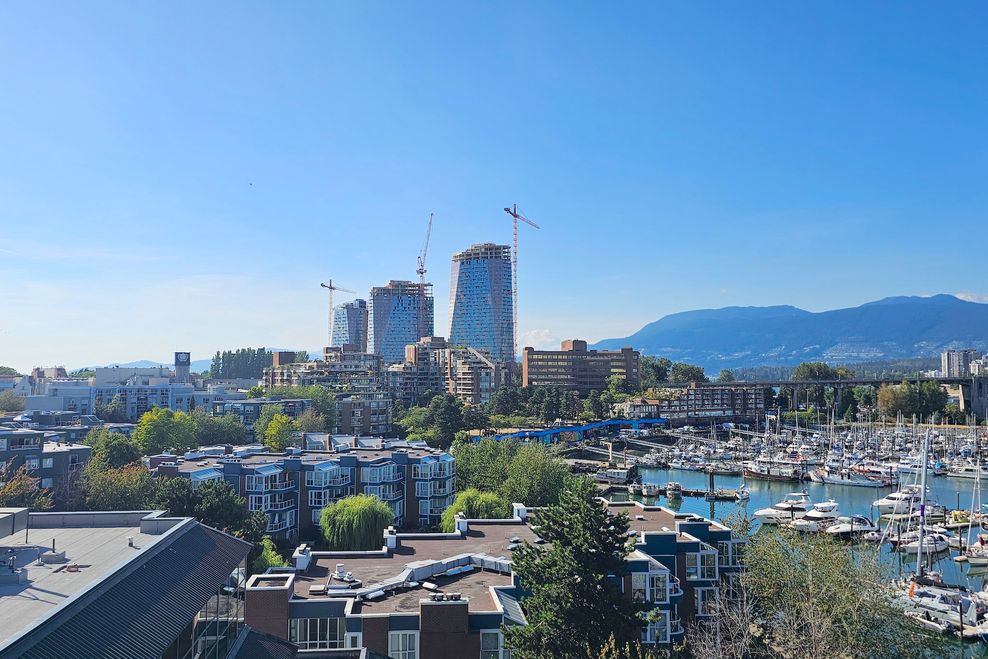
Senakw’s first three towers as seen from the Granville Connector, July 2025. (Kenneth Chan)
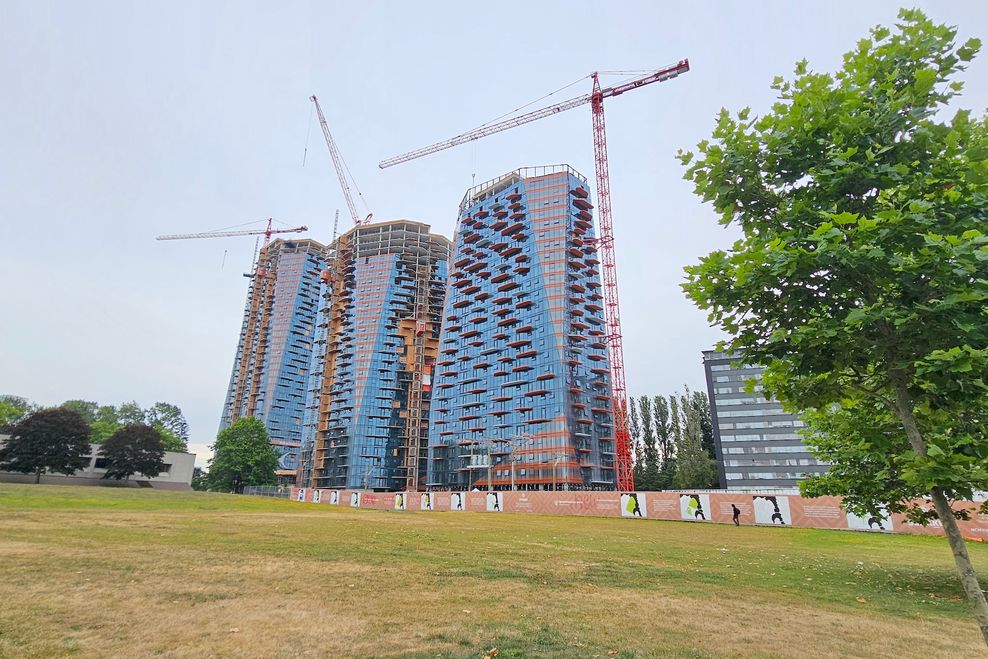
July 2025 construction progress on the first phase of Senakw. (Kenneth Chan)
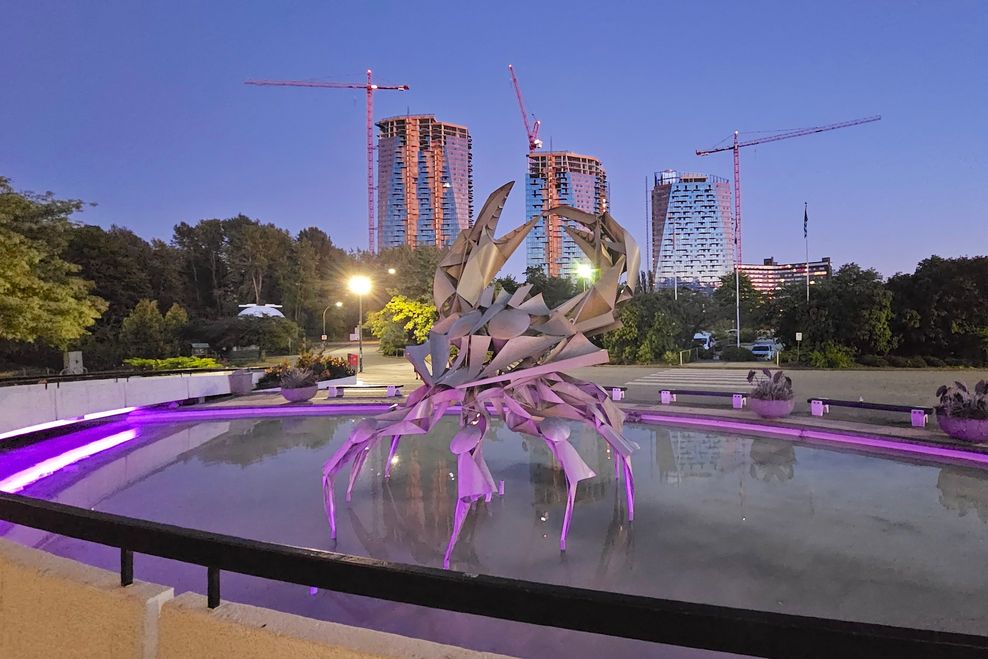
The iconic crab sculpture and water fountain at H.R. MacMillan Space Centre and the Museum of Vancouver, backdropped by the first Senakw towers under construction. (Kenneth Chan)
The sprawling brewery complex was first completed in 1953, during a period when the False Creek inlet shoreline was dedicated to heavy industrial uses. The post-industrial transformation of False Creek first began in the 1970s, when the federal government backed the creation of the False Creek South’s first residential neighbourhoods and drastically overhauled the industrial buildings in Granville Island into an arts and cultural destination for both residents and tourists.
Canadian Pacific Kansas City (CP) also once operated railways through the area to move freight in and out of what was once previously a high concentration of sawmills, manufacturing, and other industrial businesses.
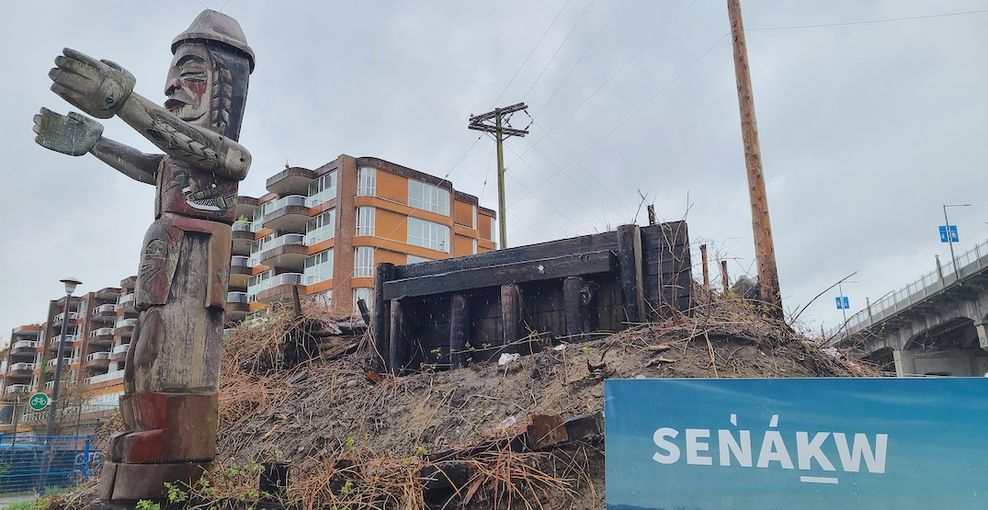
Remnants of the Kitsilano Trestle railway bridge on Senakw’s fourth phase footprint on the east side of Burrard Bridge. (Kenneth Chan/Daily Hive)
In 1995, the City of Vancouver acquired the east-west False Creek South railway corridor from CP, as part of a long-term municipal strategy to establish a streetcar line connecting Vanier Park, Granville Island, False Creek South, and Science World. For over a decade, starting shortly after this acquisition, a historic streetcar operated along much of the route — a service whose functionality received a true test during the 2010 Olympic Winter Games, when the Olympic Line demonstration streetcar was launched following some upgrades to the railway.
CP operations in the False Creek South area fully ceased in 2001, when the last freight train on the north-south Arbutus railway departed the Molson Coors brewery — one of the area’s final major industrial businesses, alongside the Granville Island concrete plant. With too few industrial customers to justify rail service, the economies of scale evaporated, and trucking became far more cost-effective for the brewery’s distribution needs.
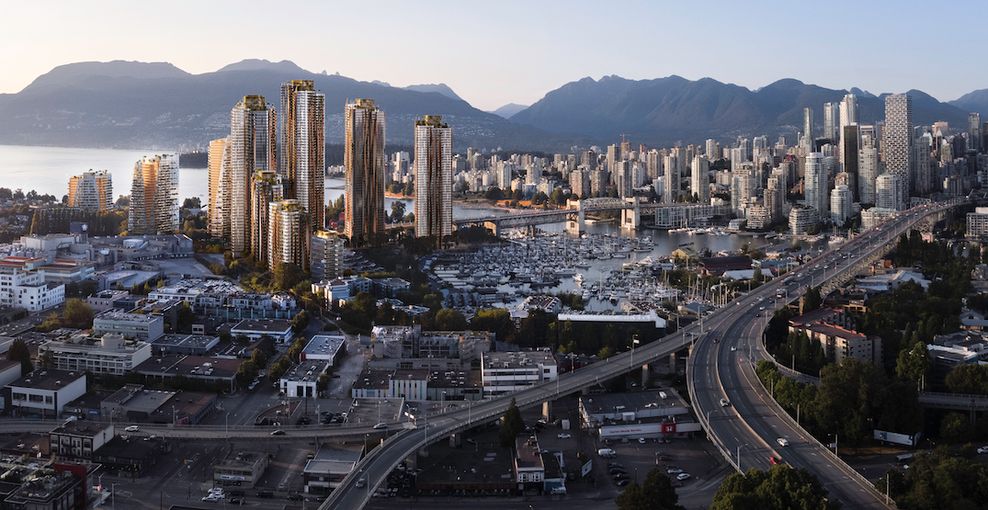
September 2022 artistic rendering of the refined detailed design of Senakw: perspective looking northwest from Granville Street near West 4th Avenue, with the former Molson Coors brewery also depicted on the far left. (Revery Architecture/Kasian/Tandem Studios/Squamish Nation)
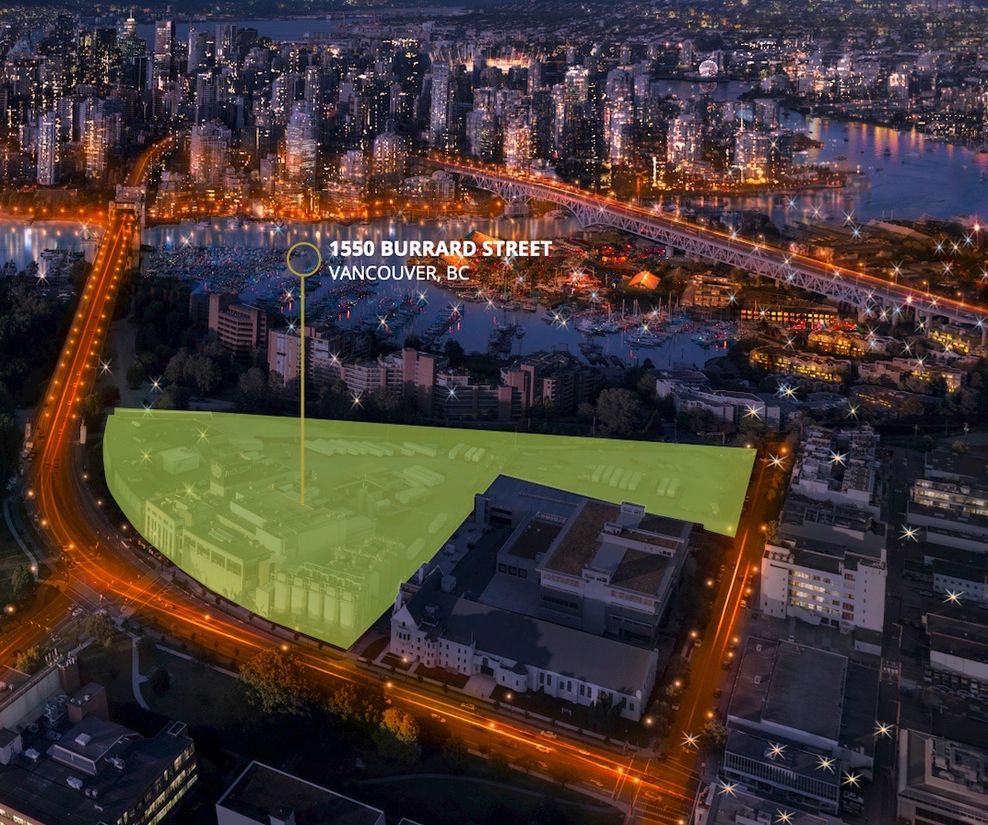
Site of the former Molson Coors brewery at 1550 Burrard St., Vancouver. (CBRE)
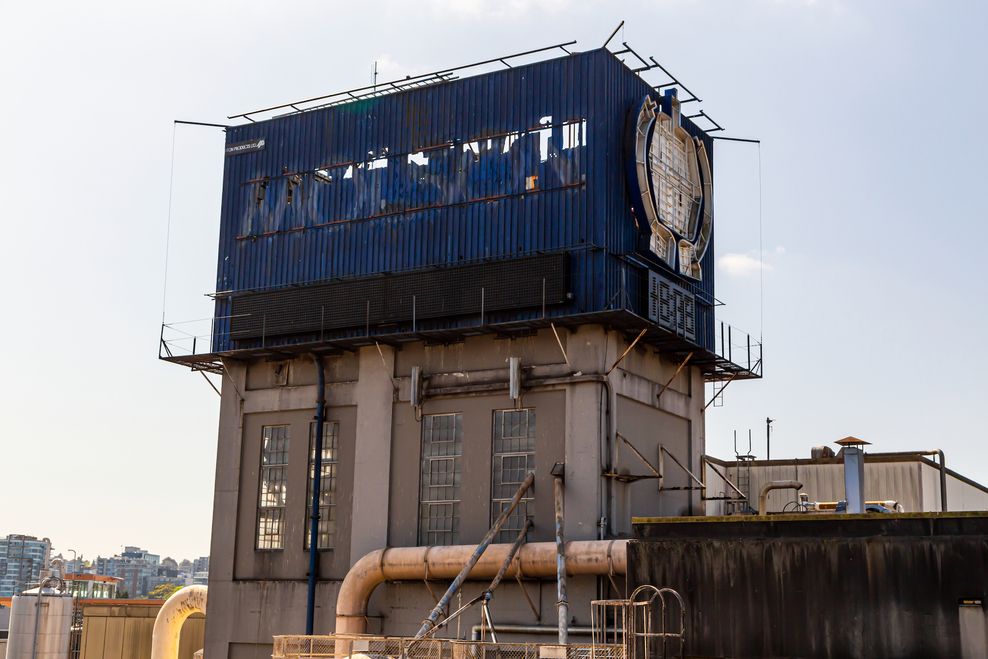
The former Molson Coors brewery on Burrard Street in Vancouver. (CineCam/Shutterstock)
In 2016, following a highly public and heated dispute with CP, the City acquired the Arbutus Corridor and transformed it into the Arbutus Greenway — now a major walking and cycling spine through the city.
The brewery ultimately shuttered in 2019 after relocating to a significantly larger and modern facility in the Fraser Valley. This new Chilliwack plant sits on over four times the land area of the historic Burrard Street site, providing far greater flexibility for operations and potential future significant expansion. Its immediate access to the Trans-Canada Highway and proximity to Canada–U.S. border crossings also offer vastly improved trucking logistics.
By contrast, ever since the post-industrial redevelopment activity in False Creek began over 50 years ago, the eight-acre former brewery parcel has become a highly constrained urban property. It no longer has freight rail access and is increasingly difficult to serve with large trucks due to chronic vehicle traffic congestion — exacerbated in part by recent reallocation of road space on Burrard Street for protected bike lanes.
Major industrial operations here are now clearly out of step with the surrounding urban environment.
Yet despite this reality, the site remains regionally protected for industrial use. Under Metro Vancouver Regional District’s industrial land-protection policies, the former brewery lands form the only industrially designated site in the immediate area — a small island of required industrial uses surrounded by high-density, mixed-use growth, now dramatically amplified by the Senakw development. Other lands farther south in the Burrard Slopes enjoy a more flexible employment land use designation that allows a broader range of uses.
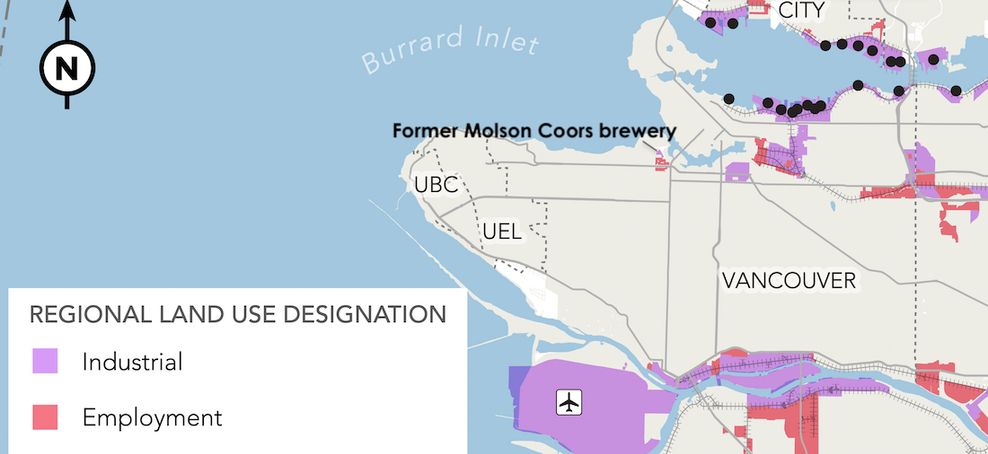
Metro Vancouver Regional District’s protected industrial land use designation for the former Molson Coors brewery site. (Metro Vancouver Regional District/Daily Hive)
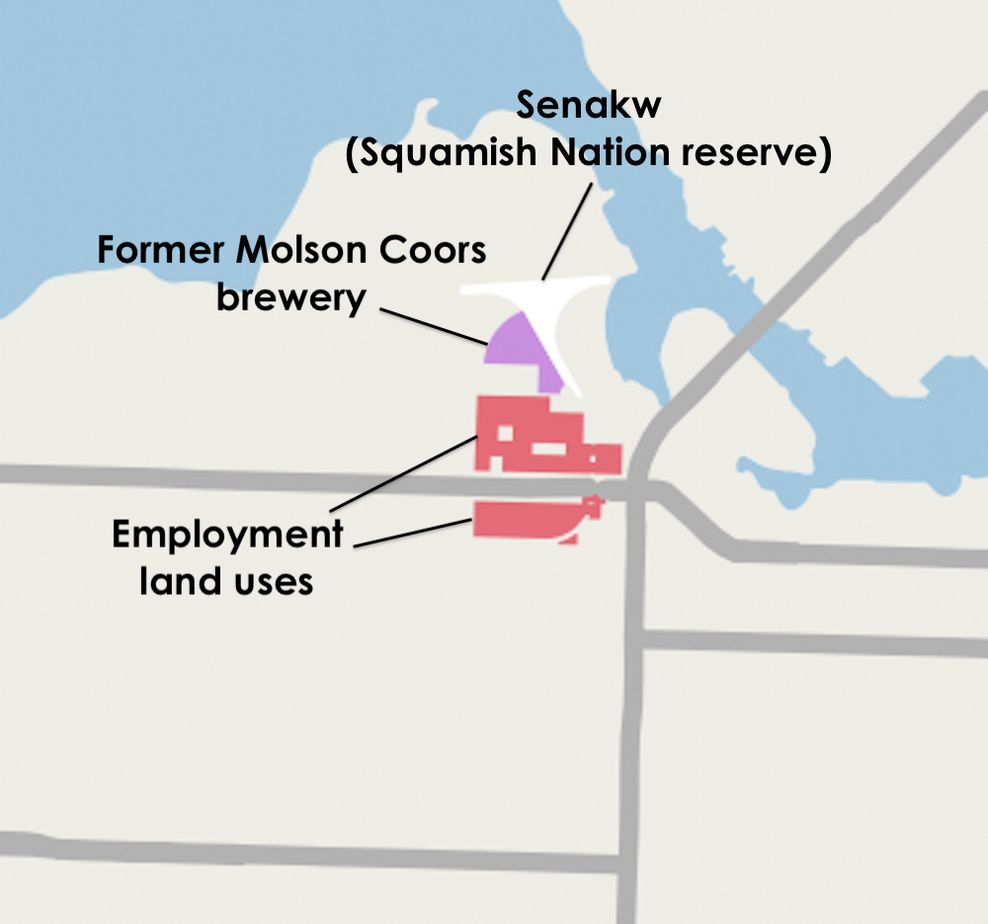
Metro Vancouver Regional District’s protected industrial land use designation for the former Molson Coors brewery site. (Metro Vancouver Regional District/Daily Hive)
There is no question Metro Vancouver is facing a prolonged and severe shortage of industrial land — a challenge that increasingly undermines the region’s ability to attract and retain the major employers that drive economic growth and support job creation. These businesses require large, unconstrained sites with strong transportation links for the efficient movement of goods, equipment, and workers. Such opportunities have become exceptionally scarce across the region. The shortage threatens long-term competitiveness and economic resilience.
Regional and municipal governments need to continue to explore ways to protect and expand Metro Vancouver’s industrial land base. However, this protection must be concentrated in areas that are truly suited for traditional industrial uses, which are also typically found in areas with lower land costs. Industrial designations that no longer align with their urban context or economic purpose — particularly in high-value, centrally located, transit-oriented areas — should be reconsidered for mixed-use redevelopment.
At best, the former brewery site could potentially support light or creative industrial uses, but doing so would arguably underutilize one of the most strategically located parcels in the city — especially when contrasted with Senakw’s soaring towers, reaching up to 59 storeys next door.
The regional district’s Metro 2050 Regional Growth Strategy, approved in 2023, does offer some flexibility for regionally designated employment lands within 200 metres of a SkyTrain station or inside Urban Centres and Frequent Transit Development Areas (FTDAs). In such cases, limited residential uses can be incorporated into upper building levels, while commercial and light-industrial uses are required within the lower levels. However, these flexibilities generally do not apply to other employment lands, as well as lands protected under the more restrictive industrial designation — such as the former brewery site.
The flexibility offered to employment lands that are also transit-oriented development sites has enabled for the consideration of PCI Developments’ recent proposal to build the second phase of Marine Gateway. Earlier this year, the developer submitted a rezoning application calling for the five-acre car dealership site immediately south of SkyTrain Marine Station and bus exchange to be redeveloped into two rental housing towers up to 43 storeys, with a bulky base podium containing 255,000 sq. ft. of industrial space — including over 200,000 sq. ft. of 33-ft-tall ceiling height space with freight truck loading bays.
This past summer, Vancouver City Council approved a member motion directing City staff to “unlock” the development potential of five “exceptional” sites that currently see industrial and/or employment land uses, and are centrally located and/or near SkyTrain stations. These five sites are the former Molson Coors brewery, the areas south of Marine Gateway Station (including PCI Developments’ Marine Gateway 2 site), and the industrial properties southeast of SkyTrain Main Street-Science World Station, as well as the Mount Pleasant Industrial Area and the Railtown district.
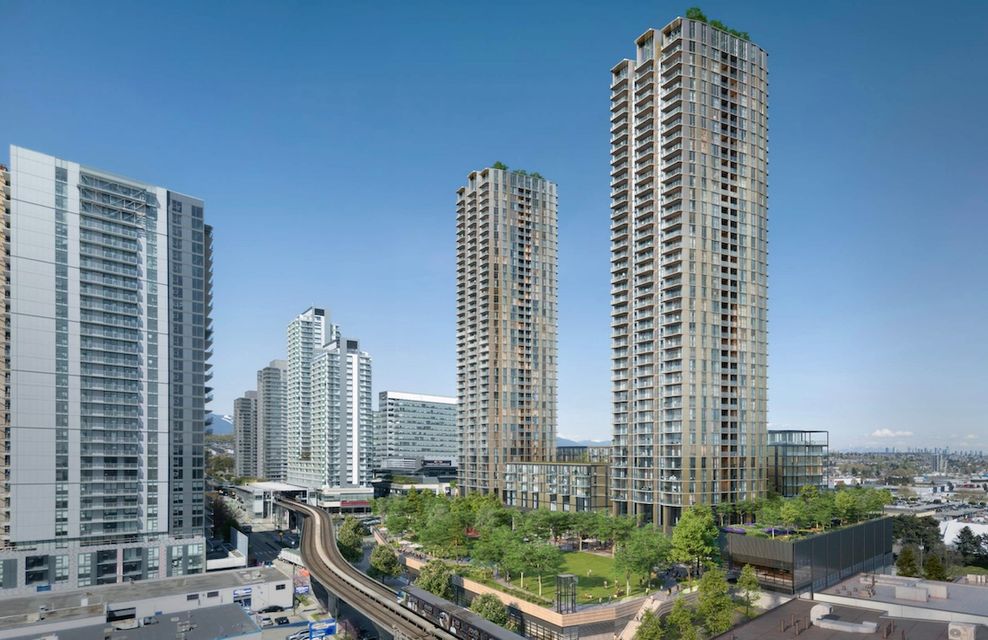
July 2025 concept of Marine Gateway Phase 2 at 8530 Cambie St., Vancouver. (Perkins&Will/PCI Developments)
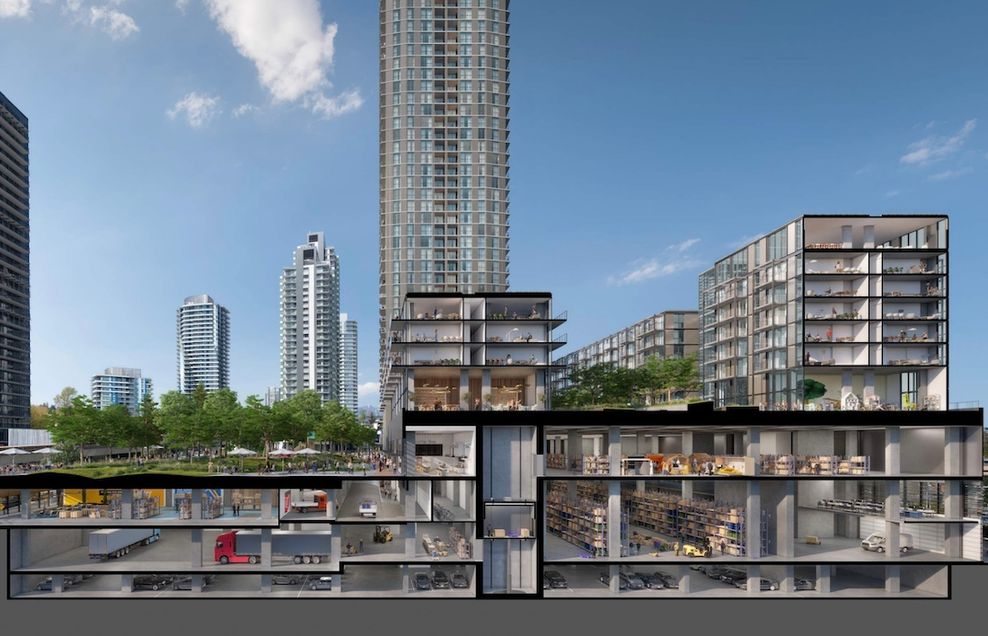
July 2025 concept of Marine Gateway Phase 2 at 8530 Cambie St., Vancouver. (Perkins&Will/PCI Developments)
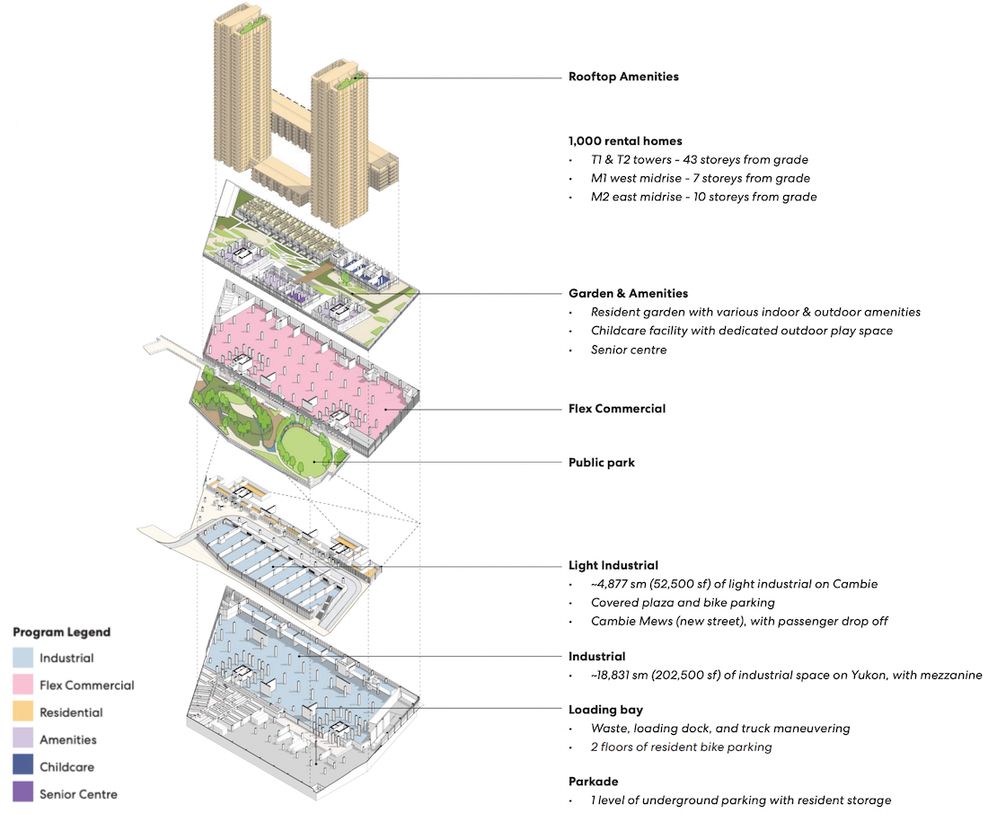
July 2025 concept of Marine Gateway Phase 2 at 8530 Cambie St., Vancouver. (Perkins&Will/PCI Developments)
But even if the municipal government endorses the shift, the final decision on amending the land use designation for some of these sites to enable a wider range of high-density developments also requires the approval of the regional district, which involves seeking the approval of the region’s various mayors and city councillors who have seats in this regional government.
Within a region with nearly two dozen miniature municipal fiefdoms represented in the regional district’s various governing bodies, this can be a highly political process, with situations where one municipal government’s elected officials can influence another city’s planning decisions — turning land use into bargaining chips between jurisdictions. Earlier this year, the City of Delta, Township of Langley, and especially the City of Surrey also voiced their discontent over the regionally-imposed land use constraints outlined in Metro 2050 within their jurisdictions.
Prior to the pandemic and Squamish Nation’s reveal of their Senakw project concept, Concord Pacific created the “Quantum Park” redevelopment concept for the brewery site, which they acquired in 2016 for $185 million.
This previous original Quatum Park concept conceived towers up to 25 storeys in height, with about 3,000 homes and 300,000 sq. ft. of commercial office and retail/restaurant space.
As part of any land-use changes, any future mixed-use residential redevelopment should be required to include a significant employment space component — something that is already being envisioned.
“In our plan, the Quantum Park, we plan to develop a mixed-use modernized community with 10 times the employment [compared to the former brewery] and thousands of housing units,” Peter Webb, senior vice-president of development for Concord Pacific, told Daily Hive Urbanized recently upon inquiry.
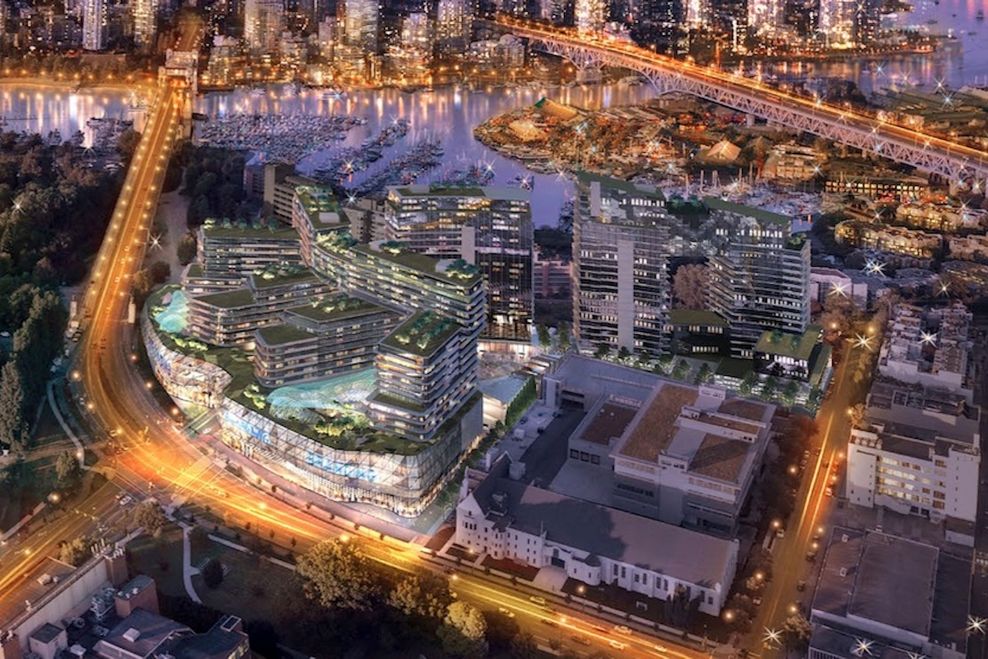
Previous 2019 concept of Quantum Park, the redevelopment of the old Molson Coors brewery in Vancouver, conceived before the Senakw project. (Concord Pacific)
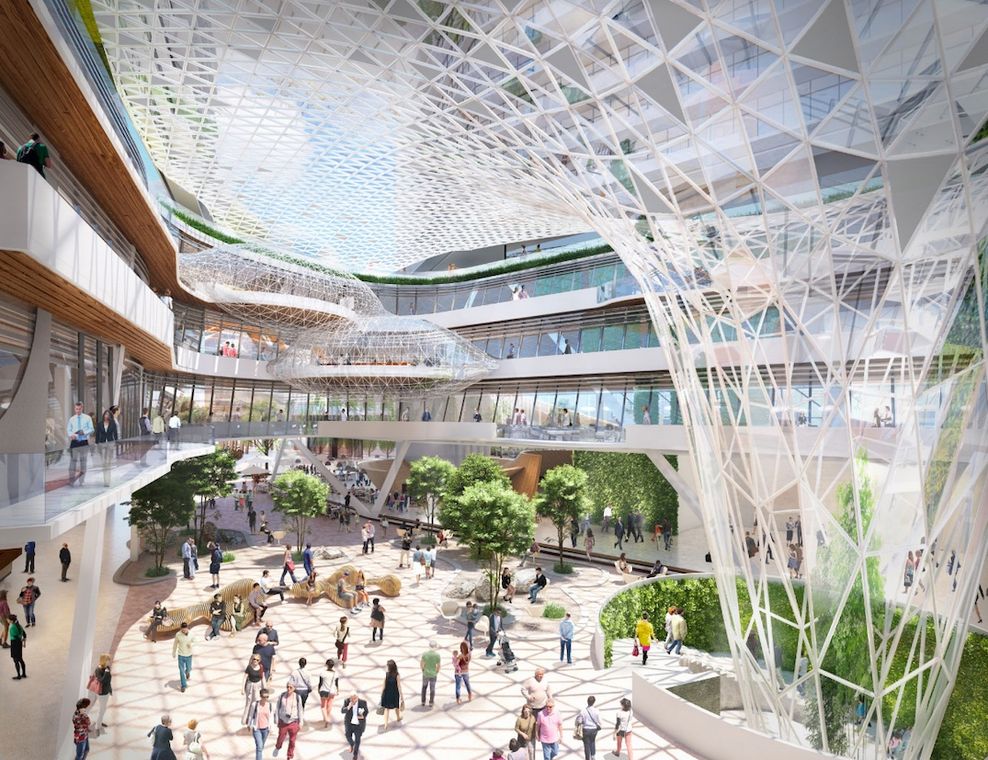
Previous 2019 concept of Quantum Park, the redevelopment of the old Molson Coors brewery in Vancouver, conceived before the Senakw project. (Concord Pacific)
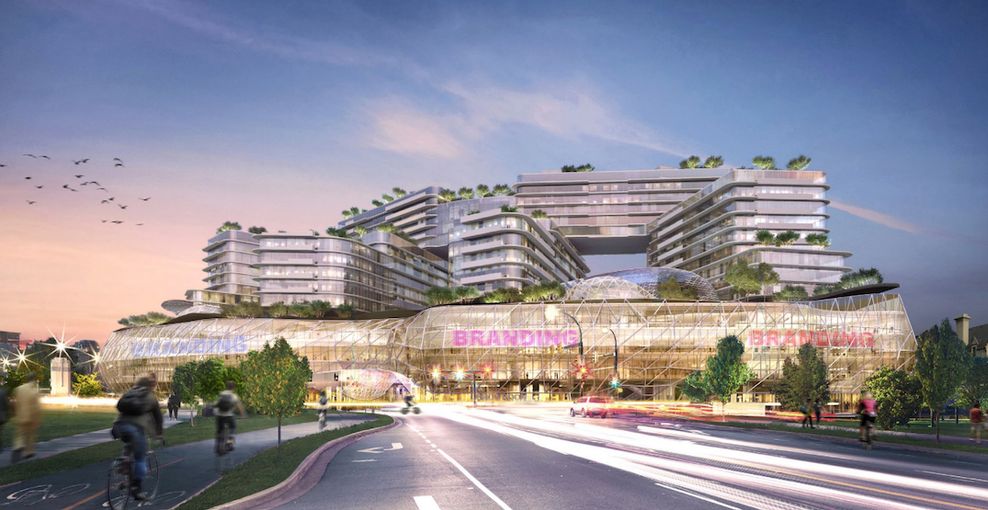
Previous 2019 concept of Quantum Park, the redevelopment of the old Molson Coors brewery in Vancouver, conceived before the Senakw project. (Concord Pacific)
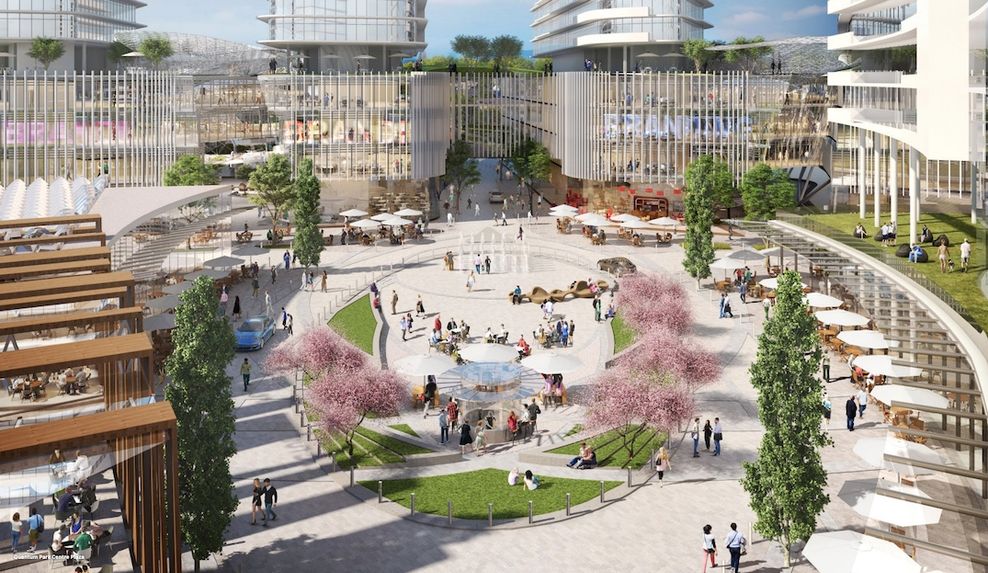
Previous 2019 concept of Quantum Park, the redevelopment of the old Molson Coors brewery in Vancouver, conceived before the Senakw project. (Concord Pacific)
He also asserts Vancouver City Council’s forthcoming finalization of the provincially-mandated, city-wide Official Development Plan (ODP) provides an opportunity for the municipal government to kick off the process to redesignate the five traditional industrial sites, which would subsequently lead to formal discussions and approvals with the regional government.
The ODP also represents the first real major opportunity in many decades to rethink how centrally-located land should be used.
“While we respect it might be a complicated process, it was unclear whether the first step would be initiated by Metro Vancouver or City,” continued Webb. “We applaud the City of Vancouver has taken the first step to include and convert Molson and a few other industrial sites in the ODP.”
“While we wouldn’t need rezoning or Metro approval to put heavy industrial into this neighbourhood in the middle of the city, but instead, Concord has been forced to wait for over eight years wanting to create high-tech job space and housing on this site…. We’re not just adding residential; we are also bringing office and new concepts of employment to the community. It’s an integrated approach that supports livability, jobs, and better access.”
He added that the redevelopment would also deliver significant improvements to the local road network, helping to ease the long-standing vehicle traffic congestion at the south end of the Burrard Street Bridge.
It is also understood that Quantum Park will undergo a substantial redesign compared to the now-outdated, pre-pandemic concept. The updated plan will reflect the transformative presence of Senakw — using it as a precedent for what is possible in the area — while establishing a cohesive public realm and urban design that better integrates Senakw into the evolving character of the broader Burrard Slopes area.
The Canadian Armed Forces’ Seaforth Armoury and the former brewery’s parking lot sit just north of 1st Avenue — the northern boundary of the City’s Broadway Plan.
Together, Senakw and Quantum Park have the potential to create a major new gateway into Vancouver’s emerging second city centre within the Central Broadway corridor — a key objective of the Broadway Plan — from the Burrard Street Bridge.
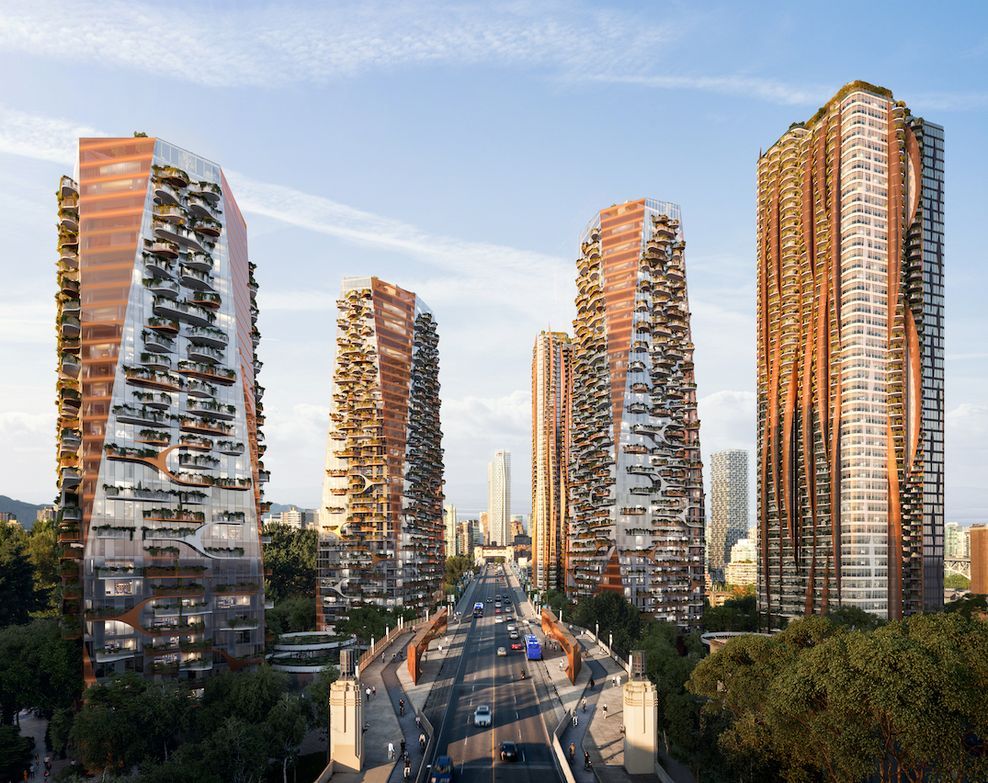
September 2022 artistic rendering of the refined detailed design of Senakw: perspective looking northeast towards Senakw’s bus transit hub on the Burrard Street Bridge. (Revery Architecture/Kasian/Tandem Studios/Squamish Nation)
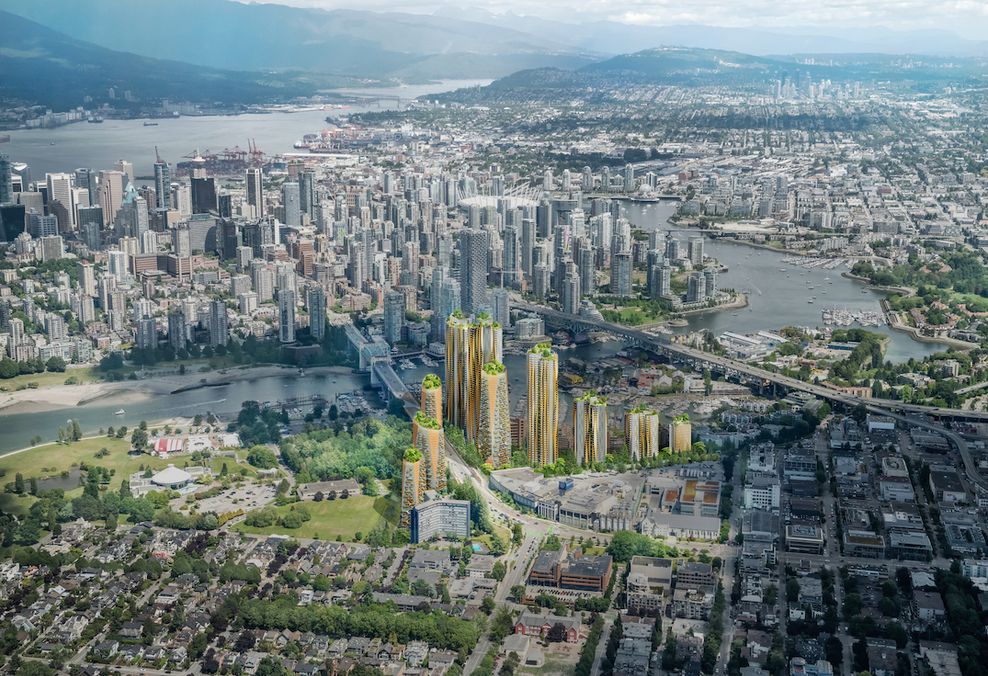
September 2022 artistic rendering of the refined detailed design of Senakw: perspective looking east, with the former Molson Coors brewery site also shown. (Revery Architecture/Kasian/Tandem Studios/Squamish Nation)
Quantum Park’s significant retail, dining, and community-serving amenities would also play a critical role in meeting the daily needs of Senakw’s future population upon full buildout — as many as 9,000 residents — as well as the growing residential density prompted by the Broadway Plan in surrounding areas.
Earlier this year, CMHC Granville Island’s operators told Daily Hive Urbanized they have begun planning to better suit the needs of Senakw residents to capture them, such as potentially expanding Granville Island’s food, grocery, and other local-serving offerings.
Additionally, through increased ridership demand, the high-density developments would help support new and improved TransLink bus services along the Burrard Street corridor. The Squamish Nation has already committed to a major public-transit investment as part of Senakw — widening the south end of the Burrard Street Bridge to accommodate a new bus transit hub. In the long-term, a future streetcar line could even be considered for the area, directly linking Senakw and Quantum Park to SkyTrain Olympic Village Station and Main Street-Science World Station.
- You might also like:
- Vancouver mayor seeks to unlock development potential of five 'exceptional' sites
- Surrey, Delta, and Langley Township want to enable more outward urban growth
- Major mixed-use residential, commercial, and industrial expansion of Marine Gateway includes a rooftop public park
- First residents could move into Senakw's first rental housing tower by early 2026
- Granville Island planning new elevator and staircase tower to Granville Bridge, observation deck, and an additional market building with underground parking
- Opinion: RapidBus route needed from Arbutus Station to downtown Vancouver to serve Senakw