


Opinion: Heavy-handed fire code enforcement risks pushing Vancouver's music and cultural events underground



Written for Daily Hive Urbanized by Jarrett Hagglund, a Vancouver based housing advocate and Vice-President of DMS Vancouver, a long-standing 2SLGBTQ2+ community organization.
The recent nightclub fire in Switzerland that killed 40 people on New Year’s Eve is a tragic reminder of what is at stake when fire code enforcement and crowd safety fail. Lives depend on inspections being taken seriously, and public safety must always come first.
That reality makes it even more important to ask hard questions about how enforcement is carried out, and whether it is achieving the outcomes we say we want.
Recent reporting by Vancity Lookout on coordinated inspections of late-night and informal music venues in Vancouver has raised concerns among event organizers, artists, and community members. According to organizers interviewed, some inspections felt aggressive and raid-like, involving large numbers of officials and police officers, and in some cases officers filming crowds during events. Promoters warn that this approach risks driving events completely underground, reducing safety rather than promoting it.
- You might also like:
- Fundraising campaign for one of Canada's largest LGBTQ community hubs in Vancouver
- Four-storey Yaletown building to be transformed into a youth mental health and addictions care hub
- Opinion: Why I stopped riding in horse carriages and started advocating against them
- Opinion: Wrap-around supports are crucial for Metro Vancouver's homeless youth
If the goal is safety, we should be paying close attention to that warning.
Fire, crowd, and life safety are non-negotiable. No one is arguing otherwise. But safety is not achieved through enforcement alone. It is achieved through legitimacy, clarity, and trust. When people understand the rules, believe they are achievable, and feel they are being treated fairly, they are far more likely to comply, invest in safety measures, and work with the City of Vancouver to address risks.
When enforcement becomes unpredictable or disconnected from clear policy pathways, the opposite happens. Fear replaces cooperation. Events move out of sight. Risks become harder to identify and manage.
This is not just a nightlife issue. It is a leadership issue.
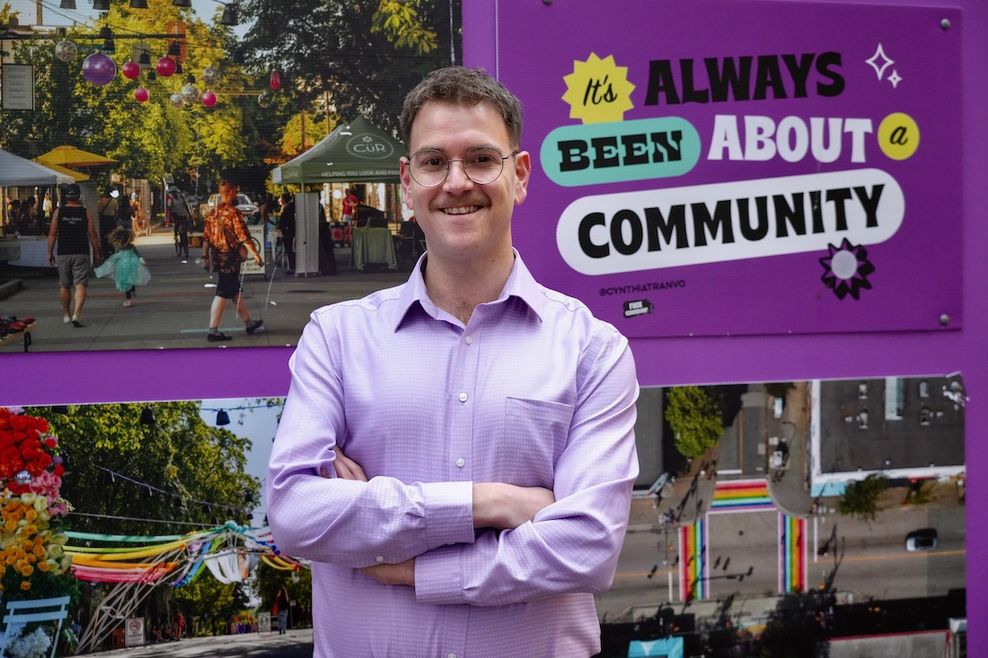
Jarrett Hagglund/submitted
I have spent much of my career working on housing and tenant advocacy, particularly in the co-op sector. The lesson there is consistent. When residents have security and clear rules, they build strong communities and take responsibility for shared spaces. When they live with uncertainty and the constant threat of displacement, trust breaks down and outcomes suffer.
Cultural spaces operate under similar dynamics.
Over the past decade, Vancouver made progress by acknowledging that arts, music, and do-it-yourself cultural spaces are part of the city’s social infrastructure. Licensing changes were intended to bring more activity into the open, where safety standards, harm reduction, and accountability could actually function.
The experiences described in recent reporting suggest that progress is fragile.
This matters especially for queer communities, racialized artists, and younger people who have built safer, more accountable environments outside of traditional nightlife districts. Many community-run venues emphasize consent, harm reduction, and collective care in ways that deserve recognition. These are not reckless spaces by default. They are often deeply intentional about safety because they are built by and for people who know what it means to be excluded or mistreated elsewhere.
Treating all informal or non-traditional venues as the same ignores that reality. It also risks losing spaces that are doing safety right.
None of this is about blaming frontline staff. Fire inspectors, bylaw officers, and police work within the direction they are given. When leadership does not provide clear frameworks and expectations, enforcement fills the gap. We see this pattern in housing, in community services, and now in cultural spaces.
A mature city does better than that.
Strong safety standards and a thriving cultural life are not in conflict. But they do require leadership that is willing to do the policy work. That means creating clear, achievable pathways for venues to operate responsibly. It means proportional enforcement that distinguishes between genuine life-safety risks and administrative non-compliance. It also means building relationships, not just issuing tickets.
One constructive step would be for the municipal government to convene direct, good-faith discussions between event organizers and enforcement agencies. Not as a public relations exercise, but as a practical effort to align expectations, clarify requirements, and identify where rules or processes are not working as intended. That kind of dialogue does not weaken safety. It strengthens it.
Vancouver deserves governance that brings people into the open, supports compliance, and treats culture as essential infrastructure alongside housing, libraries, and community centres. Governing by crackdown may feel decisive, but it is a blunt tool. Governing with clarity, collaboration, and care is harder, and far more effective.
If we are serious about safety, and serious about being a city where people can gather, create, and belong, then we need to stop acting as though those goals are in opposition. They are not. With the right leadership, they reinforce each other.
- You might also like:
- Fundraising campaign for one of Canada's largest LGBTQ community hubs in Vancouver
- Four-storey Yaletown building to be transformed into a youth mental health and addictions care hub
- Opinion: Why I stopped riding in horse carriages and started advocating against them
- Opinion: Wrap-around supports are crucial for Metro Vancouver's homeless youth