


How life changed for a Vancouver resident who sold her car and started taking transit


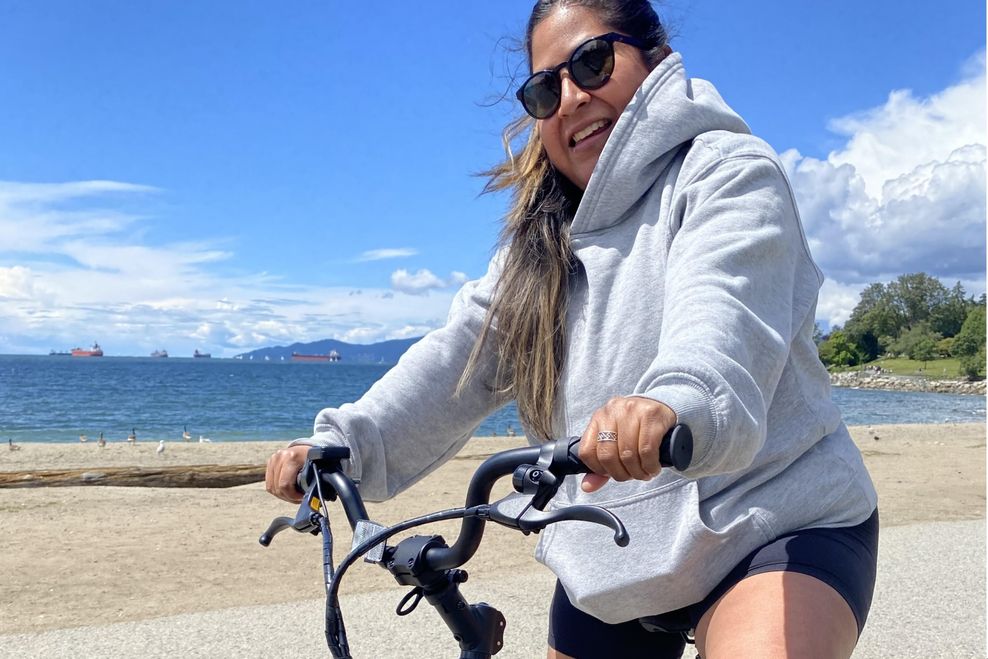
In 2021, Vancouverite Jessica Kelly decided to sell her car and start taking transit instead.
Previously, the West End resident worked in home support. She used her car — a Honda Civic — for work, since she drove to clients’ homes to assist them with health care.
She also used it for errands, to visit friends, and to go on road trips.
“I would use it a lot,” she said. “When you have the car, you’re very dependent on it.”
But about five years ago, Kelly had a sudden realization that she didn’t need it anymore. She had started going to school for early childhood education at Vancouver Community College, and wasn’t working in home care anymore. It was also COVID, and she had gotten used to spending more time at home. And she had some debt she wanted to pay off.
“And it just occurred to me one day, I was like, ‘You know what? Why am I keeping this car?’ Like, it’s too much for parking, it’s too much for insurance, it’s too much for gas, it’s too much for repairs. And it was actually quite enticing to know that I could get a pretty large lump sum to put on my debt to pay it off,” she said.
Once she listed the car, she sold it quickly. And while it was a bit of an adjustment to get used to life without a vehicle, she hasn’t regretted it in the years since. Not only has she been able to save money, but her quality of life has improved.
“I think it’s a pretty cool jump, if you can do it,” she said.
Saving money, time, and stress
CHARAN RATTANASUPPHASIRI/Shutterstock
When Kelly had a car, she estimated that she spent between $50 to $60 each time she filled up her gas tank, which she did about once per week. She also paid $120 per month for insurance, plus around $200 per year for a residential parking permit.
Now, she guesses that she’s saving around $400 per month when she factors in repairs, upkeep, and maintenance.
Kelly also saves the time spent looking for parking in the West End, which was particularly challenging due to the neighbourhood’s high parking congestion.
“It was expensive in dollars, and it was also expensive in time, because the amount of time that you drive around in the city looking for a parking spot,” she said. “I’d get constantly frustrated.”
Kelly added that changing tires twice per year and having to find storage for them was a hassle. She’d leave them with her grandparents, who live in Chilliwack.
Today, Kelly pays per use on transit, and estimates that she spends about $150 a month on rideshare. She also uses her parents’ hybrid car and contributes to the gas.
And while taking public transit might take a bit longer than driving, she doesn’t miss the stress it causes, adding that she’s observed a lot of road rage incidents. She enjoys listening to music on her commute and having the opportunity to walk (between the bus stop and the SkyTrain station) before work.
“Even if you do own a car, maybe you don’t always drive it. Maybe you can take the bus, or invest in an e-bike. And do things that are better for your health than just sitting behind the wheel.”
Adjusting to life without a car
Kelly admits that “it was a little hard” to get used to living without a car, and she had to get used to the strategic planning that taking transit can require. She also doesn’t go on as many weekend road trips since selling her car.
But she’s learned how to appreciate her time at home more.
“It’s actually nice to just be more focused to be at home and to do things around there and to be creative and find other things to do with my time,” she said.
She’s taken up playing the ukulele, drawing, singing karaoke, going for long walks, and biking.
In May of last year, Kelly purchased an e-bike, which she said is “wonderful.” She uses it to commute to her job as an early childhood educator in East Vancouver, sometimes even when it’s raining. It’s faster than taking public transit, and it’s “great to get fresh air.”
And she always has a basket on her bike, loaded with a hammock and blankets. On a nice day, she’ll find a nice place to stop, set up the hammock, and relax.
“You don’t get that with a car, because you’re just getting from point A to point B,” she said.
“Because we have such a beautiful city, that has really actually changed my life — has really just made me appreciate the city so much more, and appreciate when we have the nice sunny days, when the rain and gray is over.”