


B.C. home sales drop in every region with struggles expected to continue into 2026


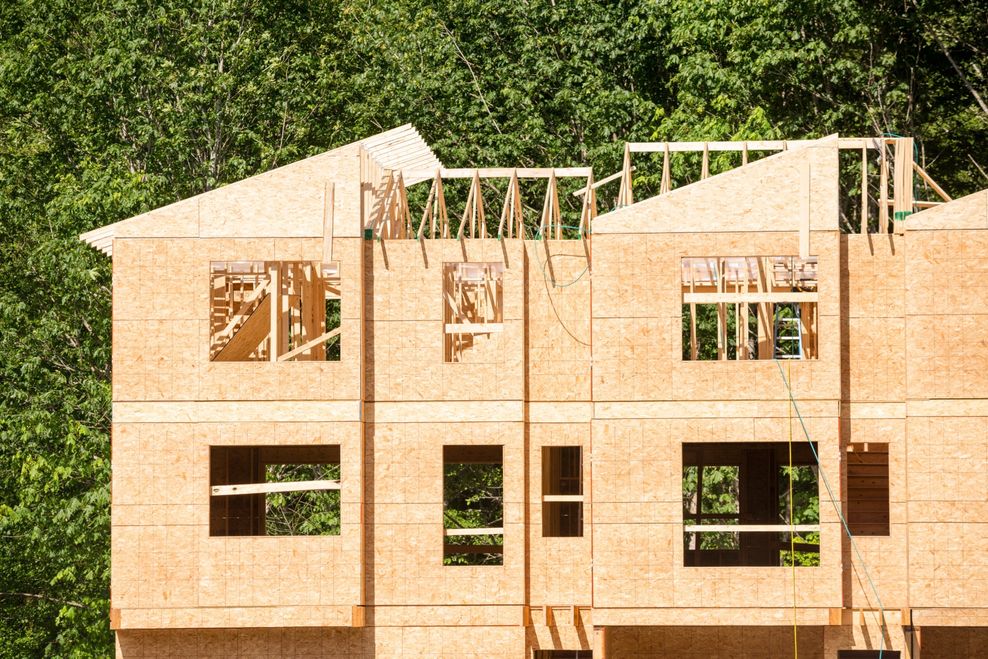
B.C. home sales remained dismal in February, with sales 33 per cent lower than the 10-year average.
The British Columbia Real Estate Association (BCREA) recorded 4,500 residential unit sales across the province, down 9.7 per cent from February 2025.
In dollar amounts, that equates to $4.21 billion worth of sales, which is 12.3 per cent lower than the same time last year.
“Housing market activity continues to struggle, with sales declining from every region in the province compared to the same time last year,” said Brendon Ogmundson, the chief economist for BCREA, in a release.
Within Greater Vancouver, unit sales were down by nearly nine per cent year-over-year. The average residential price was $1,206,180, down 1.6 per cent from the $1,225,988 it was at in February 2025.
Meanwhile, the number of listings in Greater Vancouver increased by 6.3 per cent, from 12,744 in February 2025 to 13,545 in the same month this year.
Sales-to-active listings, which is the supply of homes compared to the sales, decreased in that same time frame, from 14.2 per cent to 12.2 per cent in February 2026.
Why is the market lagging?
In the early 2000s, demand for homeownership started overtaking supply in Vancouver. But people still had options: they could look at buying a property in a neighbourhood that’s more affordable or decide to keep renting to save money towards their down payment.
This subsequently caused the rental market to become much tighter, and for housing demand to spread to Vancouver’s outer areas.
In recent years, costs have further ballooned due to low interest rates, record immigration, and an inability to expand housing supply. Between 2005 and 2025, Vancouver houses went up by 175 per cent.
But in 2024, house prices finally started to go down, according to Tore Jacobsen, the chair of Fraser Valley Real Estate Board (FVREB), who recently spoke with Daily Hive.
He pointed to high interest rates at the time (which have since come down), rising costs of living, and economic uncertainty due to tariffs and the broader geopolitical landscape as factors that might have contributed to the soft market.
Housing prices predicted to increase
While B.C. is experiencing diminished sales now, a recent report from BCREA warned that unsold housing inventory, weak construction activity, and stalled presales could cause B.C. home prices to jump by 27 per cent by 2032.
The report compares the current time period to the period that followed the 2008 recession, when low demand caused inventories to rise and homebuilding to slow. But when demand returned, the lack of supply caused a huge spike in housing prices.
Between 2010 and 2019, B.C. home prices rose by about 47 per cent.
The construction slowdown poses a major long-term risk. Because housing demand usually recovers, insufficient new supply would cause prices to once again jump to unaffordable levels.
Likewise, the Canada Mortgage and Housing Corporation (CMHC) is warning that despite a record number of housing completions in Vancouver in 2025, housing starts are slowing down. The CMHC attributed this to low presales in the condo market, slower population growth, and uncertainty due to the U.S.-Canada trade war.
With files from Kenneth Chan