


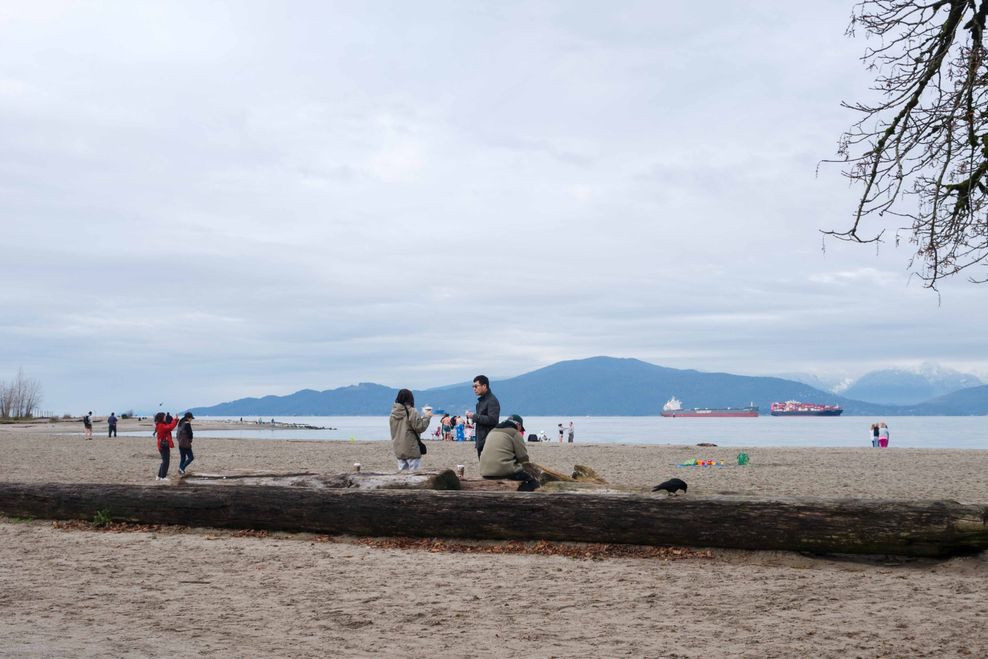
Even though we are currently experiencing an atmospheric river and it snowed last week, the first few months of our winter were relatively mild, with temperature records shattered.
This is reflected in recent analysis from Climate Central, which found that B.C.’s temperature was on average 1.9 degrees C warmer than normal for 38 days this winter.
“It’s likely that at least part of that was due to climate change,” said Kristina Dahl, Climate Central’s vice president for science.
The organization uses their climate shift index, looking at two sets of temperature data between December 2025 and February 2026. One is real-world data, the other is a climate model without human-caused emissions of heat-trapping gases.
“And so by comparing this world we live in [to] the climate model run without that human influence, we’re able to look at the difference. And then that allows us to make an estimate of how much climate change is influencing daily temperatures,” said Dahl.
While long-term variations in the Earth’s climate are natural, the rate of change in climate in the past 150 years “can’t be explained by any natural force that has changed Earth’s climate in the past.”
Burning fossil fuels releases “heat-trapping gases” like carbon dioxide and methane to the atmosphere.
“And then those gases add to the layer around Earth’s atmosphere that holds in heat, sort of like a blanket. So, it’s like we’re thickening the blanket and trapping more heat in our atmosphere. And that’s what’s causing temperatures to warm up,” Dahl explained.
These warmer temperatures can have immediate impacts if precipitation falls as rain instead of snow, like forcing ski hills to delay opening, potentially threatening summer-time water reserves if a city depends on snowpack for that, or even prolonging allergy season.
It’s also a sign that we aren’t on the right track to meet the most ambitious goal of the Paris Climate Agreement, which was to limit global warming to 1.5 above the industrial average.
Dahl said this recent period of warmth doesn’t necessarily mean that we’ve overshot this yet, because it is pegged to a 20-year average.
“It does point toward that,” she said.
Since 1948, average winter temperatures in Canada have warmed by 3.7 degrees. And under a high emissions scenario, the UNDP predicts that Vancouver could experience 38 days below freezing by the end of the century, dropping from 48 days to just 10.