


Metro Vancouver Regional District aiming to build 2,000 new homes by 2035


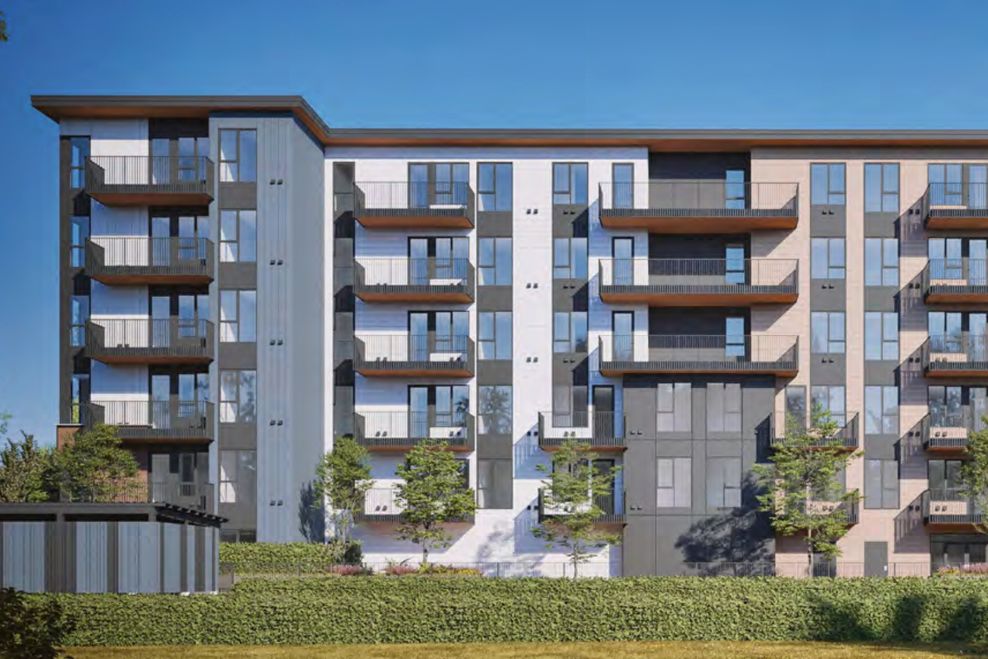
Metro Vancouver Regional District is planning to build at least 2,000 new and redeveloped affordable homes over the next 10 years as part of a new long-term strategy aimed at addressing the region’s severe housing affordability and supply issues.
The regional district’s new housing strategy through 2035 sets a target of generating an average of 200 new units annually, expanding the regional district’s housing portfolio by roughly 50 per cent to 5,100 units.
Metro Vancouver Housing, the regional district’s housing division, currently operates 3,400 secured purpose-built below-market rental homes across 53 locations, including 34 sites owned by the regional district and 19 leased.
- You might also like:
- Metro Vancouver Regional District receives provincial government support to build 2,000 affordable homes
- Vancouver housing market 'uncertain' despite record housing completions in 2025
- Opinion: Metro Vancouver cities are choking off housing supply while blaming everyone else
- 55% of all Metro Vancouver homes projected to be condos by 2051
Altogether, these locations are home to nearly 10,000 residents. Currently, about 40 per cent of these existing units are home to two-parent households with children.
The combined total land area spans about 168 acres, providing the regional district with a portfolio value of $923 million, with significant potential for future redevelopment. The regional district will leverage its existing land base and redevelopment opportunities to accelerate projects and bring more affordable rental housing to market.
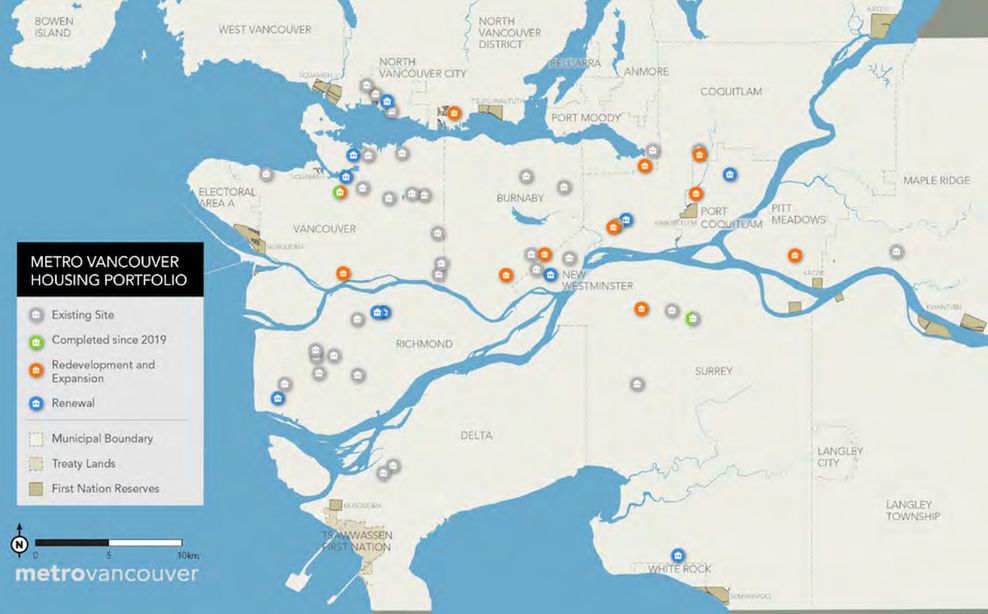
Map of Metro Vancouver Housing locations. (Metro Vancouver Regional District)
The regional district intends to commit at least $150 million over the next decade to renew aging buildings and develop new ones. The investment will be combined with funding and partnerships from federal, provincial, and municipal governments and other organizations to maximize the number of homes that can be achieved.
Municipal governments are expected to contribute land, expedite zoning approvals, and offer other support to help projects move forward, while federal programs may provide low-interest loans, grants, and energy-efficiency incentives.
This approach combines multiple funding sources — including rent revenues, senior government grants, and a modest regional tax contribution — to support development while maintaining affordability.
The strategy includes several key targets for new developments. At least 70 per cent of homes across the portfolio will be two-bedroom units or larger, reflecting a focus on housing families. The plan also aims to maintain a mixed-income model, with at least 30 per cent of units offered as rent-geared-to-income housing, while the remainder will be priced at low-end-of-market rates to keep rents below typical private-market levels.
Furthermore, by 2035, approximately 1,000 units in the regional district’s overall portfolio will be accessible or adaptable to help more residents age in place, given the continuing growing cohort of seniors.
Alongside new construction, the plan also focuses on renewing existing buildings, many of which were built in the 1980s and are reaching the end of their mortgage terms and lifespan. The plan is to reinvest surplus revenue from those properties into major upgrades and redevelopment projects.
Moreover, there will be a focus on building a pipeline of shovel-ready projects, allowing the regional district to move quickly when funding opportunities become available.
A memorandum of understanding with BC Housing that was signed in 2023 is expected to support the development of more than 2,000 new or redeveloped below-market homes over the decade.
- You might also like:
- Metro Vancouver Regional District receives provincial government support to build 2,000 affordable homes
- Vancouver housing market 'uncertain' despite record housing completions in 2025
- Opinion: Metro Vancouver cities are choking off housing supply while blaming everyone else
- 55% of all Metro Vancouver homes projected to be condos by 2051