


Inside the global competition to bring new airlines and routes to Vancouver International Airport


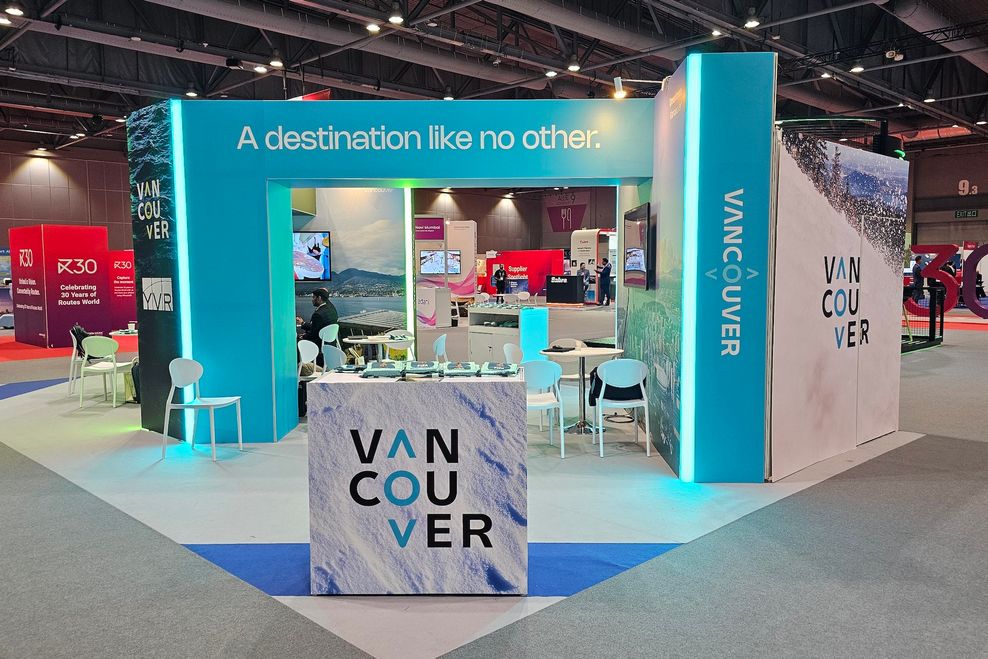
Earlier this fall, airport and airline officials and other aviation leaders from around the globe convened in Hong Kong for Routes World, one of the aviation industry’s most influential route-development conferences, held annually.
At the 2025 conference, a delegation representing Vancouver International Airport (YVR) positioned itself not merely as Canada’s second largest and busiest airport serving the country’s third most populated metropolitan region, but as a strategic Trans-Pacific gateway — linking North America with Asia and Oceania, driving trade diversification, and anchoring economic growth at a time of heightened uncertainty.
For Russ Atkinson, director of air service development at the Vancouver Airport Authority, events like Routes World are about far more than pitching flights. They are about telling Vancouver’s story — clearly, competitively, and collaboratively — to the airline decision-makers who determine where aircraft will fly next.
- You might also like:
- How air cargo is driving Vancouver International Airport's evolution and growth beyond passenger travel
- AI-powered cameras to transform real-time ground operations at Vancouver International Airport
- Vancouver International Airport on track for record-breaking year, partly from resurgence in China traffic
- Record three million passengers expected at Vancouver International Airport during the holiday travel season
- Vancouver International Airport to expand new no-unpack screening machines at all security checkpoints in 2026
“This is the nexus where the industry comes together,” Atkinson told Daily Hive Urbanized in an interview. “It’s our opportunity to sit down face to face with the network planners who decide where airplanes go, comb through the data, build the business case, and also share what makes Vancouver and British Columbia a place they ought to invest in.”
In today’s commercial passenger aviation landscape, competition between airports is fierce. Airlines have finite aircraft, constrained capital, and a growing list of global destinations vying for service. Some airlines remain in the midst of financial recovery from the pandemic, with impacts lingering longer for some carriers than others.
YVR is not alone in pitching itself as the West Coast hub of North America; it must compete directly with airports such as Los Angeles International (LAX), San Francisco International Airport (SFO), and especially Seattle-Tacoma International Airport (SEA) for new routes and expanded capacity.
SEA completed a major expansion of its international terminal in 2022, while Portland International Airport opened a multi-billion dollar terminal building expansion earlier in 2025 to launch its long-term strategy of actively growing its international segment, which is currently proportionally just a small fraction of the size of any major West Coast airport. Even larger expansion and improvement projects are also underway at SFO and LAX, which will be ready just in time for the Los Angeles 2028 Summer Olympics.
That competitive reality is precisely why YVR invests heavily in international route conferences and proactive engagement as part of its overall strategy to attract airline investment.
“It’s a very competitive environment,” said Atkinson. “That’s why we need to be out there telling our story and making sure we’re putting our best foot forward.”
And although it is highly competitive, YVR’s approach does standout globally — it was nominated and shortlisted for the 2025 Routes World awards, recognized in the over 20-million annual passengers airport category for outstanding air service development and partnerships with airlines, highlighting strong growth, new routes added, and exceptional route development activities.
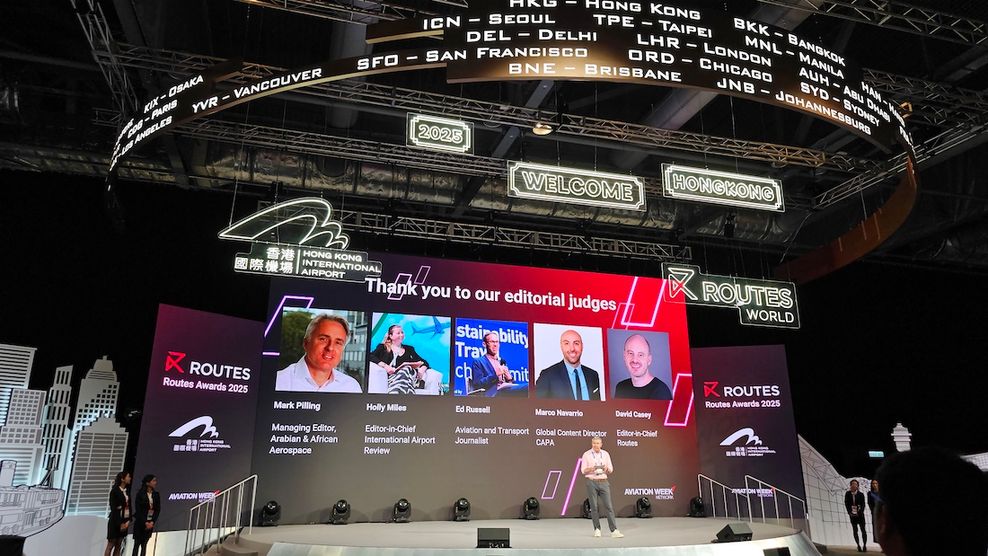
Routes World 2025 awards ceremony in Hong Kong. (Kenneth Chan)
YVR’s pitch rests on a mix of fundamentals — strong passenger demand, emerging cargo opportunities, and operational capacity — and softer but increasingly important factors, such as Vancouver’s global brand, its role as an international events host, and its diverse, multicultural population.
During this year’s conference, Atkinson’s team highlighted upcoming global events, including Vancouver’s role as a host city for the 2026 FIFA World Cup, as part of a broader narrative about long-term demand and market resilience.
YVR is also making a major effort to expand its cargo-handling capacity (not to be confused for checked luggage). Just as the airport serves as a Trans-Pacific gateway for passengers, it plays a similar role for cargo. Metro Vancouver’s geographic location and ground transportation infrastructure gives airlines the added opportunity to move high-value freight — such as perishable goods — in the belly holds beneath passenger cabins, reaching distant overseas market. Cargo volumes can play a significant role in the financial viability of commercial passenger routes.
“It’s that sort of information that give airline network planners confidence,” Atkinson told Daily Hive Urbanized. “If they’re going to invest their airplanes in our market, they need to know the market will support it, and that we’re also doing our part [as the airport authority] to drive up demand and make the route successful.”
When asked, Atkinson said financial incentives do play a role in route development, but he emphasized they are not the starting point.
“The fundamental route economics need to be there,” he said. “The airline has to see the demand — leisure, business, visiting friends and relatives, and cargo. Incentives are important, but they’re really a partnership tool rather than the deciding factor.”
While YVR does offer incentives, they are typically focused during the first few years of a route, when airlines face the greatest risk. These often include the airport authority’s joint marketing initiatives and coordinated promotional campaigns designed to build awareness and stimulate demand.
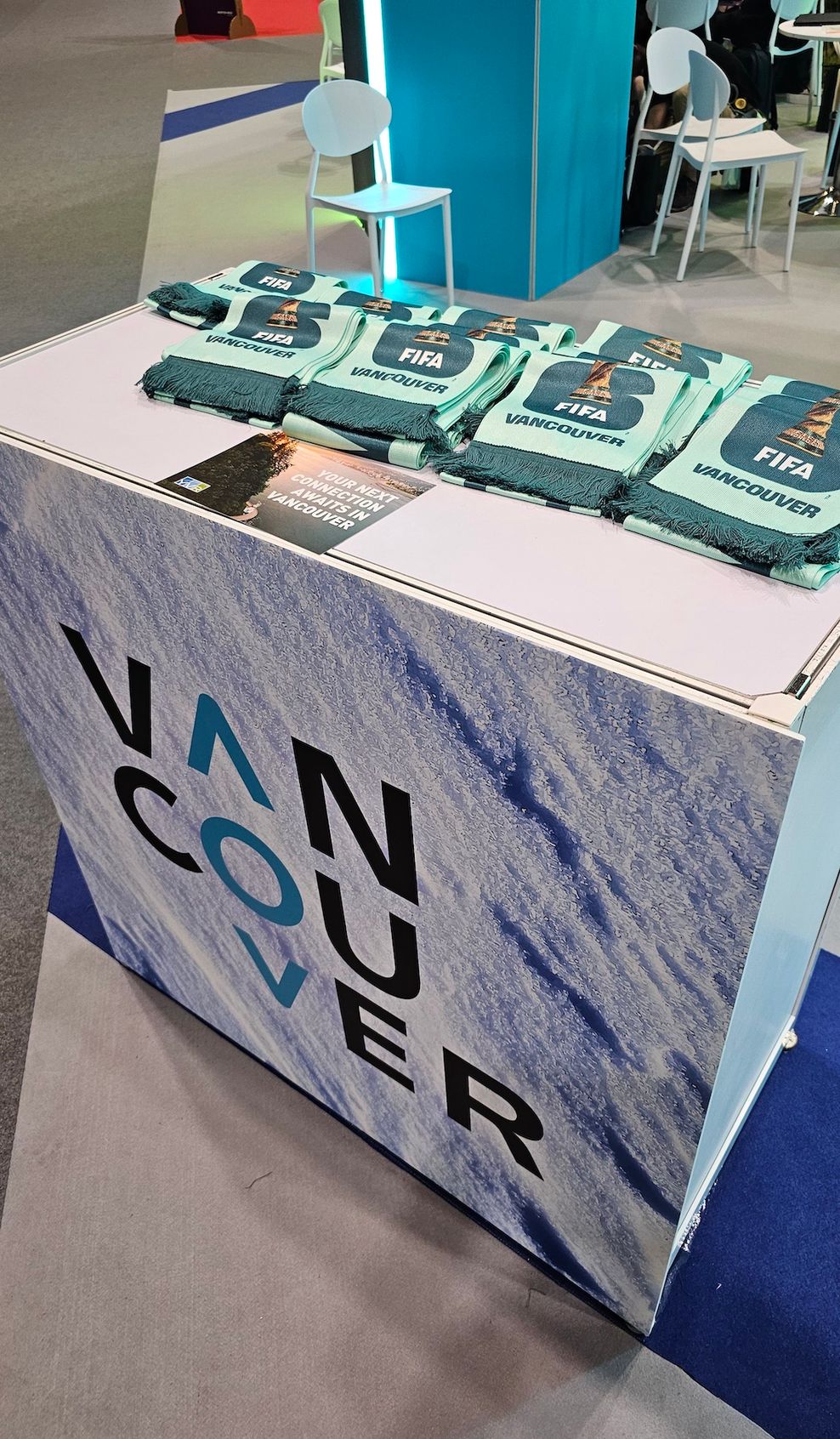
Vancouver International Airport’s (YVR) booth at the 2025 Routes World conference in Hong Kong. (Kenneth Chan)
Critically, YVR does not act alone. The airport works closely with a “destination collective” that includes Destination Vancouver, Destination Canada, the local hotel association, and other tourism and economic development partners. Depending on the route, cargo experts or industry specialists may also be brought into discussions to strengthen the case.
This collaborative approach extends beyond Canada’s borders. In the successful launch of Air Canada’s direct service to Singapore, for example, YVR worked closely with Changi Airport to align incentives and support on both ends of the route.
It is about showing airlines “that if they make the investment, we’re going to do our part to make it successful,” said Atkinson.
While the pandemic reshaped global travel habits, YVR’s traffic mix has proven resilient. Unlike many other airports that are heavily dependent on corporate/business travel, YVR has long drawn strength from leisure passengers, international students, and people visiting friends and relatives — reflecting the region’s diverse population, including its strong links to East Asian, South Asian, and Southeast Asian countries.
“Business travel is different than it was pre-pandemic,” said Atkinson. “But we haven’t been overly reliant on it out of Vancouver anyway. That balance has actually helped us resonate with the airlines.”
That diversity also makes YVR attractive to a broad range of carriers, including newer international low-cost airlines. Recent additions to YVR such as Japan Airlines-owned low-cost carrier Zipair to Tokyo and South Korean low-cost carrier T’Way Air to Seoul have introduced new price points and product offerings, expanding consumer choice while reinforcing YVR’s role as a Trans-Pacific gateway.
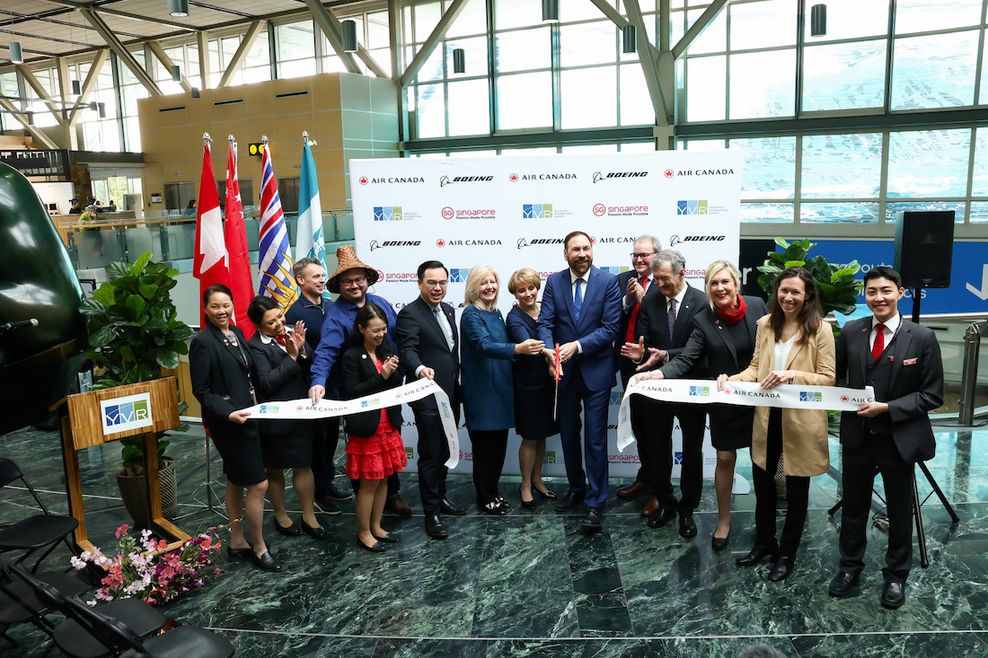
April 2024 ceremony at Vancouver International Airport celebrating the launch of Air Canada’s new route to Singapore Changi Airport. (Vancouver Airport Authority)
While YVR remains open to discussions with virtually any airline, the airport authority has outlined several priority regions that reflect both passenger demand and broader economic strategy.
Of course, Trans-Pacific growth remains central. YVR has invested heavily in its role as a connecting hub between North America and Asia-Pacific, including Australia and New Zealand. Recent years have seen the launch of direct flights to not only Singapore, but also Manila, and Bangkok. This is in addition to the increased service to Japan and South Korea, restarted links to Australia, and a gradual resurgence in direct service to China.
Vietnam stands out as a notable unserved market of interest, reflecting strong demand and growing economic and cultural ties.
Latin America is another key focus. Currently, Costa Rica is YVR’s only direct Central American destination, and there is no non-stop service to South America. Yet demand data consistently points to Brazil, Argentina, and Chile as high-potential markets. Chile, in particular, has deep business connections with B.C., while YVR’s geographic position also makes it a logical connecting point between Asia and South America.
Europe and the United Kingdom continue to perform strongly. Despite four daily non-stop flights to London during peak season — one operated by Air Canada and three by British Airways — load factors remain high, indicating latent demand. Additional European destinations such as Barcelona and Rome are also on YVR’s radar.
India represents perhaps the most compelling long-term opportunity. B.C.’s large South Asian population fuels consistent demand not only to New Delhi, but also to southern Indian cities. Beyond passenger traffic, India offers significant cargo potential and aligns with Canada’s efforts to diversify international trade.
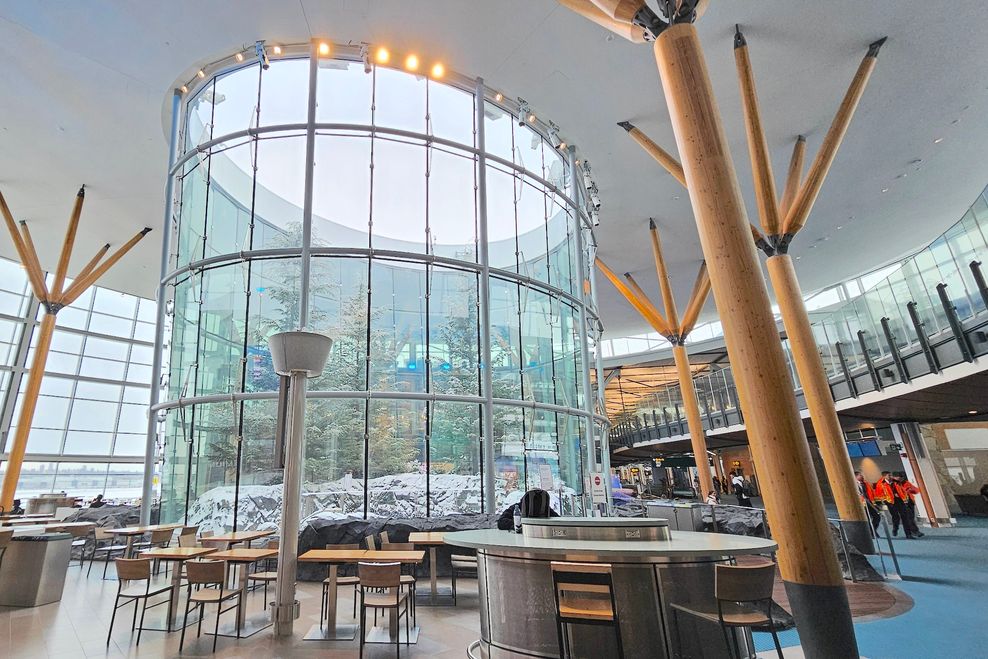
Pier D atrium at Vancouver International Airport. (Kenneth Chan)
Behind every route discussion lies YVR’s broader mandate — serving the community and economy of B.C.
The airport contributes approximately $15 billion annually to the Canadian economy, including $12 billion to B.C. alone, and supports nearly 150,000 jobs, with 26,000 located directly on Sea Island. Roughly $20 billion in goods move through YVR each year, underscoring the airport’s role as a critical trade gateway.
Each new route adds to that impact. Air Canada’s direct service to Singapore, for instance, is estimated to generate $18 million in economic output and support nearly 140 full-time jobs, while T’Way Air’s new Seoul service is expected to contribute $39.8 million and about 240 jobs in B.C.
“The more frequent the service, the larger the aircraft, the more high-value cargo it takes, the higher those benefit numbers are. And given the economic situation right now, with the need to drive growth and help find new markets for Canadian goods, our mission is even more important,” Stephen Smart, the head of communications for Vancouver Airport Authority, told Daily Hive Urbanized in an email.
In an era marked by global economic uncertainty, rising costs, and shifting trade patterns, that economic role has taken on added urgency.
With all that said, YVR has fully recovered from the pandemic, with its financial position now stronger than ever, according to the airport authority.
That recovery is reflected in the airport’s exceptional passenger and cargo volumes over the past two years. In 2024, YVR recorded its second-highest passenger total on record, welcoming 26.2 million travellers, while also setting an all-time high for cargo volumes at 339,000 tonnes.
In 2025, the airport is projected to set new all-time records for both passengers and cargo, surpassing its previous peak of 26.38 million passengers in 2019 and continuing to grow freight volumes. The strength in passenger volumes in 2025 is partly due to a resurgence in the Mainland Chinese market, including connections via Hong Kong International Airport.
- You might also like:
- How air cargo is driving Vancouver International Airport's evolution and growth beyond passenger travel
- AI-powered cameras to transform real-time ground operations at Vancouver International Airport
- Vancouver International Airport on track for record-breaking year, partly from resurgence in China traffic
- Record three million passengers expected at Vancouver International Airport during the holiday travel season
- Vancouver International Airport to expand new no-unpack screening machines at all security checkpoints in 2026